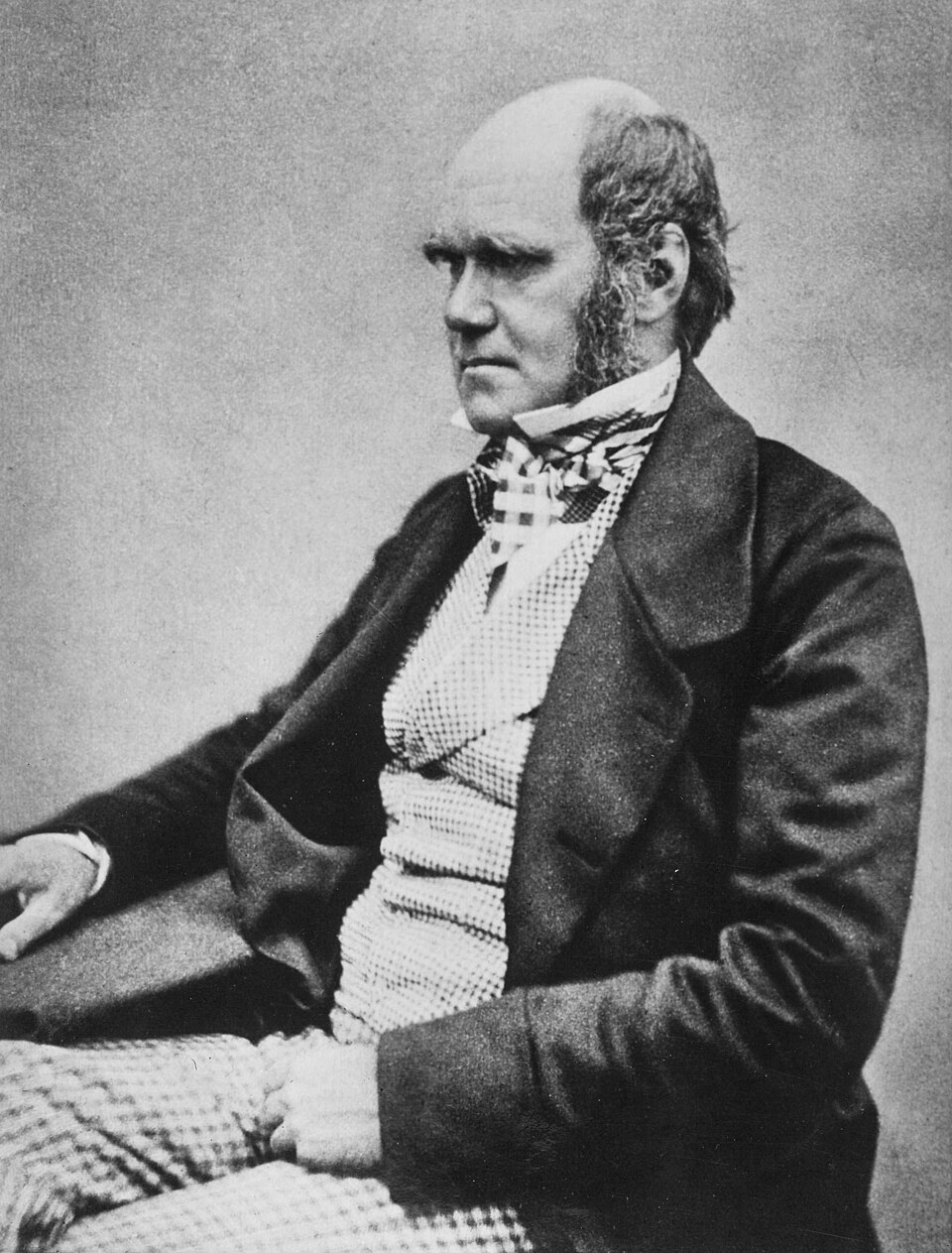
via Wikipedia · CC-BY-SA
73
Ideas
9
Passages
471
Citations
Works cited (2)
Ideas this author touches 73 Ideas · click an Idea to read in context
Animal39Evolution29Man23Nature16Habit15Life And Death15Virtue And Vice15Emotion13State13Science12Desire11Love11Family10Language10Good And Evil9Mind9Pleasure And Pain9Progress9Art8Custom And Convention8Memory And Imagination8Same And Other8Beauty7Definition7Sense7Cause6Medicine6Opposition6Wealth6Happiness5Honor5Knowledge5Labor5Poetry5Reasoning5Relation5Will5Change4Education4God4Hypothesis4Law4Temperance4Time4Truth4Astronomy3Chance3Experience3Idea3Mechanics3Religion3Sign And Symbol3Citizen2Courage2Matter2Necessity And Contingency2Opinion2Physics2Principle2Prudence2Punishment2Rhetoric2Slavery2Soul2Duty1Eternity1Government1History1Immortality1Logic1Sin1War And Peace1World1
This MindMap is generated using weights to determine which ideas this thinker debates with others.
Passages by work
The Origin of Species5 passages
Origin of Species, 241 b-c / Descent of Man, 372b-c✓ correct
WHEN we compare the individuals of the same variety or sub-variety of our older cultivated plants and animals, one of the first points which strikes us is, that they generally differ more from each other than do the individuals of any one species or variety in a state of nature. And if we reflect on the vast diversity of the plants and animals which have been cultivated, and which have varied… Read the rest of this passage →
Origin of Species, Ic; lOd-llb; 38c; 41c-44c✓ correct
IN THE sixth chapter I enumerated the chief objections which might be justly urged against the views maintained in this volume. Most of them have now been discussed. One, namely the distinctness of specific forms, and their not being blended together by innumerable transitional links, is a very obvious difficulty. I assigned reasons why such links do not commonly occur at the present day under… Read the rest of this passage →
Origin of Species, HOc-lllb / De- CH 4 [772 b 5-n] 314b-c; CH 6 [775*28^2] 317b-c, CH 8 [777*22]-cH 10 [778*12] 319b- 320a,c / Politics, BK vu, CH 16 [1335*11-22] b 540a; [H35 i2-i9] 540c✓ correct
How will the struggle for existence, briefly discussed in the last chapter, act in regard to variation? Can the principle of selection, which we have seen is so potent in the hands of man, apply under nature? I think we shall see that it can act most efficiently. Let the endless number of slight variations and individual differences occurring in our domestic productions, and, in a lesser degree,… Read the rest of this passage →
Origin of Species, 2d-4a passim✓ correct
LONG before the reader has arrived at this part of my work, a crowd of difficulties will have occurred to him. Some of them are so serious that to this day I can hardly reflect on them without being in some degree staggered; but, to the best of my judgment, the greater number are only apparent, and those that are real are not, I think, fatal to the theory.
These difficulties and objections may… Read the rest of this passage →
Origin of Species, 239c / Descent of a b [io6i 29- 4] 589c; BK xm, CH 2 [io77b n]- CH 3 [1078*31] 609a-d✓ correct
BEFORE applying the principles arrived at in the last chapter to organic beings in a state of nature, we must briefly discuss whether these latter are subject to any variation. To treat this subject properly, a long catalogue of dry facts ought to be given; but these shall reserve for a future work. Nor shall I here discuss the various definitions which have been given of the term species. No one… Read the rest of this passage →
Cited under: Animal · Art · Astronomy · Beauty · Cause · Chance · Change · Custom And Convention · Definition · Desire · Eternity · Evolution · Experience · God · Good And Evil · Habit · Hypothesis · Idea · Knowledge · Language · Law · Life And Death · Logic · Man · Matter · Mechanics · Medicine · Nature · Necessity And Contingency · Opposition · Physics · Pleasure And Pain · Progress · Reasoning · Relation · Religion · Rhetoric · Same And Other · Science · Sense · Sign And Symbol · Time · Truth · Will · World
The Descent of Man4 passages
Descent of Man, 291d-294c; 296c- 297b; 400a-c; 412d; 447b-c; 480a-481b✓ correct
HE WHO wishes to decide whether man is the modified descendant of some pre-existing form, would probably first enquire whether man varies, however slightly, in bodily structure and in mental faculties; and if so, whether the variations are transmitted to his offspring in accordance with the laws which prevail with the lower animals. Again, are the variations the result, as far as our ignorance… Read the rest of this passage →
Descent of Man, 256c-257a; 354b- 293d-296c; CH n [762*io- io] 303a-d; BK iv, b 355a✓ correct
IT is manifest that man is now subject to much variability. No two individuals of the same race are quite alike. We may compare millions of faces, and each will be distinct. There is an equally great amount of diversity in the proportions and dimensions of the various parts of the body; the length of the legs being one of the most variable points.1 Although in some quarters of the world an… Read the rest of this passage →
Descent of Man, 288b-d : CH 8 [1269*14-23] 465b, BK v, CH 9 [1310*15- 18] 512b-c; BK vn, CH 13 [i332*27- io] 537a-b, HK vin, CH i [1337*19-27] 542b, CH 5 [1339* 2i-25]544c-d✓ correct
WITH animals which have their sexes separated, the males necessarily differ from the females in their organs of reproduction; and these are the primary sexual characters. But the sexes often differ in what Hunter has called secondary sexual characters, which are not directly connected with the act of reproduction; for instance, the male possesses certain organs of sense or locomotion, of which… Read the rest of this passage →
Dessert of Man, 324b BK vm, 740d-741a MM*** Capital, 16a-18d✓ correct
FULLY subscribe to the judgment of those writers1 who maintain that of all the differences between man and the lower animals, the moral sense or conscience is by far the most important. This sense, as Mackintosh2 remarks, “has a rightful supremacy over every other principle of human action”; it is summed up in that short but imperious word ought, so full of high significance. It is the most noble… Read the rest of this passage →
Cited under: Animal · Art · Astronomy · Beauty · Chance · Change · Citizen · Courage · Custom And Convention · Desire · Duty · Education · Emotion · Evolution · Experience · Family · God · Good And Evil · Government · Habit · Happiness · History · Honor · Idea · Immortality · Knowledge · Labor · Language · Law · Life And Death · Love · Man · Matter · Medicine · Memory And Imagination · Mind · Nature · Necessity And Contingency · Opinion · Opposition · Pleasure And Pain · Poetry · Principle · Progress · Prudence · Punishment · Reasoning · Relation · Religion · Same And Other · Science · Sense · Sign And Symbol · Sin · Slavery · Soul · State · Temperance · Time · Truth · Virtue And Vice · War And Peace · Wealth · Will