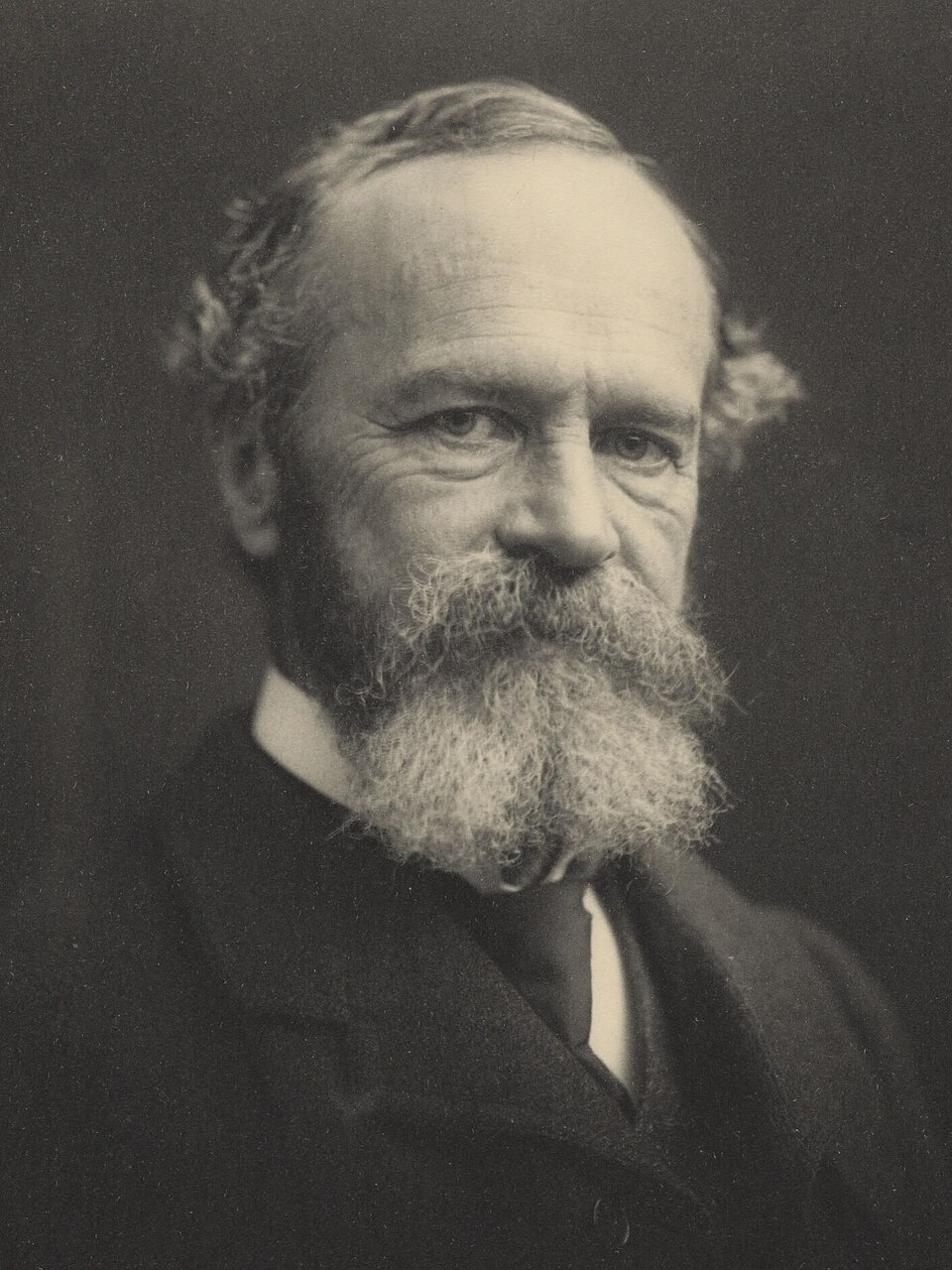
via Wikipedia · CC-BY-SA
88
Ideas
18
Passages
860
Citations
Works cited (1)
Ideas this author touches 88 Ideas · click an Idea to read in context
Mind36Knowledge30Memory And Imagination29Sense27Man25Will24Animal22Emotion22Idea22Science21Truth20Habit19Reasoning19Being18Desire17Experience15Pleasure And Pain15Change14Relation14Time14Education13Same And Other13Art12Definition12Mathematics12One And Many12Sign And Symbol12Soul12Virtue And Vice12Language11Nature11Quality11Universal And Particular11Judgment10Medicine10Necessity And Contingency10Philosophy10Cause9Good And Evil9Honor9Life And Death9Love9Matter9Opposition9Physics9Principle9Beauty8Element8Evolution8Logic8Quantity8Space8Hypothesis7Poetry7Family6Opinion6Chance5Form5Happiness5Immortality5Infinity5Progress5Prudence5Custom And Convention4Mechanics4Courage3Duty3Metaphysics3Punishment3Religion3World3Dialectic2Fate2God2Justice2Labor2Liberty2Rhetoric2Temperance2War And Peace2Wealth2Angel1Eternity1History1Induction1Monarchy1State1Wisdom1
This MindMap is generated using weights to determine which ideas this thinker debates with others.
Passages by work
The Principles of Psychology18 passages
Psychology, 148b✓ correct
Life, both of its phenomena and of their conditions. The phenomena are such things as we call feelings, desires, cognitions, reasonings, decisions, and the like; and, superficially considered, their variety and complexity is such as to leave a chaotic impression on the observer. The most natural and consequently the earliest way of unifying the material was, first, to classify it as well as might… Read the rest of this passage →
Psychology, 2b-3a; 8a-67b✓ correct
I begin chopping the foot of a tree, its branches are unmoved by my act, and its leaves murmur as peacefully as ever in the wind. If, on the contrary, I do violence to the foot of a fellow-man, the rest of his body instantly responds to the aggression by movements of alarm or defence. The reason of this difference is that the man has a nervous system whilst the tree has none; and the function of… Read the rest of this passage →
Psychology, 636a-661b✓ correct
When we look at living creatures from an outward point of view, one of the first things that strike us is that they are bundles of habits. In wild animals, the usual round of daily behavior seems a necessity implanted at birth; in animals domesticated, and especially in man, it seems, to a great extent, to be the result of education. The habits to which there is an innate tendency are called… Read the rest of this passage →
Psychology, 572a-b : Meteorology, BK iv, CH 12 493d-494d / Meta-✓ correct
VIII, , the distinction was drawn between two kinds of knowledge of things, bare acquaintance with them and knowledge about them. The possibility of two such knowledges depends on a fundamental psychical peculiarity which may be entitled "the principle of constancy in the mind's meanings," and which may be thus expressed: "The same matters can be thought of in successive portions of the mental… Read the rest of this passage →
Psychology, 882a-884b passim 9-6 (D) II Esdras, 9:6 / Job, 26:7; 38 '1-42 -2 / Psalms, 8✓ correct
We now begin our study of the mind from within. Most books start with sensations, as the simplest mental facts, and proceed synthetically, constructing each higher stage from those below it. But this is abandoning the empirical method of investigation. No one ever had a simple sensation by itself. Consciousness, from our natal day, is of a teeming multiplicity of objects and relations, and what… Read the rest of this passage →
Psychology, 673a-b Fourth Ennead, TR HI, CH 16 150c-d✓ correct
In the last chapter what concerned us was the direct intuition of time. We found it limited to intervals of considerably less than a minute. Beyond its borders extends the immense region of conceived time, past and future, into one direction or another of which we mentally project all the events which we think of as real, and form a systematic order of them by giving to each a date. The relation… Read the rest of this passage →
Psychology, 882a-884b CH 6-8 51d-53a; TR v, CH I-TR vi, CH 2 57d-✓ correct
The reader who found himself swamped with too much metaphysics in the last chapter will have a still worse time of it in this one, which is exclusively metaphysical. Metaphysics means nothing but an unusually obstinate effort to think clearly. The fundamental conceptions of psychology are practically very clear to us, but theoretically they are very confused, and one easily makes the obscurest… Read the rest of this passage →
Psychology, 95b-97a : i [2o8 9~22] 287b; CH 8 [215*1-13] 294c-d; BK v, CH 6✓ correct
Since, for psychology, a mind is an object in a world of other objects, its relation to those other objects must next be surveyed. First of all, to its
Time-Relations.
Minds, as we know them, are temporary existences. Whether my mind had a being prior to the birth of my body, whether it shall have one after the latter's decease, are questions to be decided by my general philosophy or theology… Read the rest of this passage →
Psychology, 8a-52b passim 7^(2) Paleontological evidences: the missing✓ correct
We have now finished the physiological preliminaries of our subject and must in the remaining chapters study the mental states themselves whose cerebral conditions and concomitants we have been considering hitherto. Beyond the brain, however, there is an outer world to which the brain-states themselves 'correspond.' And it will be well, ere we advance farther, to say a word about the relation of… Read the rest of this passage →
Psychology, 627a-631a; 852a; 859a-882a : [640*1 2-64 i 39] 162b-165a / Generation of b Animals, BK i, CH 20 [729*6]-^ 22 [73o 33]✓ correct
IN the sensations of hearing, touch, sight, and pain we are accustomed to distinguish from among the other elements the element of voluminousness. We call the reverberations of a thunderstorm more voluminous than the squeaking of a slate-pencil; the entrance into a warm bath gives our skin a more massive feeling than the prick of a pin; a little neuralgic pain, fine as a cobweb, in the face,… Read the rest of this passage →
Psychology, 203a-204b 3/. The imitation of God or the gods: the divine✓ correct
The elementary properties of nerve-tissue on which the brain-functions depend are far from being satisfactorily made out. The scheme that suggests itself in the first instance to the mind, because it is so obvious, is certainly false: I mean the notion that each cell stands for an idea or part of an idea, and that the ideas are associated or 'bound into bundles' (to use a phrase of Locke's) by… Read the rest of this passage →
Psychology, 674a-675b✓ correct
PURE sensation we saw above, , to be an abstraction never realized in adult life. Any quality of a thing which affects our sense organs does also more than that: it arouses processes in the hemispheres which are due to the organization of that organ by past experiences, and the result of which in consciousness are commonly described as ideas which the sensation suggests. The first of these ideas… Read the rest of this passage →
Psychology, 305a-312a✓ correct
In describing the functions of the hemispheres a short way back, we used language derived from both the bodily and the mental life, saying now that the animal made indeterminate and unforeseeable reactions, and anon that he was swayed by considerations of future good and evil; treating his hemispheres sometimes as the seat of memory and ideas in the psychic sense, and sometimes talking of them as… Read the rest of this passage →
Psychology, 885b-886a 11 ARCHIMEDES:✓ correct
Strange to say, so patent a fact as the perpetual presence of selective attention has received hardly any notice from psychologists of the English empiricist school. The Germans have explicitly treated of it, either as a faculty or as a resultant, but in the pages of such writers as Locke, Hume, Hartley, the Mills, and Spencer the word hardly occurs, or if it does so, it is parenthetically and as… Read the rest of this passage →
Psychology, 132a 138b passim✓ correct
It is a matter of popular observation that some men have sharper senses than others, and that some have acuter minds and are able to 'split hairs' and see two shades of meaning where the majority see but one. Locke long ago set apart the faculty of discrimination as one in which men differ individually. What he wrote is good enough to quote as an introduction to this chapter:
"Another faculty we… Read the rest of this passage →
Psychology, 851a 515a; CH 15 521a-c / Christian Doctrine, BK n,✓ correct
In the next two chapters I shall deal with what is sometimes called internal perception, or the perception of time, and of events as occupying a date therein, especially when the date is a past one, in which case the perception in question goes by the name of memory. To remember a thing as past, it is necessary that the notion of 'past' should be one of our 'ideas.' We shall see in the chapter on… Read the rest of this passage →
Psychology, 882a-884b 6 174c-d; CH xxn, SECT 9 202 c- 203 a; BK in,✓ correct
WE talk of man being the rational animal; and the traditional intellectualist philosophy has always made a great point of treating the brutes as wholly irrational creatures. Nevertheless, it is by no means easy to decide just what is meant by reason, or how the peculiar thinking process called reasoning differs from other thought-sequences which may lead to similar results.
Much of our thinking… Read the rest of this passage →
Psychology, 381b-385b✓ correct
In speaking of the instincts it has been impossible to keep them separate from the emotional excitements which go with them. Objects of rage, love, fear, etc., not only prompt a man to outward deeds, but provoke characteristic alterations in his attitude and visage, and affect his breathing, circulation, and other organic functions in specific ways. When the outward deeds are inhibited, these… Read the rest of this passage →
Cited under: Angel · Animal · Art · Beauty · Being · Cause · Chance · Change · Courage · Custom And Convention · Definition · Desire · Dialectic · Duty · Education · Element · Emotion · Eternity · Evolution · Experience · Family · Fate · Form · God · Good And Evil · Habit · Happiness · History · Honor · Hypothesis · Idea · Immortality · Induction · Infinity · Judgment · Justice · Knowledge · Labor · Language · Liberty · Life And Death · Logic · Love · Man · Mathematics · Matter · Mechanics · Medicine · Memory And Imagination · Metaphysics · Mind · Monarchy · Nature · Necessity And Contingency · One And Many · Opinion · Opposition · Philosophy · Physics · Pleasure And Pain · Poetry · Principle · Progress · Prudence · Punishment · Quality · Quantity · Reasoning · Relation · Religion · Rhetoric · Same And Other · Science · Sense · Sign And Symbol · Soul · Space · State · Temperance · Time · Truth · Universal And Particular · Virtue And Vice · War And Peace · Wealth · Will · Wisdom · World