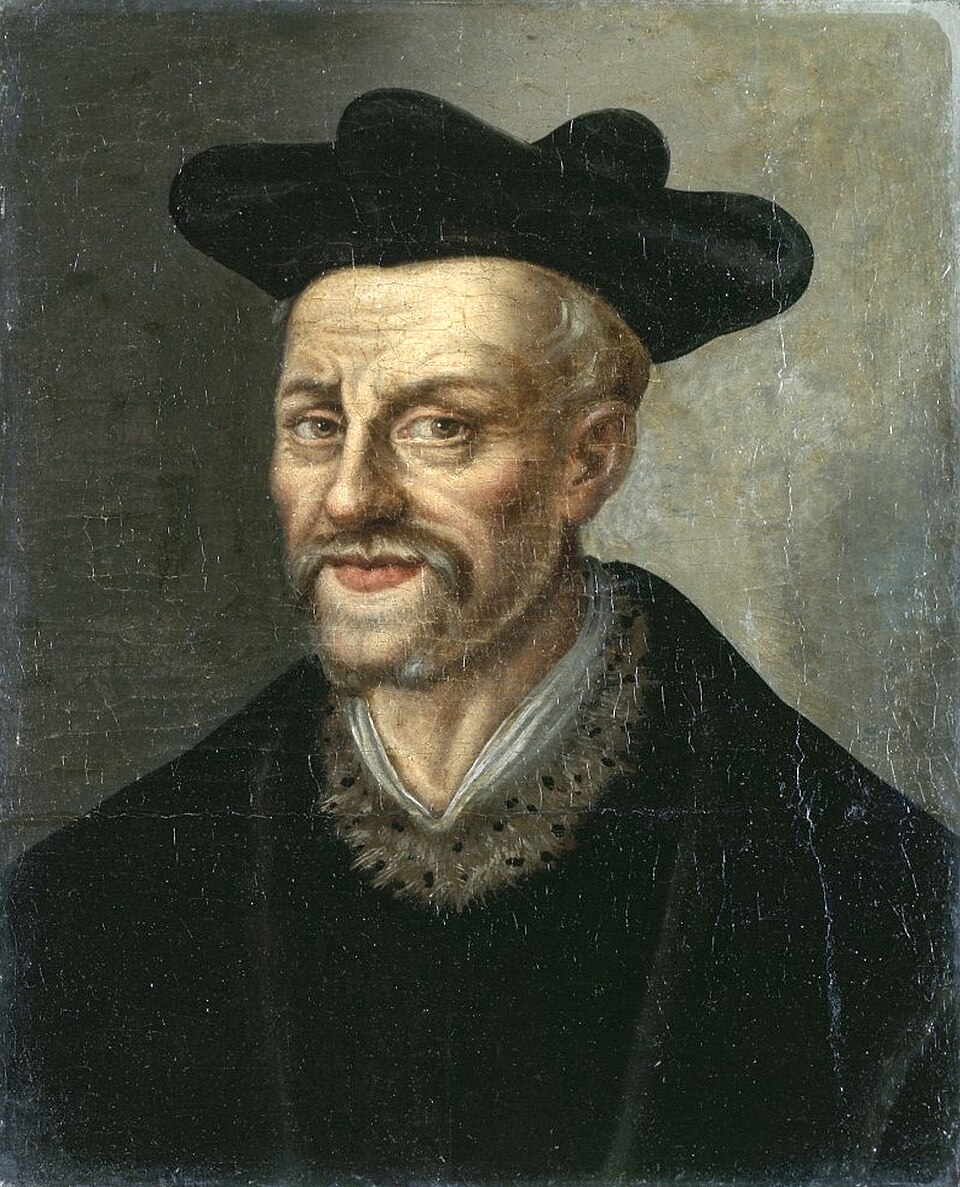
via Wikipedia · CC-BY-SA
66
Ideas
8
Passages
273
Citations
Works cited (1)
Ideas this author touches 66 Ideas · click an Idea to read in context
Animal15Education14Medicine12War And Peace10Art9Pleasure And Pain9Angel8Astronomy8Family8Happiness8Man8Religion8Language7State7Emotion6Good And Evil6Honor6Love6Immortality5Poetry5Virtue And Vice5Courage4Justice4Knowledge4Law4Life And Death4Logic4Prophecy4Rhetoric4Custom And Convention3Desire3Government3Liberty3Monarchy3Nature3Opposition3Philosophy3Progress3Reasoning3Wealth3Wisdom3Duty2God2Idea2Mathematics2Relation2Revolution2Sign And Symbol2Sin2Temperance2Will2Aristocracy1Chance1Element1Experience1Fate1Habit1History1Memory And Imagination1Necessity And Contingency1Opinion1Prudence1Punishment1Same And Other1Tyranny1World1
This MindMap is generated using weights to determine which ideas this thinker debates with others.
Passages by work
Gargantua and Pantagruel8 passages
Gargantua and Pantagruel, BK m, 132b-c✓ correct
Abstracted soul, ravished with ecstasies,
Gone back, and now familiar in the skies,
Thy former host, thy body, leaving quite,
Which to obey thee always took delight —
Obsequious, ready — now from motion free,
Senseless, and as it were in apathy,
Wouldst thou not issue forth for a short space,
From that divine, eternal, heavenly place,
To see the third part, in this earthy cell,
Of the… Read the rest of this passage →
Gargantua and Pantagruel, BK n, 117d✓ correct
Reader here may be pleased to take notice that the copy of verses by the title of ‘Rablophila’, premised to the first book of this translation, being but a kind of mock poem, in imitation of somewhat lately published (as to any indifferent observer will easily appear, by the false quantities in the Latin, the abusive strain of the English, and extravagant subscription to both), and as such, by a… Read the rest of this passage →
Gargantua and Pantagruel, BK iv, 247d-248b✓ correct
I must write to find thee courteous, an epithet too often bestowed without a cause. The author of this work has been as sparing of what we call good nature, as most readers are nowadays. So I am afraid his translator and commentator is not to expect much more than has been showed them. What’s worse, there are but two sorts of taking prefaces, as there are but two kinds of prologues to plays; for… Read the rest of this passage →
Gargantua and Pantagruel, BK i, 14a-b✓ correct
I must refer you to the great chronicle of Pantagruel for the knowledge of that genealogy and antiquity of race by which Gargantua is come unto us. In it you may understand more at large how the giants were born in this world, and how from them by a direct line issued Gargantua, the father of Pantagruel: and do not take it ill, if for this time I pass by it, although the subject be such, that the… Read the rest of this passage →
Gargantua and Pantagruel, BK n, 85c-87c 388c / Rhetoric. BK i, CH 2 [1358*3-26] S97d- 598b; CH 4 [1359^18] 599d; BK in; CH i [1404*1-12] 654a✓ correct
Reader here may be pleased to take notice that the copy of verses by the title of ‘Rablophila’, premised to the first book of this translation, being but a kind of mock poem, in imitation of somewhat lately published (as to any indifferent observer will easily appear, by the false quantities in the Latin, the abusive strain of the English, and extravagant subscription to both), and as such, by a… Read the rest of this passage →
Gargantua and Pantagruel, BK i✓ correct
Rabelais, whose wit prodigiously was made,
All men, professions, actions to invade,
With so much furious vigour, as if it
Had lived o’er each of them, and each had quit,
Yet with such happy sleight and careless skill,
As, like the serpent, doth with laughter kill,
So that although his noble leaves appear
Antic and Gottish, and dull souls forbear
To turn them o’er, lest they should only… Read the rest of this passage →
Gargantua and Pantagruel, BK HI, 143a-144c SECT 11-15 140b-141a; BK in, CH vr, SECT 12 271d-272b✓ correct
Abstracted soul, ravished with ecstasies,
Gone back, and now familiar in the skies,
Thy former host, thy body, leaving quite,
Which to obey thee always took delight —
Obsequious, ready — now from motion free,
Senseless, and as it were in apathy,
Wouldst thou not issue forth for a short space,
From that divine, eternal, heavenly place,
To see the third part, in this earthy cell,
Of the… Read the rest of this passage →
Gargantua and Pantagruel, BK HI, 18 AUGUSTINE City of God, BK xfrx, CH 13, 5l9a; : 181d-182b * , 25( MONTAIGNE- Essays* 33b-c; ^ A 2 2b-4a; A 3, REP 3 4b-Sa; A 4, ANS 5a-6a; 394a-395b; 406c-408b 20 SHAKESPEARE: 1st Henry VI, ACT u, sc v [i- ; -. Q 50, A i, ANS and REP 2-3 6a-7b; A 3; REP 2 , 16} 12d-13a / As you Ufy It, ACT u, sc vn 8b-9a; Q 51, A i, ANS 12b-13c; Q 52, A t, ANS [137-166] 608d-609a * 15d48a; A 2, ANS 18a-19a; Q 54, A i, ANS 22d-✓ correct
Abstracted soul, ravished with ecstasies,
Gone back, and now familiar in the skies,
Thy former host, thy body, leaving quite,
Which to obey thee always took delight —
Obsequious, ready — now from motion free,
Senseless, and as it were in apathy,
Wouldst thou not issue forth for a short space,
From that divine, eternal, heavenly place,
To see the third part, in this earthy cell,
Of the… Read the rest of this passage →
Cited under: Angel · Animal · Aristocracy · Art · Astronomy · Chance · Courage · Custom And Convention · Desire · Duty · Education · Element · Emotion · Experience · Family · Fate · God · Good And Evil · Government · Habit · Happiness · History · Honor · Idea · Immortality · Justice · Knowledge · Language · Law · Liberty · Life And Death · Logic · Love · Man · Mathematics · Medicine · Memory And Imagination · Monarchy · Nature · Necessity And Contingency · Opinion · Opposition · Philosophy · Pleasure And Pain · Poetry · Progress · Prophecy · Prudence · Punishment · Reasoning · Relation · Religion · Revolution · Rhetoric · Same And Other · Sign And Symbol · Sin · State · Temperance · Tyranny · Virtue And Vice · War And Peace · Wealth · Will · Wisdom · World