The Debate on Democracy
Plato (critic) vs Mill (defender)
Plato wrote the first serious attack on democracy we still have. In Republic VIII he imagines a soul formed by democratic life — a person who lives each day as it pleases him, treats all desires as equal, and mistakes indifference for freedom. The portrait is about 2,400 years old and still stings, because anyone who has spent an hour online recognizes it.
John Stuart Mill, writing at the height of the Victorian franchise debate, takes Plato's critique seriously and answers it on its own ground. Mill does not claim that democracy produces better laws, or wiser rulers, or even happier citizens. He claims that the daily practice of self-government — the public argument, the obligation to reason with strangers, the freedom to change one's mind — develops human beings in a way that nothing else can.
In the passages that follow you will read both. Neither is a straw man. Plato is seeing a real democracy; Mill is defending a real one. The work, as you read, is to hold both critiques at once — to watch each philosopher hit the other's strongest point — and to notice what you think a democratic citizen is for.
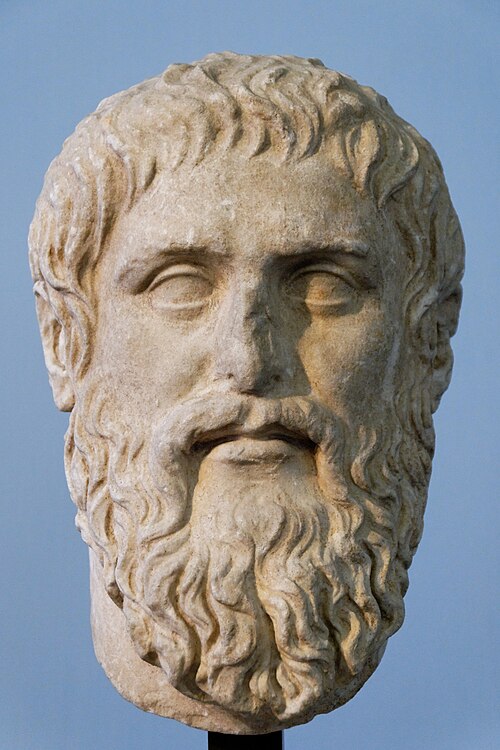 1Platoc. 427 – 347 BCERepublic · Book 6 · Jowett (GBWW) translation
AND thus, Glaucon, after the argument has gone a weary way, the true and the false philosophers have at length appeared in view.
I do not think, he said, that the way could have been shortened.
I suppose not, I said; and yet I believe that we might have had a better view of both of them if the discussion could have been confined to this one subject and if there were not many other questions awaiting us, which he who desires to see in what respect the life of the just differs from that of the unjust must consider.
And what is the next question? he asked.
Surely, I said, the one which follows next in order. Inasmuch as philosophers only are able to grasp the eternal and unchangeable, and those who wander in the region of the many and variable are not philosophers, I must ask you which of the two classes should be the rulers of our State?
And how can we rightly answer that question?
Whichever of the two are best able to guard the laws and institutions of our State — let them be our guardians.
Very good.
Neither, I said, can there be any question that the guardian who is to keep anything should have eyes rather than no eyes?
There can be no question of that.
And are not those who are verily and indeed wanting in the knowledge of the true being of each thing, and who have in their souls no clear pattern, and are unable as with a painter's eye to look at the absolute truth and to that original to repair, and having perfect vision of the other world to order the laws about beauty, goodness, justice in this, if not already ordered, and to guard and preserve the order of them — are not such persons, I ask, simply blind?
Truly, he replied, they are much in that condition.
And shall they be our guardians when there are others who, besides being their equals in experience and falling short of them in no particular of virtue, also know the very truth of each thing?
There can be no reason, he said, for rejecting those who have this greatest of all great qualities; they must always have the first place unless they fail in some other respect. Suppose, then, I said, that we determine how far they can unite this and the other excellences.
By all means.
In the first place, as we began by observing, the nature of the philosopher has to be ascertained. We must come to an understanding about him, and, when we have done so, then, if I am not mistaken, we shall also acknowledge that such a union of qualities is possible, and that those in whom they are united, and those only, should be rulers in the State.
What do you mean?
Let us suppose that philosophical minds always love knowledge of a sort which shows them the eternal nature not varying from generation and corruption.
Agreed.
And further, I said, let us agree that they are lovers of all true being; there is no part whether greater or less, or more or less honorable, which they are willing to renounce; as we said before of the lover and the man of ambition.
True.
And if they are to be what we were describing, is there not another quality which they should also possess?
What quality?
Truthfulness: they will never intentionally receive into their minds falsehood, which is their detestation, and they will love the truth.
Yes, that may be safely affirmed of them.
"May be." my friend, I replied, is not the word; say rather, "must be affirmed:" for he whose nature is amorous of anything cannot help loving all that belongs or is akin to the object of his affections.
Right, he said.
And is there anything more akin to wisdom than truth?
How can there be?
Can the same nature be a lover of wisdom and a lover of falsehood?
Never.
The true lover of learning then must from his earliest youth, as far as in him lies, desire all truth?
Assuredly.
But then again, as we know by experience, he whose desires are strong in one direction will have them weaker in others; they will be like a stream which has been drawn off into another channel.
True.
He whose desires are drawn toward knowledge in every form will be absorbed in the pleasures of the soul, and will hardly feel bodily pleasure — I mean, if he be a true philosopher and not a sham one.
That is most certain.
Such a one is sure to be temperate and the reverse of covetous; for the motives which make another man desirous of having and spending, have no place in his character.
Very true.
Another criterion of the philosophical nature has also to be considered.
What is that?
There should be no secret corner of illiberality; nothing can be more antagonistic than meanness to a soul which is ever longing after the whole of things both divine and human.
Most true, he replied.
Then how can he who has magnificence of mind and is the spectator of all time and all existence, think much of human life?
He cannot.
Or can such a one account death fearful? No, indeed.
Then the cowardly and mean nature has no part in true philosophy?
Certainly not.
Or again: can he who is harmoniously constituted, who is not covetous or mean, or a boaster, or a coward — can he, I say, ever be unjust or hard in his dealings?
Impossible.
Then you will soon observe whether a man is just and gentle, or rude and unsociable; these are the signs which distinguish even in youth the philosophical nature from the unphilosophical.
True.
There is another point which should be remarked.
What point?
Whether he has or has not a pleasure in learning; for no one will love that which gives him pain, and in which after much toil he makes little progress.
Certainly not.
And again, if he is forgetful and retains nothing of what he learns, will he not be an empty vessel?
That is certain. Laboring in vain, he must end in hating himself and his fruitless occupation? Yes.
Then a soul which forgets cannot be ranked among genuine philosophic natures; we must insist that the philosopher should have a good memory?
Certainly.
And once more, the inharmonious and unseemly nature can only tend to disproportion?
Undoubtedly.
And do you consider truth to be akin to proportion or to disproportion?
To proportion.
Then, besides other qualities, we must try to find a naturally well-proportioned and gracious mind, which will move spontaneously toward the true being of everything.
Certainly.
Well, and do not all these qualities, which we have been enumerating, go together, and are they not, in a manner, necessary to a soul, which is to have a full and perfect participation of being?
They are absolutely necessary, he replied.
And must not that be a blameless study which he only can pursue who has the gift of a good memory, and is quick to learn — noble, gracious, the friend of truth, justice, courage, temperance, who are his kindred?
The god of jealousy himself, he said, could find no fault with such a study.
And to men like him, I said, when perfected by years and education, and to these only you will intrust the State.
Here Adeimantus interposed and said: To these statements, Socrates, no one can offer a reply; but when you talk in this way, a strange feeling passes over the minds of your hearers: They fancy that they are led astray a little at each step in the argument, owing to their own want of skill in asking and answering questions; these littles accumulate, and at the end of the discussion they are found to have sustained a mighty overthrow and all their former notions appear to be turned upside down. And as unskilful players of draughts are at last shut up by their more skilful adversaries and have no piece to move, so they too find themselves shut up at last; for they have nothing to say in this new game of which words are the counters; and yet all the time they are in the right. The observation is suggested to me by what is now occurring. For any one of us might say, that although in words he is not able to meet you at each step of the argument, he sees as a fact that the votaries of philosophy, when they carry on the study, not only in youth as a part of education, but as the pursuit of their maturer years, most of them become strange monsters, not to say utter rogues, and that those who may be considered the best of them are made useless to the world by the very study which you extol.
Well, and do you think that those who say so are wrong?
I cannot tell, he replied; but I should like to know what is your opinion.
Hear my answer; I am of opinion that they are quite right.
Then how can you be justified in saying that cities will not cease from evil until philosophers rule in them, when philosophers are acknowledged by us to be of no use to them?
You ask a question, I said, to which a reply can only be given in a parable.
Yes, Socrates; and that is a way of speaking to which you are not at all accustomed, I suppose.
I perceive, I said, that you are vastly amused at having plunged me into such a hopeless discussion; but now hear the parable, and then you will be still more amused at the meagreness of my imagination: for the manner in which the best men are treated in their own States is so grievous that no single thing on earth is comparable to it; and therefore, if I am to plead their cause, I must have recourse to fiction, and put together a figure made up of many things, like the fabulous unions of goats and stags which are found in pictures. Imagine then a fleet or a ship in which there is a captain who is taller and stronger than any of the crew, but he is a little deaf and has a similar infirmity in sight, and his knowledge of navigation is not much better. The sailors are quarrelling with one another about the steering — everyone is of opinion that he has a right to steer, though he has never learned the art of navigation and cannot tell who taught him or when he learned, and will further assert that it cannot be taught, and they are ready to cut in pieces anyone who says the contrary. They throng about the captain, begging and praying him to commit the helm to them; and if at any time they do not prevail, but others are preferred to them, they kill the others or throw them overboard, and having first chained up the noble captain's senses with drink or some narcotic drug, they mutiny and take possession of the ship and make free with the stores; thus, eating and drinking, they proceed on their voyage in such manner as might be expected of them. Him who is their partisan and cleverly aids them in their plot for getting the ship out of the captain's hands into their own whether by force or persuasion, they compliment with the name of sailor, pilot, able seaman, and abuse the other sort of man, whom they call a good-for-nothing; but that the true pilot must pay attention to the year and seasons and sky and stars and winds, and whatever else belongs to his art, if he intends to be really qualified for the command of a ship, and that he must and will be the steerer, whether other people like or not — the possibility of this union of authority with the steerer's art has never seriously entered into their thoughts or been made part of their calling. Now in vessels which are in a state of mutiny and by sailors who are mutineers, how will the true pilot be regarded? Will he not be called by them a prater, a star-gazer, a good-for-nothing?
— Plato, Republic, Book 6
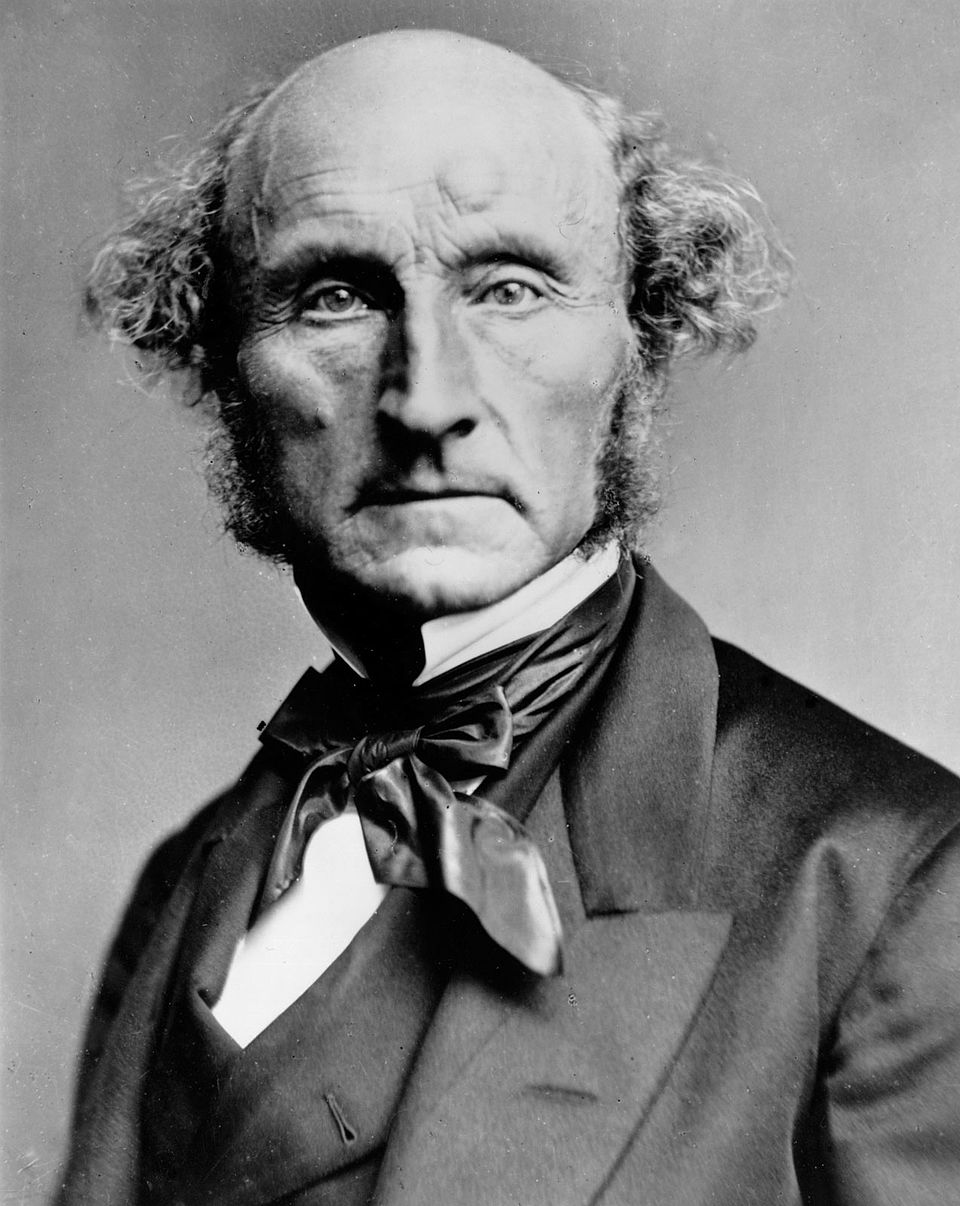 2Mill1806 – 1873On Liberty · Chapter 1
THE subject of this Essay is not the so-called Liberty of the Will, so unfortunately opposed to the misnamed doctrine of Philosophical Necessity; but Civil, or Social Liberty: the nature and limits of the power which can be legitimately exercised by society over the individual. A question seldom stated, and hardly ever discussed, in general terms, but which profoundly influences the practical controversies of the age by its latent presence, and is likely soon to make itself recognized as the vital question of the future. It is so far from being new, that, in a certain sense, it has divided mankind, almost from the remotest ages, but in the stage of progress into which the more civilized portions of the species have now entered, it presents itself under new conditions, and requires a different and more fundamental treatment.
The struggle between Liberty and Authority is the most conspicuous feature in the portions of history with which we are earliest familiar, particularly in that of Greece, Rome, and England. But in old times this contest was between subjects, or some classes of subjects, and the government. By liberty, was meant protection against the tyranny of the political rulers. The rulers were conceived (except in some of the popular governments of Greece) as in a necessarily antagonistic position to the people whom they ruled. They consisted of a governing One, or a governing tribe or caste, who derived their authority from inheritance or conquest; who, at all events, did not hold it at the pleasure of the governed, and whose supremacy men did not venture, perhaps did not desire, to contest, whatever precautions might be taken against its oppressive exercise. Their power was regarded as necessary, but also as highly dangerous; as a weapon which they would attempt to use against their subjects, no less than against external enemies. To prevent the weaker members of the community from being preyed upon by innumerable vultures, it was needful that there should be an animal of prey stronger than the rest, commissioned to keep them down. But as the king of the vultures would be no less bent upon preying upon the flock than any of the minor harpies, it was indispensable to be in a perpetual attitude of defence against his beak and claws. The aim, therefore, of patriots, was to set limits to the power which the ruler should be suffered to exercise over the community; and this limitation was what they meant by liberty. It was attempted in two ways. First, by obtaining a recognition of certain immunities, called political liberties or rights, which it was to be regarded as a breach of duty in the ruler to infringe, and which, if he did infringe, specific resistance, or general rebellion, was held to be justifiable. A second, and generally a later expedient, was the establishment of constitutional checks; by which the consent of the community, or of a body of some sort supposed to represent its interests, was made a necessary condition to some of the more important acts of the governing power. To the first of these modes of limitation, the ruling power, in most European countries, was compelled, more or less, to submit. It was not so with the second; and to attain this, or when already in some degree possessed, to attain it more completely, became everywhere the principal object of the lovers of liberty. And so long as mankind were content to combat one enemy by another, and to be ruled by a master, on condition of being guaranteed more or less efficaciously against his tyranny, they did not carry their aspirations beyond this point.
A time, however, came in the progress of human affairs, when men ceased to think it a necessity of nature that their governors should be an independent power, opposed in interest to themselves. It appeared to them much better that the various magistrates of the State should be their tenants or delegates, revocable at their pleasure. In that way alone, it seemed, could they have complete security that the powers of government would never be abused to their disadvantage. By degrees, this new demand for elective and temporary rulers became the prominent object of the exertions of the popular party, wherever any such party existed; and superseded, to a considerable extent, the previous efforts to limit the power of rulers. As the struggle proceeded for making the ruling power emanate from the periodical choice of the ruled, some persons began to think that too much importance had been attached to the limitation of the power itself. That (it might seem) was a resource against rulers whose interests were habitually opposed to those of the people. What was now wanted was, that the rulers should be identified with the people; that their interest and will should be the interest and will of the nation. The nation did not need to be protected against its own will. There was no fear of its tyrannizing over itself. Let the rulers be effectually responsible to it, promptly removable by it, and it could afford to trust them with power of which it could itself dictate the use to be made. Their power was but the nation’s own power, concentrated, and in a form convenient for exercise. This mode of thought, or rather perhaps of feeling, was common among the last generation of European liberalism, in the Continental section of which, it still apparently predominates. Those who admit any limit to what a government may do, except in the case of such governments as they think ought not to exist, stand out as brilliant exceptions among the political thinkers of the Continent. A similar tone of sentiment might by this time have been prevalent in our own country, if the circumstances which for a time encouraged it had continued unaltered.
But, in political and philosophical theories, as well as in persons, success discloses faults and infirmities which failure might have concealed from observation. The notion, that the people have no need to limit their power over themselves, might seem axiomatic, when popular government was a thing only dreamed about, or read of as having existed at some distant period of the past. Neither was that notion necessarily disturbed by such temporary aberrations as those of the French Revolution, the worst of which were the work of an usurping few, and which, in any case, belonged, not to the permanent working of popular institutions, but to a sudden and convulsive outbreak against monarchical and aristocratic despotism. In time, however, a democratic republic came to occupy a large portion of the earth’s surface, and made itself felt as one of the most powerful members of the community of nations; and elective and responsible government became subject to the observations and criticisms which wait upon a great existing fact. It was now perceived that such phrases as “self-government,” and “the power of the people over themselves,” do not express the true state of the case. The “people” who exercise the power, are not always the same people with those over whom it is exercised, and the “self-government” spoken of, is not the government of each by himself, but of each by all the rest. The will of the people, moreover, practically means, the will of the most numerous or the most active part of the people; the majority, or those who succeed in making themselves accepted as the majority; the people, consequently, may desire to oppress a part of their number; and precautions are as much needed against this, as against any other abuse of power. The limitation, therefore, of the power of government over individuals, loses none of its importance when the holders of power are regularly accountable to the community, that is, to the strongest party therein. This view of things, recommending itself equally to the intelligence of thinkers and to the inclination of those important classes in European society to whose real or supposed interests democracy is adverse, has had no difficulty in establishing itself; and in political speculations “the tyranny of the majority” is now generally included among the evils against which society requires to be on its guard.
Like other tyrannies, the tyranny of the majority was at first, and is still vulgarly, held in dread, chiefly as operating through the acts of the public authorities. But reflecting persons perceived that when society is itself the tyrant — society collectively, over the separate individuals who compose it — its means of tyrannizing are not restricted to the acts which it may do by the hands of its political functionaries. Society can and does execute its own mandates: and if it issues wrong mandates instead of right, or any mandates at all in things with which it ought not to meddle, it practises a social tyranny more formidable than many kinds of political oppression, since, though not usually upheld by such extreme penalties, it leaves fewer means of escape, penetrating much more deeply into the details of life, and enslaving the soul itself. Protection, therefore, against the tyranny of the magistrate is not enough; there needs protection also against the tyranny of the prevailing opinion and feeling; against the tendency of society to impose, by other means than civil penalties, its own ideas and practices as rules of conduct on those who dissent from them; to fetter the development, and, if possible, prevent the formation, of any individuality not in harmony with its ways, and compel all characters to fashion themselves upon the model of its own. There is a limit to the legitimate interference of collective opinion with individual independence; and to find that limit, and maintain it against encroachment, is as indispensable to a good condition of human affairs, as protection against political despotism.
But though this proposition is not likely to be contested in general terms, the practical question, where to place the limit — how to make the fitting adjustment between individual independence and social control — is a subject on which nearly everything remains to be done. All that makes existence valuable to any one, depends on the enforcement of restraints upon the actions of other people. Some rules of conduct, therefore, must be imposed, by law in the first place, and by opinion on many things which are not fit subjects for the operation of law. What these rules should be, is the principal question in human affairs; but if we except a few of the most obvious cases, it is one of those which least progress has been made in resolving. No two ages, and scarcely any two countries, have decided it alike; and the decision of one age or country is a wonder to another. Yet the people of any given age and country no more suspect any difficulty in it, than if it were a subject on which mankind had always been agreed. The rules which obtain among themselves appear to them self-evident and self-justifying. This all but universal illusion is one of the examples of the magical influence of custom, which is not only, as the proverb says a second nature, but is continually mistaken for the first. The effect of custom, in preventing any misgiving respecting the rules of conduct which mankind impose on one another, is all the more complete because the subject is one on which it is not generally considered necessary that reasons should be given, either by one person to others, or by each to himself. People are accustomed to believe and have been encouraged in the belief by some who aspire to the character of philosophers, that their feelings, on subjects of this nature, are better than reasons, and render reasons unnecessary. The practical principle which guides them to their opinions on the regulation of human conduct, is the feeling in each person’s mind that everybody should be required to act as he, and those with whom he sympathizes, would like them to act. No one, indeed, acknowledges to himself that his standard of judgment is his own liking; but an opinion on a point of conduct, not supported by reasons, can only count as one person’s preference; and if the reasons, when given, are a mere appeal to a similar preference felt by other people, it is still only many people’s liking instead of one. To an ordinary man, however, his own preference, thus supported, is not only a perfectly satisfactory reason, but the only one he generally has for any of his notions of morality, taste, or propriety, which are not expressly written in his religious creed; and his chief guide in the interpretation even of that. Men’s opinions, accordingly, on what is laudable or blamable, are affected by all the multifarious causes which influence their wishes in regard to the conduct of others, and which are as numerous as those which determine their wishes on any other subject. Sometimes their reason — at other times their prejudices or superstitions: often their social affections, not seldom their antisocial ones, their envy or jealousy, their arrogance or contemptuousness: but most commonly, their desires or fears for themselves — their legitimate or illegitimate self-interest. Wherever there is an ascendant class, a large portion of the morality of the country emanates from its class interests, and its feelings of class superiority. The morality between Spartans and Helots, between planters and negroes, between princes and subjects, between nobles and roturiers, between men and women, has been for the most part the creation of these class interests and feelings: and the sentiments thus generated, react in turn upon the moral feelings of the members of the ascendant class, in their relations among themselves. Where, on the other hand, a class, formerly ascendant, has lost its ascendency, or where its ascendency is unpopular, the prevailing moral sentiments frequently bear the impress of an impatient dislike of superiority. Another grand determining principle of the rules of conduct, both in act and forbearance which have been enforced by law or opinion, has been the servility of mankind towards the supposed preferences or aversions of their temporal masters, or of their gods. This servility though essentially selfish, is not hypocrisy; it gives rise to perfectly genuine sentiments of abhorrence; it made men burn magicians and heretics. Among so many baser influences, the general and obvious interests of society have of course had a share, and a large one, in the direction of the moral sentiments: less, however, as a matter of reason, and on their own account, than as a consequence of the sympathies and antipathies which grew out of them: and sympathies and antipathies which had little or nothing to do with the interests of society, have made themselves felt in the establishment of moralities with quite as great force.
— Mill, On Liberty, Chapter 1
3Platoc. 427 – 347 BCEStatesman · Jowett (GBWW) translation
I owe you many thanks, indeed, Theodorus, for the acquaintance both of Theaetetus and of the Stranger.
THEODORUS: And in a little while, Socrates, you will owe me three times as many, when they have completed for you the delineation of the Statesman and of the Philosopher, as well as of the Sophist.
SOCRATES: Sophist, statesman, philosopher! O my dear Theodorus, do my ears truly witness that this is the estimate formed of them by the great calculator and geometrician?
THEODORUS: What do you mean, Socrates?
SOCRATES: I mean that you rate them all at the same value, whereas they are really separated by an interval, which no geometrical ratio can express.
THEODORUS: By Ammon, the god of Cyrene, Socrates, that is a very fair hit; and shows that you have not forgotten your geometry. I will retaliate on you at some other time, but I must now ask the Stranger, who will not, I hope, tire of his goodness to us, to proceed either with the Statesman or with the Philosopher, whichever he prefers.
STRANGER: That is my duty, Theodorus; having begun I must go on, and not leave the work unfinished. But what shall be done with Theaetetus?
THEODORUS: In what respect?
STRANGER: Shall we relieve him, and take his companion, the Young Socrates, instead of him? What do you advise?
THEODORUS: Yes, give the other a turn, as you propose. The young always do better when they have intervals of rest.
SOCRATES: I think, Stranger, that both of them may be said to be in some way related to me; for the one, as you affirm, has the cut of my ugly face (compare Theaet.), the other is called by my name. And we should always be on the look-out to recognize a kinsman by the style of his conversation. I myself was discoursing with Theaetetus yesterday, and I have just been listening to his answers; my namesake I have not yet examined, but I must. Another time will do for me; to-day let him answer you.
STRANGER: Very good. Young Socrates, do you hear what the elder Socrates is proposing?
YOUNG SOCRATES: I do.
STRANGER: And do you agree to his proposal?
YOUNG SOCRATES: Certainly.
STRANGER: As you do not object, still less can I. After the Sophist, then, I think that the Statesman naturally follows next in the order of enquiry. And please to say, whether he, too, should be ranked among those who have science.
YOUNG SOCRATES: Yes.
STRANGER: Then the sciences must be divided as before?
YOUNG SOCRATES: I dare say.
STRANGER: But yet the division will not be the same?
YOUNG SOCRATES: How then?
STRANGER: They will be divided at some other point.
YOUNG SOCRATES: Yes.
STRANGER: Where shall we discover the path of the Statesman? We must find and separate off, and set our seal upon this, and we will set the mark of another class upon all diverging paths. Thus the soul will conceive of all kinds of knowledge under two classes.
YOUNG SOCRATES: To find the path is your business, Stranger, and not mine.
STRANGER: Yes, Socrates, but the discovery, when once made, must be yours as well as mine.
YOUNG SOCRATES: Very good.
STRANGER: Well, and are not arithmetic and certain other kindred arts, merely abstract knowledge, wholly separated from action?
YOUNG SOCRATES: True.
STRANGER: But in the art of carpentering and all other handicrafts, the knowledge of the workman is merged in his work; he not only knows, but he also makes things which previously did not exist.
YOUNG SOCRATES: Certainly.
STRANGER: Then let us divide sciences in general into those which are practical and those which are purely intellectual.
YOUNG SOCRATES: Let us assume these two divisions of science, which is one whole.
STRANGER: And are ‘statesman,’ ‘king,’ ‘master,’ or ‘householder,’ one and the same; or is there a science or art answering to each of these names? Or rather, allow me to put the matter in another way.
YOUNG SOCRATES: Let me hear.
STRANGER: If any one who is in a private station has the skill to advise one of the public physicians, must not he also be called a physician?
YOUNG SOCRATES: Yes.
STRANGER: And if any one who is in a private station is able to advise the ruler of a country, may not he be said to have the knowledge which the ruler himself ought to have?
YOUNG SOCRATES: True.
STRANGER: But surely the science of a true king is royal science?
YOUNG SOCRATES: Yes.
STRANGER: And will not he who possesses this knowledge, whether he happens to be a ruler or a private man, when regarded only in reference to his art, be truly called ‘royal’?
YOUNG SOCRATES: He certainly ought to be.
STRANGER: And the householder and master are the same?
YOUNG SOCRATES: Of course.
STRANGER: Again, a large household may be compared to a small state:— will they differ at all, as far as government is concerned?
YOUNG SOCRATES: They will not.
STRANGER: Then, returning to the point which we were just now discussing, do we not clearly see that there is one science of all of them; and this science may be called either royal or political or economical; we will not quarrel with any one about the name.
YOUNG SOCRATES: Certainly not.
STRANGER: This too, is evident, that the king cannot do much with his hands, or with his whole body, towards the maintenance of his empire, compared with what he does by the intelligence and strength of his mind.
YOUNG SOCRATES: Clearly not.
STRANGER: Then, shall we say that the king has a greater affinity to knowledge than to manual arts and to practical life in general?
YOUNG SOCRATES: Certainly he has.
STRANGER: Then we may put all together as one and the same — statesmanship and the statesman — the kingly science and the king.
YOUNG SOCRATES: Clearly.
STRANGER: And now we shall only be proceeding in due order if we go on to divide the sphere of knowledge?
YOUNG SOCRATES: Very good.
STRANGER: Think whether you can find any joint or parting in knowledge.
YOUNG SOCRATES: Tell me of what sort.
STRANGER: Such as this: You may remember that we made an art of calculation?
YOUNG SOCRATES: Yes.
STRANGER: Which was, unmistakeably, one of the arts of knowledge?
YOUNG SOCRATES: Certainly.
STRANGER: And to this art of calculation which discerns the differences of numbers shall we assign any other function except to pass judgment on their differences?
YOUNG SOCRATES: How could we?
STRANGER: You know that the master-builder does not work himself, but is the ruler of workmen?
YOUNG SOCRATES: Yes.
STRANGER: He contributes knowledge, not manual labour?
YOUNG SOCRATES: True.
STRANGER: And may therefore be justly said to share in theoretical science?
YOUNG SOCRATES: Quite true.
STRANGER: But he ought not, like the calculator, to regard his functions as at an end when he has formed a judgment; — he must assign to the individual workmen their appropriate task until they have completed the work.
YOUNG SOCRATES: True.
STRANGER: Are not all such sciences, no less than arithmetic and the like, subjects of pure knowledge; and is not the difference between the two classes, that the one sort has the power of judging only, and the other of ruling as well?
YOUNG SOCRATES: That is evident.
STRANGER: May we not very properly say, that of all knowledge, there are two divisions — one which rules, and the other which judges?
YOUNG SOCRATES: I should think so.
STRANGER: And when men have anything to do in common, that they should be of one mind is surely a desirable thing?
YOUNG SOCRATES: Very true.
STRANGER: Then while we are at unity among ourselves, we need not mind about the fancies of others?
YOUNG SOCRATES: Certainly not.
STRANGER: And now, in which of these divisions shall we place the king? — Is he a judge and a kind of spectator? Or shall we assign to him the art of command — for he is a ruler?
YOUNG SOCRATES: The latter, clearly.
STRANGER: Then we must see whether there is any mark of division in the art of command too. I am inclined to think that there is a distinction similar to that of manufacturer and retail dealer, which parts off the king from the herald.
YOUNG SOCRATES: How is this?
STRANGER: Why, does not the retailer receive and sell over again the productions of others, which have been sold before?
YOUNG SOCRATES: Certainly he does.
STRANGER: And is not the herald under command, and does he not receive orders, and in his turn give them to others?
YOUNG SOCRATES: Very true.
STRANGER: Then shall we mingle the kingly art in the same class with the art of the herald, the interpreter, the boatswain, the prophet, and the numerous kindred arts which exercise command; or, as in the preceding comparison we spoke of manufacturers, or sellers for themselves, and of retailers — seeing, too, that the class of supreme rulers, or rulers for themselves, is almost nameless — shall we make a word following the same analogy, and refer kings to a supreme or ruling-for-self science, leaving the rest to receive a name from some one else? For we are seeking the ruler; and our enquiry is not concerned with him who is not a ruler.
YOUNG SOCRATES: Very good.
STRANGER: Thus a very fair distinction has been attained between the man who gives his own commands, and him who gives another’s. And now let us see if the supreme power allows of any further division.
YOUNG SOCRATES: By all means.
STRANGER: I think that it does; and please to assist me in making the division.
YOUNG SOCRATES: At what point?
STRANGER: May not all rulers be supposed to command for the sake of producing something?
YOUNG SOCRATES: Certainly.
STRANGER: Nor is there any difficulty in dividing the things produced into two classes.
YOUNG SOCRATES: How would you divide them?
STRANGER: Of the whole class, some have life and some are without life.
YOUNG SOCRATES: True.
STRANGER: And by the help of this distinction we may make, if we please, a subdivision of the section of knowledge which commands.
YOUNG SOCRATES: At what point?
STRANGER: One part may be set over the production of lifeless, the other of living objects; and in this way the whole will be divided.
YOUNG SOCRATES: Certainly.
STRANGER: That division, then, is complete; and now we may leave one half, and take up the other; which may also be divided into two.
YOUNG SOCRATES: Which of the two halves do you mean?
STRANGER: Of course that which exercises command about animals. For, surely, the royal science is not like that of a master-workman, a science presiding over lifeless objects; — the king has a nobler function, which is the management and control of living beings.
YOUNG SOCRATES: True.
STRANGER: And the breeding and tending of living beings may be observed to be sometimes a tending of the individual; in other cases, a common care of creatures in flocks?
YOUNG SOCRATES: True.
STRANGER: But the statesman is not a tender of individuals — not like the driver or groom of a single ox or horse; he is rather to be compared with the keeper of a drove of horses or oxen.
YOUNG SOCRATES: Yes, I see, thanks to you.
STRANGER: Shall we call this art of tending many animals together, the art of managing a herd, or the art of collective management?
YOUNG SOCRATES: No matter; — whichever suggests itself to us in the course of conversation.
STRANGER: Very good, Socrates; and, if you continue to be not too particular about names, you will be all the richer in wisdom when you are an old man. And now, as you say, leaving the discussion of the name — can you see a way in which a person, by showing the art of herding to be of two kinds, may cause that which is now sought amongst twice the number of things, to be then sought amongst half that number?
— Plato, Statesman
4Mill1806 – 1873Representative Government · Chapter 1
ALL SPECULATIONS concerning forms of government bear the impress, more or less exclusive, of two conflicting theories respecting political institutions; or, to speak more properly, conflicting conceptions of what political institutions are.
By some minds, government is conceived as strictly a practical art, giving rise to no questions but those of means and an end. Forms of government are assimilated to any other expedients for the attainment of human objects. They are regarded as wholly an affair of invention and contrivance. Being made by man, it is assumed that man has the choice either to make them or not, and how or on what pattern they shall be made. Government, according to this conception, is a problem, to be worked like any other question of business. The first step is to define the purposes which governments are required to promote. The next, is to inquire what form of government is best fitted to fulfil those purposes. Having satisfied ourselves on these two points, and ascertained the form of government which combines the greatest amount of good with the least of evil, what further remains is to obtain the concurrence of our countrymen, or those for whom the institutions are intended, in the opinion which we have privately arrived at. To find the best form of government; to persuade others that it is the best; and having done so, to stir them up to insist on having it, is the order of ideas in the minds of those who adopt this view of political philosophy. They look upon a constitution in the same light (difference of scale being allowed for) as they would upon a steam plough, or a threshing machine.
To these stand opposed another kind of political reasoners, who are so far from assimilating a form of government to a machine, that they regard it as a sort of spontaneous product, and the science of government as a branch (so to speak) of natural history. According to them, forms of government are not a matter of choice. We must take them, in the main, as we find them. Governments cannot be constructed by premeditated design. They "are not made, but grow." Our business with them, as with the other facts of the universe, is to acquaint ourselves with their natural properties, and adapt ourselves to them. The fundamental political institutions of a people are considered by this school as a sort of organic growth from the nature and life of that people: a product of their habits, instincts, and unconscious wants and desires, scarcely at all of their deliberate purposes. Their will has had no part in the matter but that of meeting the necessities of the moment by the contrivances of the moment, which contrivances, if in sufficient conformity to the national feelings and character, commonly last, and by successive aggregation constitute a polity, suited to the people who possess it, but which it would be vain to attempt to superduce upon any people whose nature and circumstances had not spontaneously evolved it.
It is difficult to decide which of these doctrines would be the most absurd, if we could suppose either of them held as an exclusive theory. But the principles which men profess, on any controverted subject, are usually a very incomplete exponent of the opinions they really hold. No one believes that every people is capable of working every sort of institutions. Carry the analogy of mechanical contrivances as far as we will, a man does not choose even an instrument of timber and iron on the sole ground that it is in itself the best. He considers whether he possesses the other requisites which must be combined with it to render its employment advantageous, and in particular whether those by whom it will have to be worked possess the knowledge and skill necessary for its management. On the other hand, neither are those who speak of institutions as if they were a kind of living organisms really the political fatalists they give themselves out to be. They do not pretend that mankind have absolutely no range of choice as to the government they will live under, or that a consideration of the consequences which flow from different forms of polity is no element at all in deciding which of them should be preferred. But though each side greatly exaggerates its own theory, out of opposition to the other, and no one holds without modification to either, the two doctrines correspond to a deep-seated difference between two modes of thought; and though it is evident that neither of these is entirely in the right, yet it being equally evident that neither is wholly in the wrong, we must endeavour to get down to what is at the root of each, and avail ourselves of the amount of truth which exists in either.
Let us remember, then, in the first place, that political institutions (however the proposition may be at times ignored) are the work of men; owe their origin and their whole existence to human will. Men did not wake on a summer morning and find them sprung up. Neither do they resemble trees, which, once planted, "are aye growing" while men "are sleeping." In every stage of their existence they are made what they are by human voluntary agency. Like all things, therefore, which are made by men, they may be either well or ill made; judgment and skill may have been exercised in their production, or the reverse of these. And again, if a people have omitted, or from outward pressure have not had it in their power, to give themselves a constitution by the tentative process of applying a corrective to each evil as it arose, or as the sufferers gained strength to resist it, this retardation of political progress is no doubt a great disadvantage to them, but it does not prove that what has been found good for others would not have been good also for them, and will not be so still when they think fit to adopt it.
On the other hand, it is also to be borne in mind that political machinery does not act of itself. As it is first made, so it has to be worked, by men, and even by ordinary men. It needs, not their simple acquiescence, but their active participation; and must be adjusted to the capacities and qualities of such men as are available. This implies three conditions. The people for whom the form of government is intended must be willing to accept it; or at least not so unwilling as to oppose an insurmountable obstacle to its establishment. They must be willing and able to do what is necessary to keep it standing. And they must be willing and able to do what it requires of them to enable it to fulfil its purposes. The word "do" is to be understood as including forbearances as well as acts. They must be capable of fulfilling the conditions of action, and the conditions of self-restraint, which are necessary either for keeping the established polity in existence, or for enabling it to achieve the ends, its conduciveness to which forms its recommendation.
The failure of any of these conditions renders a form of government, whatever favourable promise it may otherwise hold out, unsuitable to the particular case.
The first obstacle, the repugnance of the people to the particular form of government, needs little illustration, because it never can in theory have been overlooked. The case is of perpetual occurrence. Nothing but foreign force would induce a tribe of North American Indians to submit to the restraints of a regular and civilised government. The same might have been said, though somewhat less absolutely, of the barbarians who overran the Roman Empire. It required centuries of time, and an entire change of circumstances, to discipline them into regular obedience even to their own leaders, when not actually serving under their banner. There are nations who will not voluntarily submit to any government but that of certain families, which have from time immemorial had the privilege of supplying them with chiefs. Some nations could not, except by foreign conquest, be made to endure a monarchy; others are equally averse to a republic. The hindrance often amounts, for the time being, to impracticability.
But there are also cases in which, though not averse to a form of government — possibly even desiring it — a people may be unwilling or unable to fulfil its conditions. They may be incapable of fulfilling such of them as are necessary to keep the government even in nominal existence. Thus a people may prefer a free government, but if, from indolence, or carelessness, or cowardice, or want of public spirit, they are unequal to the exertions necessary for preserving it; if they will not fight for it when it is directly attacked; if they can be deluded by the artifices used to cheat them out of it; if by momentary discouragement, or temporary panic, or a fit of enthusiasm for an individual, they can be induced to lay their liberties at the feet even of a great man, or trust him with powers which enable him to subvert their institutions; in all these cases they are more or less unfit for liberty: and though it may be for their good to have had it even for a short time, they are unlikely long to enjoy it. Again, a people may be unwilling or unable to fulfil the duties which a particular form of government requires of them. A rude people, though in some degree alive to the benefits of civilised society, may be unable to practise the forbearance which it demands: their passions may be too violent, or their personal pride too exacting, to forego private conflict, and leave to the laws the avenging of their real or supposed wrongs. In such a case, a civilised government, to be really advantageous to them, will require to be in a considerable degree despotic: to be one over which they do not themselves exercise control, and which imposes a great amount of forcible restraint upon their actions.
Again, a people must be considered unfit for more than a limited and qualified freedom, who will not co-operate actively with the law and the public authorities in the repression of evil-doers. A people who are more disposed to shelter a criminal than to apprehend him; who, like the Hindoos, will perjure themselves to screen the man who has robbed them, rather than take trouble or expose themselves to vindictiveness by giving evidence against him; who, like some nations of Europe down to a recent date, if a man poniards another in the public street, pass by on the other side, because it is the business of the police to look to the matter, and it is safer not to interfere in what does not concern them; a people who are revolted by an execution, but not shocked at an assassination — require that the public authorities should be armed with much sterner powers of repression than elsewhere, since the first indispensable requisites of civilised life have nothing else to rest on. These deplorable states of feeling, in any people who have emerged from savage life, are, no doubt, usually the consequence of previous bad government, which has taught them to regard the law as made for other ends than their good, and its administrators as worse enemies than those who openly violate it. But however little blame may be due to those in whom these mental habits have grown up, and however the habits may be ultimately conquerable by better government, yet while they exist a people so disposed cannot be governed with as little power exercised over them as a people whose sympathies are on the side of the law, and who are willing to give active assistance in its enforcement. Again, representative institutions are of little value, and may be a mere instrument of tyranny or intrigue, when the generality of electors are not sufficiently interested in their own government to give their vote, or, if they vote at all, do not bestow their suffrages on public grounds, but sell them for money, or vote at the beck of some one who has control over them, or whom for private reasons they desire to propitiate. Popular election thus practised, instead of a security against misgovernment, is but an additional wheel in its machinery.
— Mill, Representative Government, Chapter 1
5Platoc. 427 – 347 BCERepublic · Book 9 · Jowett (GBWW) translation
LAST of all comes the tyrannical man; about whom we have once more to ask, how is he formed out of the democratical? and how does he live, in happiness or in misery?
Yes, he said, he is the only one remaining.
There is, however, I said, a previous question which remains unanswered.
What question?
I do not think that we have adequately determined the nature and number of the appetites, and until this is accomplished the inquiry will always be confused.
Well, he said, it is not too late to supply the omission.
Very true, I said; and observe the point which I want to understand: Certain of the unnecessary pleasures and appetites I conceive to be unlawful; everyone appears to have them, but in some persons they are controlled by the laws and by reason, and the better desires prevail over them — either they are wholly banished or they become few and weak; while in the case of others they are stronger, and there are more of them.
Which appetites do you mean?
I mean those which are awake when the reasoning and human and ruling power is asleep; then the wild beast within us, gorged with meat or drink, starts up and, having shaken off sleep, goes forth to satisfy his desires; and there is no conceivable folly or crime — not excepting incest or any other unnatural union, or parricide, or the eating of forbidden food — which at such a time, when he has parted company with all shame and sense, a man may not be ready to commit.
Most true, he said.
But when a man's pulse is healthy and temperate, and when before going to sleep he has awakened his rational powers, and fed them on noble thoughts and inquiries, collecting himself in meditation; after having first indulged his appetites neither too much nor too little, but just enough to lay them to sleep, and prevent them and their enjoyments and pains from interfering with the higher principle — which he leaves in the solitude of pure abstraction, free to contemplate and aspire to the knowledge of the unknown, whether in past, present, or future: when again he has allayed the passionate element, if he has a quarrel against anyone — I say, when, after pacifying the two irrational principles, he rouses up the third, which is reason, before he takes his rest, then, as you know, he attains truth most nearly, and is least likely to be the sport of fantastic and lawless visions.
I quite agree.
In saying this I have been running into a digression; but the point which I desire to note is that in all of us, even in good men, there is a lawless wild-beast nature, which peers out in sleep. Pray, consider whether I am right, and you agree with me.
Yes, I agree.
And now remember the character which we attributed to the democratic man. He was supposed from his youth upward to have been trained under a miserly parent, who encouraged the saving appetites in him, but discountenanced the unnecessary, which aim only at amusement and ornament?
True.
And then he got into the company of a more refined, licentious sort of people, and taking to all their wanton ways rushed into the opposite extreme from an abhorrence of his father's meanness. At last, being a better man than his corruptors, he was drawn in both directions until he halted midway and led a life, not of vulgar and slavish passion, but of what he deemed moderate indulgence in various pleasures. After this manner the democrat was generated out of the oligarch?
Yes, he said; that was our view of him, and is so still.
And now, I said, years will have passed away, and you must conceive this man, such as he is, to have a son, who is brought up in his father's principles.
I can imagine him.
Then you must further imagine the same thing to happen to the son which has already happened to the father: he is drawn into a perfectly lawless life, which by his seducers is termed perfect liberty; and his father and friends take part with his moderate desires, and the opposite party assist the opposite ones. As soon as these dire magicians and tyrantmakers find that they are losing their hold on him, they contrive to implant in him a master-passion, to be lord over his idle and spendthrift lusts — a sort of monstrous winged drone — that is the only image which will adequately describe him.
Yes, he said, that is the only adequate image of him.
And when his other lusts, amid clouds of incense and perfumes and garlands and wines, and all the pleasures of a dissolute life, now let loose, come buzzing around him, nourishing to the utmost the sting of desire which they implant in his drone-like nature, then at last this lord of the soul, having Madness for the captain of his guard, breaks out into a frenzy; and if he finds in himself any good opinions or appetites in process of formation, and there is in him any sense of shame remaining, to these better principles he puts an end, and casts them forth until he has purged away temperance and brought in madness to the full.
Yes, he said, that is the way in which the tyrannical man is generated.
And is not this the reason why, of old, love has been called a tyrant?
I should not wonder.
Further, I said, has not a drunken man also the spirit of a tyrant?
He has.
And you know that a man who is deranged, and not right in his mind, will fancy that he is able to rule, not only over men, but also over the gods?
That he will.
And the tyrannical man in the true sense of the word comes into being when, either under the influence of nature or habit, or both, he becomes drunken, lustful, passionate? O my friend, is not that so?
Assuredly.
Such is the man and such is his origin. And next, how does he live?
Suppose, as people facetiously say, you were to tell me.
I imagine, I said, at the next step in his progress, that there will be feasts and carousals and revellings and courtesans, and all that sort of thing; Love is the lord of the house within him, and orders all the concerns of his soul.
That is certain.
Yes; and every day and every night desires grow up many and formidable, and their demands are many.
They are indeed, he said.
His revenues, if he has any, are soon spent.
True.
Then come debt and the cutting down of his property.
Of course.
When he has nothing left, must not his desires, crowding in the nest like young ravens, be crying aloud for food; and he, goaded on by them, and especially by love himself, who is in a manner the captain of them, is in a frenzy, and would fain discover whom he can defraud or despoil of his property, in order that he may gratify them?
Yes, that is sure to be the case.
He must have money, no matter how, if he is to escape horrid pains and pangs.
He must.
And as in himself there was a succession of pleasures, and the new got the better of the old and took away their rights, so he being younger will claim to have more than his father and his mother, and if he has spent his own share of the property, he will take a slice of theirs.
No doubt he will.
And if his parents will not give way, then he will try first of all to cheat and deceive them.
Very true.
And if he fails, then he will use force and plunder them.
Yes, probably.
And if the old man and woman fight for their own, what then, my friend? Will the creature feel any compunction at tyrannizing over them?
Nay, he said, I should not feel at all comfortable about his parents.
But, O heavens! Adeimantus, on account of some newfangled love of a harlot, who is anything but a necessary connection, can you believe that he would strike the mother who is his ancient friend and necessary to his very existence, and would place her under the authority of the other, when she is brought under the same roof with her; or that, under like circumstances, he would do the same to his withered old father, first and most indispensable of friends, for the sake of some newly found blooming youth who is the reverse of indispensable?
Yes, indeed, he said; I believe that he would.
Truly, then, I said, a tyrannical son is a blessing to his father and mother.
He is indeed, he replied.
He first takes their property, and when that fails, and pleasures are beginning to swarm in the hive of his soul, then he breaks into a house, or steals the garments of some nightly wayfarer; next he proceeds to clear a temple. Meanwhile the old opinions which he had when a child, and which gave judgment about good and evil, are overthrown by those others which have just been emancipated, and are now the bodyguard of love and share his empire. These in his democratic days, when he was still subject to the laws and to his father, were only let loose in the dreams of sleep. But now that he is under the dominion of Love, he becomes always and in waking reality what he was then very rarely and in a dream only; he will commit the foulest murder, or eat forbidden food, or be guilty of any other horrid act. Love is his tyrant, and lives lordly in him and lawlessly, and being himself a king, leads him on, as a tyrant leads a State, to the performance of any reckless deed by which he can maintain himself and the rabble of his associates, whether those whom evil communications have brought in from without, or those whom he himself has allowed to break loose within him by reason of a similar evil nature in himself. Have we not here a picture of his way of life?
Yes, indeed, he said.
And if there are only a few of them in the State, and the rest of the people are well disposed, they go away and become the body-guard of mercenary soldiers of some other tyrant who may probably want them for a war; and if there is no war, they stay at home and do many little pieces of mischief in the city.
What sort of mischief?
For example, they are the thieves, burglars, cut-purses, footpads, robbers of temples, man-stealers of the community; or if they are able to speak, they turn informers and bear false witness and take bribes.
A small catalogue of evils, even if the perpetrators of them are few in number.
Yes, I said; but small and great are comparative terms, and all these things, in the misery and evil which they inflict upon a State, do not come within a thousand miles of the tyrant; when this noxious class and their followers grow numerous and become conscious of their strength, assisted by the infatuation of the people, they choose from among themselves the one who has most of the tyrant in his own soul, and him they create their tyrant.
Yes, he said, and he will be the most fit to be a tyrant.
If the people yield, well and good; but if they resist him, as he began by beating his own father and mother, so now, if he has the power, he beats them, and will keep his dear old fatherland or motherland, as the Cretans say, in subjection to his young retainers whom he has introduced to be their rulers and masters. This is the end of his passions and desires.
— Plato, Republic, Book 9
6Platoc. 427 – 347 BCERepublic · Book 1 · Jowett (GBWW) translation
SOCRATES, who is the narrator. CEPHALUS. GLACON. THRASYMACHUS. ADEIMANTUS. CLEITOPHON. POLEMARCHUS.
And others who are mute auditors.
The scene is laid in the house of Cephalus at the Piraeus; and the whole dialogue is narrated by Socrates the day after it actually took place to Timaeus Hermocrates, Critias, and a nameless person, who are introduced in the Timaeus.
I WENT down yesterday to the Piraeus with Glaucon, the son of Ariston, that I might offer up my prayers to the goddess; and also because I wanted to see in what manner they would celebrate the festival, which was a new thing. I was delighted with the procession of the inhabitants; but that of the Thracians was equally, if not more, beautiful. When we had finished our prayers and viewed the spectacle, we turned in the direction of the city; and at that instant Polemarchus, the son of Cephalus, chanced to catch sight of us from a distance as we were starting on our way home, and told his servant to run and bid us wait for him. The servant took hold of me by the cloak behind, and said, Polemarchus desires you to wait.
I turned round, and asked him where his master was.
There he is, said the youth, coming after you, if you will only wait.
Certainly we will, said Glaucon; and in a few minutes Polemarchus appeared, and with him Adeimantus, Glaucon's brother, Niceratus, the son of Nicias, and several others who had been at the procession.
Polemarchus said to me, I perceive, Socrates, that you and your companion are already on your way to the city.
You are not far wrong, I said.
But do you see, he rejoined, how many we are?
Of course.
And are you stronger than all these? for if not, you will have to remain where you are.
May there not be the alternative, I said, that we may persuade you to let us go?
But can you persuade us, if we refuse to listen to you? he said.
Certainly not, replied Glaucon.
Then we are not going to listen; of that you may be assured.
Adeimantus added: Has no one told you of the torch-race on horseback in honor of the goddess which will take place in the evening?
With horses! I replied. That is a novelty. Will horsemen carry torches and pass them one to another during the race?
Yes, said Polemarchus; and not only so, but a festival will be celebrated at night, which you certainly ought to see. Let us rise soon after supper and see this festival; there will be a gathering of young men, and we will have a good talk. Stay then, and do not be perverse.
Glaucon said, I suppose, since you insist, that we must.
Very good, I replied.
Accordingly we went with Polemarchus to his house; and there we found his brothers Lysias and Euthydemus, and with them Thrasymachus the Chalcedonian, Charmantides the Paeanian, and Cleitophon, the son of Aristonymus. There too was Cephalus, the father of Polemarchus, whom I had not seen for a long time, and I thought him very much aged. He was seated on a cushioned chair, and had a garland on his head, for he had been sacrificing in the court; and there were some other chairs in the room arranged in a semicircle, upon which we sat down by him. He saluted me eagerly, and then he said:
You don't come to see me, Socrates, as often as you ought: If I were still able to go and see you I would not ask you to come to me. But at my age I can hardly get to the city, and therefore you should come oftener to the Piraeus. For, let me tell you that the more the pleasures of the body fade away, the greater to me are the pleasure and charm of conversation. Do not, then, deny my request, but make our house your resort and keep company with these young men; we are old friends, and you will be quite at home with us.
I replied: There is nothing which for my part I like better, Cephalus, than conversing with aged men; for I regard them as travellers who have gone a journey which I too may have to go, and of whom I ought to inquire whether the way is smooth and easy or rugged and difficult. And this is a question which I should like to ask of you, who have arrived at that time which the poets call the "threshold of old age": Is life harder toward the end, or what report do you give of it?
I will tell you, Socrates, he said, what my own feeling is. Men of my age flock together; we are birds of a feather, as the old proverb says; and at our meetings the tale of my acquaintance commonly is: I cannot eat, I cannot drink; the pleasures of youth and love are fled away; there was a good time once, but now that is gone, and life is no longer life. Some complain of the slights which are put upon them by relations, and they will tell you sadly of how many evils their old age is the cause. But to me, Socrates, these complainers seem to blame that which is not really in fault. For if old age were the cause, I too, being old, and every other old man would have felt as they do. But this is not my own experience, nor that of others whom I have known. How well I remember the aged poet Sophocles, when in answer to the question, How does love suit with age, Sophocles — are you still the man you were? Peace, he replied; most gladly have I escaped the thing of which you speak; I feel as if I had escaped from a mad and furious master. His words have often occurred to my mind since, and they seem as good to me now as at the time when he uttered them. For certainly old age has a great sense of calm and freedom; when the passions relax their hold, then, as Sophocles says, we are freed from the grasp not of one mad master only, but of many. The truth is, Socrates, that these regrets, and also the complaints about relations, are to be attributed to the same cause, which is not old age, but men's characters and tempers; for he who is of a calm and happy nature will hardly feel the pressure of age, but to him who is of an opposite disposition youth and age are equally a burden.
I listened in admiration, and wanting to draw him out, that he might go on — Yes, Cephalus, I said; but I rather suspect that people in general are not convinced by you when you speak thus; they think that old age sits lightly upon you, not because of your happy disposition, but because you are rich, and wealth is well known to be a great comforter.
You are right, he replied; they are not convinced: and there is something in what they say; not, however, so much as they imagine. I might answer them as Themistocles answered the Seriphian who was abusing him and saying that he was famous, not for his own merits but because he was an Athenian: "If you had been a native of my country or I of yours, neither of us would have been famous." And to those who are not rich and are impatient of old age, the same reply may be made; for to the good poor man old age cannot be a light burden, nor can a bad rich man ever have peace with himself.
May I ask, Cephalus, whether your fortune was for the most part inherited or acquired by you?
Acquired! Socrates; do you want to know how much I acquired? In the art of making money I have been midway between my father and grandfather: for my grandfather, whose name I bear, doubled and trebled the value of his patrimony, that which he inherited being much what I possess now; but my father, Lysanias, reduced the property below what it is at present; and I shall be satisfied if I leave to these my sons not less, but a little more, than I received.
That was why I asked you the question, I replied, because I see that you are indifferent about money, which is a characteristic rather of those who have inherited their fortunes than of those who have acquired them; the makers of fortunes have a second love of money as a creation of their own, resembling the affection of authors for their own poems, or of parents for their children, besides that natural love of it for the sake of use and profit which is common to them and all men. And hence they are very bad company, for they can talk about nothing but the praises of wealth. That is true, he said.
Yes, that is very true, but may I ask another question? — What do you consider to be the greatest blessing which you have reaped from your wealth?
One, he said, of which I could not expect easily to convince others. For let me tell you, Socrates, that when a man thinks himself to be near death, fears and cares enter into his mind which he never had before; the tales of a world below and the punishment which is exacted there of deeds done here were once a laughing matter to him, but now he is tormented with the thought that they may be true: either from the weakness of age, or because he is now drawing nearer to that other place, he has a clearer view of these things; suspicions and alarms crowd thickly upon him, and he begins to reflect and consider what wrongs he has done to others. And when he finds that the sum of his transgressions is great he will many a time like a child start up in his sleep for fear, and he is filled with dark forebodings. But to him who is conscious of no sin, sweet hope, as Pindar charmingly says, is the kind nurse of his age:
"Hope," he says, "cherishes the soul of him who lives in justice and holiness, and is the nurse of his age and the companion of his journey — hope which is mightiest to sway the restless soul of man."
How admirable are his words! And the great blessing of riches, I do not say to every man, but to a good man, is, that he has had no occasion to deceive or to defraud others, either intentionally or unintentionally; and when he departs to the world below he is not in any apprehension about offerings due to the gods or debts which he owes to men. Now to this peace of mind the possession of wealth greatly contributes; and therefore I say, that, setting one thing against another, of the many advantages which wealth has to give, to a man of sense this is in my opinion the greatest.
Well said, Cephalus, I replied; but as concerning justice, what is it? — to speak the truth and to pay your debts — no more than this? And even to this are there not exceptions? Suppose that a friend when in his right mind has deposited arms with me and he asks for them when he is not in his right mind, ought I to give them back to him? No one would say that I ought or that I should be right in doing so, any more than they would say that I ought always to speak the truth to one who is in his condition.
— Plato, Republic, Book 1
7Platoc. 427 – 347 BCERepublic · Book 8 · Jowett (GBWW) translation
AND so, Glaucon, we have arrived at the conclusion that in the perfect State wives and children are to be in common; and that all education and the pursuits of war and peace are also to be common, and the best philosophers and the bravest warriors are to be their kings?
That, replied Glaucon, has been acknowledged.
Yes, I said; and we have further acknowledged that the governors, when appointed themselves, will take their soldiers and place them in houses such as we were describing, which are common to all, and contain nothing private, or individual; and about their property, you remember what we agreed?
Yes, I remember that no one was to have any of the ordinary possessions of mankind; they were to be warrior athletes and guardians, receiving from the other citizens, in lieu of annual payment, only their maintenance, and they were to take care of themselves and of the whole State.
True, I said; and now that this division of our task is concluded, let us find the point at which we digressed, that we may return into the old path.
There is no difficulty in returning; you implied, then as now, that you had finished the description of the State: you said that such a State was good, and that the man was good who answered to it, although, as now appears, you had more excellent things to relate both of State and man. And you said further, that if this was the true form, then the others were false; and of the false forms, you said, as I remember, that there were four principal ones, and that their defects, and the defects of the individuals corresponding to them, were worth examining. When we had seen all the individuals, and finally agreed as to who was the best and who was the worst of them, we were to consider whether the best was not also the happiest, and the worst the most miserable. I asked you what were the four forms of government of which you spoke, and then Polemarchus and Adeimantus put in their word; and you began again, and have found your way to the point at which we have now arrived.
Your recollection, I said, is most exact.
Then, like a wrestler, he replied, you must put yourself again in the same position; and let me ask the same questions, and do you give me the same answer which you were about to give me then.
Yes, if I can, I will, I said.
I shall particularly wish to hear what were the four constitutions of which you were speaking.
That question, I said, is easily answered: the four governments of which I spoke, so far as they have distinct names, are first, those of Crete and Sparta, which are generally applauded; what is termed oligarchy comes next; this is not equally approved, and is a form of government which teems with evils: thirdly, democracy, which naturally follows oligarchy, although very different: and lastly comes tyranny, great and famous, which differs from them all, and is the fourth and worst disorder of a State. I do not know, do you? of any other constitution which can be said to have a distinct character. There are lordships and principalities which are bought and sold, and some other intermediate forms of government. But these are nondescripts and may be found equally among Hellenes and among barbarians.
Yes, he replied, we certainly hear of many curious forms of government which exist among them.
Do you know, I said, that governments vary as the dispositions of men vary, and that there must be as many of the one as there are of the other? For we cannot suppose that States are made of "oak and rock," and not out of the human natures which are in them, and which in a figure turn the scale and draw other things after them?
Yes, he said, the States are as the men are; they grow out of human characters.
Then if the constitutions of States are five, the dispositions of individual minds will also be five?
Certainly.
Him who answers to aristocracy, and whom we rightly call just and good, we have already described.
We have.
Then let us now proceed to describe the inferior sort of natures, being the contentious and ambitious, who answer to the Spartan polity; also the oligarchical, democratical, and tyrannical. Let us place the most just by the side of the most unjust, and when we see them we shall be able to compare the relative happiness or unhappiness of him who leads a life of pure justice or pure injustice. The inquiry will then be completed. And we shall know whether we ought to pursue injustice, as Thrasymachus advises, or in accordance with the conclusions of the argument to prefer justice.
Certainly, he replied, we must do as you say.
Shall we follow our old plan, which we adopted with a view to clearness, of taking the State first and then proceeding to the individual, and begin with the government of honor? — I know of no name for such a government other than timocracy or perhaps timarchy. We will compare with this the like character in the individual; and, after that, consider oligarchy and the oligarchical man; and then again we will turn our attention to democracy and the democratical man; and lastly, we will go and view the city of tyranny, and once more take a look into the tyrant's soul, and try to arrive at a satisfactory decision.
That way of viewing and judging of the matter will be very suitable.
First, then, I said, let us inquire how timocracy (the government of honor) arises out of aristocracy (the government of the best). Clearly, all political changes originate in divisions of the actual governing power; a government which is united, however small, cannot be moved.
Very true, he said.
In what way, then, will our city be moved, and in what manner will the two classes of auxiliaries and rulers disagree among themselves or with one another? Shall we, after the manner of Homer, pray the muses to tell us "how discord first arose"? Shall we imagine them in solemn mockery, to play and jest with us as if we were children, and to address us in a lofty tragic vein, making believe to be in earnest?
How would they address us?
After this manner: A city which is thus constituted can hardly be shaken; but, seeing that everything which has a beginning has also an end, even a constitution such as yours will not last forever, but will in time be dissolved. And this is the dissolution: In plants that grow in the earth, as well as in animals that move on the earth's surface, fertility and sterility of soul and body occur when the circumferences of the circles of each are completed, which in short-lived existences pass over a short space, and in long-lived ones over a long space. But to the knowledge of human fecundity and sterility all the wisdom and education of your rulers will not attain; the laws which regulate them will not be discovered by an intelligence which is alloyed with sense, but will escape them, and they will bring children into the world when they ought not. Now that which is of divine birth has a period which is contained in a perfect number, but the period of human birth is comprehended in a number in which first increments by involution and evolution (or squared and cubed) obtaining three intervals and four terms of like and unlike, waxing and waning numbers, make all the terms commensurable and agreeable to one another. The base of these (3) with a third added (4), when combined with five (20) and raised to the third power, furnishes two harmonies; the first a square which is 100 times as great (400 = 4 x 100), and the other a figure having one side equal to the former, but oblong, consisting of 100 numbers squared upon rational diameters of a square (i.e., omitting fractions), the side of which is five (7 x 7 = 49 x 100 = 4900), each of them being less by one (than the perfect square which includes the fractions, sc. 50) or less by two perfect squares of irrational diameters (of a square the side of which is five = 50 + 50 = 100); and 100 cubes of three (27 x 100 = 2700 + 4900 + 400 = 8000). Now this number represents a geometrical figure which has control over the good and evil of births. For when your guardians are ignorant of the law of births, and unite bride and bridegroom out of season, the children will not be goodly or fortunate. And though only the best of them will be appointed by their predecessor, still they will be unworthy to hold their father's places, and when they come into power as guardians they will soon be found to fail in taking care of us, the muses, first by undervaluing music; which neglect will soon extend to gymnastics; and hence the young men of your State will be less cultivated. In the succeeding generation rulers will be appointed who have lost the guardian power of testing the metal of your different races, which, like Hesiod's, are of gold and silver and brass and iron. And so iron will be mingled with silver, and brass with gold, and hence there will arise dissimilarity and inequality and irregularity, which always and in all places are causes of hatred and war. This the muses affirm to be the stock from which discord has sprung, wherever arising; and this is their answer to us.
Yes, and we may assume that they answer truly.
Why, yes, I said, of course they answer truly; how can the muses speak falsely?
And what do the muses say next?
When discord arose, then the two races were drawn different ways: the iron and brass fell to acquiring money, and land, and houses, and gold, and silver; but the gold and silver races, not wanting money, but having the true riches in their own nature, inclined toward virtue and the ancient order of things. There was a battle between them, and at last they agreed to distribute their land and houses among individual owners; and they enslaved their friends and maintainers, whom they had formerly protected in the condition of freemen, and made of them subjects and servants; and they themselves were engaged in war and in keeping a watch against them.
I believe that you have rightly conceived the origin of the change.
And the new government which thus arises will be of a form intermediate between oligarchy and aristocracy?
Very true.
Such will be the change, and after the change has been made, how will they proceed? Clearly, the new State, being in a mean between oligarchy and the perfect State, will partly follow one and partly the other, and will also have some peculiarities.
True, he said.
In the honor given to rulers, in the abstinence of the warriorclass from agriculture, handicrafts, and trade in general, in the institution of common meals, and in the attention paid to gymnastics and military training — in all these respects this State will resemble the former.
True.
But in the fear of admitting philosophers to power, because they are no longer to be had simple and earnest, but are made up of mixed elements; and in turning from them to passionate and less complex characters, who are by nature fitted for war rather than peace; and in the value set by them upon military stratagems and contrivances, and in the waging of everlasting wars — this State will be for the most part peculiar.
Yes.
— Plato, Republic, Book 8
8Platoc. 427 – 347 BCERepublic · Book 5 · Jowett (GBWW) translation
SUCH is the good and true City or State, and the good and true man is of the same pattern; and if this is right every other is wrong; and the evil is one which affects not only the ordering of the State, but also the regulation of the individual soul, and is exhibited in four forms.
What are they? he said.
I was proceeding to tell the order in which the four evil forms appeared to me to succeed one another, when Polemarchus, who was sitting a little way off, just beyond Adeimantus, began to whisper to him: stretching forth his hand, he took hold of the upper part of his coat by the shoulder, and drew him toward him, leaning forward himself so as to be quite close and saying something in his ear, of which I only caught the words, "Shall we let him off, or what shall we do?"
Certainly not, said Adeimantus, raising his voice.
Who is it, I said, whom you are refusing to let off?
You, he said.
I repeated, Why am I especially not to be let off?
Why, he said, we think that you are lazy, and mean to cheat us out of a whole chapter which is a very important part of the story; and you fancy that we shall not notice your airy way of proceeding; as if it were self-evident to everybody, that in the matter of women and children "friends have all things in common."
And was I not right, Adeimantus?
Yes, he said; but what is right in this particular case, like everything else, requires to be explained; for community may be of many kinds. Please, therefore, to say what sort of community you mean. We have been long expecting that you would tell us something about the family life of your citizens — how they will bring children into the world, and rear them when they have arrived, and, in general, what is the nature of this community of women and children — for we are of opinion that the right or wrong management of such matters will have a great and paramount influence on the State for good or for evil. And now, since the question is still undetermined, and you are taking in hand another State, we have resolved, as you heard, not to let you go until you give an account of all this.
To that resolution, said Glaucon, you may regard me as saying: Agreed.
And without more ado, said Thrasymachus, you may consider us all to be equally agreed.
I said, You know not what you are doing in thus assailing me: What an argument are you raising about the State! Just as I thought that I had finished, and was only too glad that I had laid this question to sleep, and was reflecting how fortunate I was in your acceptance of what I then said, you ask me to begin again at the very foundation, ignorant of what a hornet's nest of words you are stirring. Now I foresaw this gathering trouble, and avoided it.
For what purpose do you conceive that we have come here, said Thrasymachus — to look for gold, or to hear discourse?
Yes, but discourse should have a limit.
Yes, Socrates, said Glaucon, and the whole of life is the only limit which wise men assign to the hearing of such discourses. But never mind about us; take heart yourself and answer the question in your own way: What sort of community of women and children is this which is to prevail among our guardians? and how shall we manage the period between birth and education, which seems to require the greatest care? Tell us how these things will be.
Yes, my simple friend, but the answer is the reverse of easy; many more doubts arise about this than about our previous conclusions. For the practicability of what is said may be doubted; and looked at in another point of view, whether the scheme, if ever so practicable, would be for the best, is also doubtful. Hence I feel a reluctance to approach the subject, lest our aspiration, my dear friend, should turn out to be a dream only.
Fear not, he replied, for your audience will not be hard upon you; they are not sceptical or hostile.
I said: My good friend, I suppose that you mean to encourage me by these words.
Yes, he said.
Then let me tell you that you are doing just the reverse; the encouragement which you offer would have been all very well had I myself believed that I knew what I was talking about. To declare the truth about matters of high interest which a man honors and loves, among wise men who love him, need occasion no fear or faltering in his mind; but to carry on an argument when you are yourself only a hesitating inquirer, which is my condition, is a dangerous and slippery thing; and the danger is not that I shall be laughed at (of which the fear would be childish), but that I shall miss the truth where I have most need to be sure of my footing, and drag my friends after me in my fall. And I pray Nemesis not to visit upon me the words which I am going to utter. For I do indeed believe that to be an involuntary homicide is a less crime than to be a deceiver about beauty, or goodness, or justice, in the matter of laws. And that is a risk which I would rather run among enemies than among friends; and therefore you do well to encourage me.
Glaucon laughed and said: Well, then, Socrates, in case you and your argument do us any serious injury you shall be acquitted beforehand of the homicide, and shall not be held to be a deceiver; take courage then and speak.
Well, I said, the law says that when a man is acquitted he is free from guilt, and what holds at law may hold in argument.
Then why should you mind?
Well, I replied, I suppose that I must retrace my steps and say what I perhaps ought to have said before in the proper place. The part of the men has been played out, and now properly enough comes the turn of the women. Of them I will proceed to speak, and the more readily since I am invited by you.
For men born and educated like our citizens, the only way, in my opinion, of arriving at a right conclusion about the possession and use of women and children is to follow the path on which we originally started, when we said that the men were to be the guardians and watch-dogs of the herd.
True.
Let us further suppose the birth and education of our women to be subject to similar or nearly similar regulations; then we shall see whether the result accords with our design.
What do you mean?
What I mean may be put into the form of a question, I said: Are dogs divided into he's and she's, or do they both share equally in hunting and in keeping watch and in the other duties of dogs? or do we intrust to the males the entire and exclusive care of the flocks, while we leave the females at home, under the idea that the bearing and the suckling of their puppies are labor enough for them?
No, he said, they share alike; the only difference between them is that the males are stronger and the females weaker.
But can you use different animals for the same purpose, unless they are bred and fed in the same way?
You cannot.
Then, if women are to have the same duties as men, they must have the same nurture and education?
Yes.
The education which was assigned to the men was music and gymnastics. Yes.
Then women must be taught music and gymnastics and also the art of war, which they must practise like the men?
That is the inference, I suppose.
I should rather expect, I said, that several of our proposals, if they are carried out, being unusual, may appear ridiculous.
No doubt of it.
Yes, and the most ridiculous thing of all will be the sight of women naked in the palaestra, exercising with the men, especially when they are no longer young; they certainly will not be a vision of beauty, any more than the enthusiastic old men who, in spite of wrinkles and ugliness, continue to frequent the gymnasia.
Yes, indeed, he said: according to present notions the proposal would be thought ridiculous.
But then, I said, as we have determined to speak our minds, we must not fear the jests of the wits which will be directed against this sort of innovation; how they will talk of women's attainments, both in music and gymnastics, and above all about their wearing armor and riding upon horseback!
Very true, he replied. Yet, having begun, we must go forward to the rough places of the law; at the same time begging of these gentlemen for once in their life to be serious. Not long ago, as we shall remind them, the Hellenes were of the opinion, which is still generally received among the barbarians, that the sight of a naked man was ridiculous and improper; and when first the Cretans, and then the Lacedaemonians, introduced the custom, the wits of that day might equally have ridiculed the innovation.
No doubt.
But when experience showed that to let all things be uncovered was far better than to cover them up, and the ludicrous effect to the outward eye had vanished before the better principle which reason asserted, then the man was perceived to be a fool who directs the shafts of his ridicule at any other sight but that of folly and vice, or seriously inclines to weigh the beautiful by any other standard but that of the good.
Very true, he replied.
First, then, whether the question is to be put in jest or in earnest, let us come to an understanding about the nature of woman: Is she capable of sharing either wholly or partially in the actions of men, or not at all? And is the art of war one of those arts in which she can or cannot share? That will be the best way of commencing the inquiry, and will probably lead to the fairest conclusion.
That will be much the best way.
Shall we take the other side first and begin by arguing against ourselves? in this manner the adversary's position will not be undefended.
Why not? he said.
Then let us put a speech into the mouths of our opponents. They will say: "Socrates and Glaucon, no adversary need convict you, for you yourselves, at the first foundation of the State, admitted the principle that everybody was to do the one work suited to his own nature." And certainly, if I am not mistaken, such an admission was made by us. "And do not the natures of men and women differ very much indeed?" And we shall reply, Of course they do. Then we shall be asked, "Whether the tasks assigned to men and to women should not be different, and such as are agreeable to their different natures?" Certainly they should. "But if so, have you not fallen into a serious inconsistency in saying that men and women, whose natures are so entirely different, ought to perform the same actions?" What defence will you make for us, my good sir, against anyone who offers these objections?
That is not an easy question to answer when asked suddenly; and I shall and I do beg of you to draw out the case on our side.
— Plato, Republic, Book 5
Join the Great Conversation
Add your reading notes, a question, or a response. Others in this lesson will see your contribution — and the editor will read every submission before it goes live.