Is the State Legitimate?
Hobbes vs Locke
Hobbes and Locke begin their political philosophy in the same place — a thought experiment about what human beings are like before, or outside, government. Their two pictures of that pre-political state are so different that you can almost forget they share a premise. Hobbes gives us the war of all against all, life solitary, poor, nasty, brutish, and short. Locke gives us something close to the opposite: a state of perfect freedom, bounded by a law of nature that every rational person can see.
From those two starting points the philosophers move in opposite directions. Hobbes's state cannot be unjust because the alternative to it is the war — legitimacy follows from necessity. Locke's state exists only by the consent of the governed, to protect rights that predate it — legitimacy follows from contract, and can be withdrawn when the contract is broken. Both men are writing out of the same seventeenth-century crisis: civil war, regicide, religious fragmentation, the end of an inherited European order. Both are asking what a political arrangement can possibly be worth when the authority of tradition has stopped working.
In the passages that follow you will read the core chapters of the Leviathan and the Second Treatise. The instinct to pick Locke is strong. Resist it until you have let Hobbes press his case. The productive reading holds both claims about legitimacy in view at once and notices, passage by passage, where each philosopher is strong and where each asks you to look away.
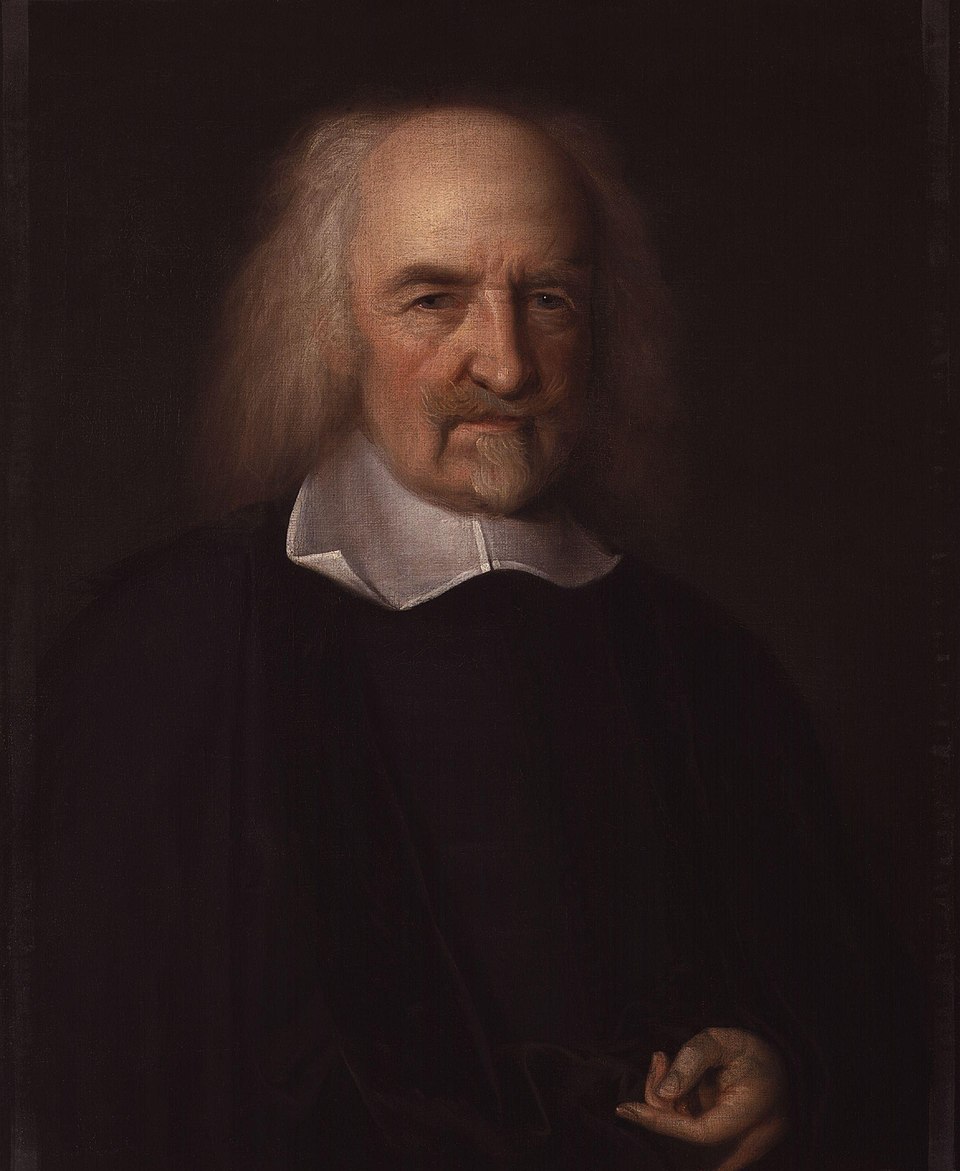 1Hobbes1588 – 1679Leviathan · Chapter 17
THE final cause, end, or design of men (who naturally love liberty, and dominion over others) in the introduction of that restraint upon themselves, in which we see them live in Commonwealths, is the foresight of their own preservation, and of a more contented life thereby; that is to say, of getting themselves out from that miserable condition of war which is necessarily consequent, as hath been shown, to the natural passions of men when there is no visible power to keep them in awe, and tie them by fear of punishment to the performance of their covenants, and observation of those laws of nature set down in the fourteenth and fifteenth chapters.
For the laws of nature, as justice, equity, modesty, mercy, and, in sum, doing to others as we would be done to, of themselves, without the terror of some power to cause them to be observed, are contrary to our natural passions, that carry us to partiality, pride, revenge, and the like. And covenants, without the sword, are but words and of no strength to secure a man at all. Therefore, notwithstanding the laws of nature (which every one hath then kept, when he has the will to keep them, when he can do it safely), if there be no power erected, or not great enough for our security, every man will and may lawfully rely on his own strength and art for caution against all other men. And in all places, where men have lived by small families, to rob and spoil one another has been a trade, and so far from being reputed against the law of nature that the greater spoils they gained, the greater was their honour; and men observed no other laws therein but the laws of honour; that is, to abstain from cruelty, leaving to men their lives and instruments of husbandry. And as small families did then; so now do cities and kingdoms, which are but greater families (for their own security), enlarge their dominions upon all pretences of danger, and fear of invasion, or assistance that may be given to invaders; endeavour as much as they can to subdue or weaken their neighbours by open force, and secret arts, for want of other caution, justly; and are remembered for it in after ages with honour.
Nor is it the joining together of a small number of men that gives them this security; because in small numbers, small additions on the one side or the other make the advantage of strength so great as is sufficient to carry the victory, and therefore gives encouragement to an invasion. The multitude sufficient to confide in for our security is not determined by any certain number, but by comparison with the enemy we fear; and is then sufficient when the odds of the enemy is not of so visible and conspicuous moment to determine the event of war, as to move him to attempt.
And be there never so great a multitude; yet if their actions be directed according to their particular judgements, and particular appetites, they can expect thereby no defence, nor protection, neither against a common enemy, nor against the injuries of one another. For being distracted in opinions concerning the best use and application of their strength, they do not help, but hinder one another, and reduce their strength by mutual opposition to nothing: whereby they are easily, not only subdued by a very few that agree together, but also, when there is no common enemy, they make war upon each other for their particular interests. For if we could suppose a great multitude of men to consent in the observation of justice, and other laws of nature, without a common power to keep them all in awe, we might as well suppose all mankind to do the same; and then there neither would be, nor need to be, any civil government or Commonwealth at all, because there would be peace without subjection.
Nor is it enough for the security, which men desire should last all the time of their life, that they be governed and directed by one judgement for a limited time; as in one battle, or one war. For though they obtain a victory by their unanimous endeavour against a foreign enemy, yet afterwards, when either they have no common enemy, or he that by one part is held for an enemy is by another part held for a friend, they must needs by the difference of their interests dissolve, and fall again into a war amongst themselves.
It is true that certain living creatures, as bees and ants, live sociably one with another (which are therefore by Aristotle numbered amongst political creatures), and yet have no other direction than their particular judgements and appetites; nor speech, whereby one of them can signify to another what he thinks expedient for the common benefit: and therefore some man may perhaps desire to know why mankind cannot do the same. To which I answer,
First, that men are continually in competition for honour and dignity, which these creatures are not; and consequently amongst men there ariseth on that ground, envy, and hatred, and finally war; but amongst these not so.
Secondly, that amongst these creatures the common good differeth not from the private; and being by nature inclined to their private, they procure thereby the common benefit. But man, whose joy consisteth in comparing himself with other men, can relish nothing but what is eminent.
Thirdly, that these creatures, having not, as man, the use of reason, do not see, nor think they see, any fault in the administration of their common business: whereas amongst men there are very many that think themselves wiser and abler to govern the public better than the rest, and these strive to reform and innovate, one this way, another that way; and thereby bring it into distraction and civil war.
Fourthly, that these creatures, though they have some use of voice in making known to one another their desires and other affections, yet they want that art of words by which some men can represent to others that which is good in the likeness of evil; and evil, in the likeness of good; and augment or diminish the apparent greatness of good and evil, discontenting men and troubling their peace at their pleasure.
Fifthly, irrational creatures cannot distinguish between injury and damage; and therefore as long as they be at ease, they are not offended with their fellows: whereas man is then most troublesome when he is most at ease; for then it is that he loves to show his wisdom, and control the actions of them that govern the Commonwealth.
Lastly, the agreement of these creatures is natural; that of men is by covenant only, which is artificial: and therefore it is no wonder if there be somewhat else required, besides covenant, to make their agreement constant and lasting; which is a common power to keep them in awe and to direct their actions to the common benefit.
The only way to erect such a common power, as may be able to defend them from the invasion of foreigners, and the injuries of one another, and thereby to secure them in such sort as that by their own industry and by the fruits of the earth they may nourish themselves and live contentedly, is to confer all their power and strength upon one man, or upon one assembly of men, that may reduce all their wills, by plurality of voices, unto one will: which is as much as to say, to appoint one man, or assembly of men, to bear their person; and every one to own and acknowledge himself to be author of whatsoever he that so beareth their person shall act, or cause to be acted, in those things which concern the common peace and safety; and therein to submit their wills, every one to his will, and their judgements to his judgement. This is more than consent, or concord; it is a real unity of them all in one and the same person, made by covenant of every man with every man, in such manner as if every man should say to every man: I authorise and give up my right of governing myself to this man, or to this assembly of men, on this condition; that thou give up, thy right to him, and authorise all his actions in like manner. This done, the multitude so united in one person is called a COMMONWEALTH; in Latin, CIVITAS. This is the generation of that great LEVIATHAN, or rather, to speak more reverently, of that mortal god to which we owe, under the immortal God, our peace and defence. For by this authority, given him by every particular man in the Commonwealth, he hath the use of so much power and strength conferred on him that, by terror thereof, he is enabled to form the wills of them all, to peace at home, and mutual aid against their enemies abroad. And in him consisteth the essence of the Commonwealth; which, to define it, is: one person, of whose acts a great multitude, by mutual covenants one with another, have made themselves every one the author, to the end he may use the strength and means of them all as he shall think expedient for their peace and common defence.
And he that carryeth this person is called sovereign, and said to have sovereign power; and every one besides, his subject.
The attaining to this sovereign power is by two ways. One, by natural force: as when a man maketh his children to submit themselves, and their children, to his government, as being able to destroy them if they refuse; or by war subdueth his enemies to his will, giving them their lives on that condition. The other, is when men agree amongst themselves to submit to some man, or assembly of men, voluntarily, on confidence to be protected by him against all others. This latter may be called a political Commonwealth, or Commonwealth by Institution; and the former, a Commonwealth by acquisition. And first, I shall speak of a Commonwealth by institution.
— Hobbes, Leviathan, Chapter 17
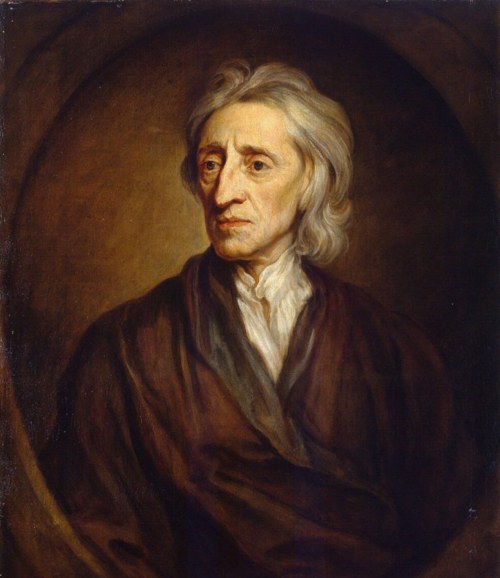 2Locke1632 – 1704Second Treatise of Civil Government · Chapter 16
THOUGH governments can originally have no other rise than that before mentioned, nor polities be founded on any thing but the consent of the people; yet such have been the disorders ambition has filled the world with, that in the noise of war, which makes so great a part of the history of mankind, this consent is little taken notice of: and therefore many have mistaken the force of arms for the consent of the people, and reckon conquest as one of the originals of government. But conquest is as far from setting up any government, as demolishing an house is from building a new one in the place. Indeed, it often makes way for a new frame of a common-wealth, by destroying the former; but, without the consent of the people, can never erect a new one.
§176. That the aggressor, who puts himself into the state of war with another, and unjustly invades another man’s right, can, by such an unjust war, never come to have a right over the conquered, will be easily agreed by all men, who will not think, that robbers and pyrates have a right of empire over whomsoever they have force enough to master; or that men are bound by promises, which unlawful force extorts from them. Should a robber break into my house, and with a dagger at my throat make me seal deeds to convey my estate to him, would this give him any title? Just such a title, by his sword, has an unjust conqueror, who forces me into submission. The injury and the crime is equal, whether committed by the wearer of a crown, or some petty villain. The title of the offender, and the number of his followers, make no difference in the offence, unless it be to aggravate it. The only difference is, great robbers punish little ones, to keep them in their obedience; but the great ones are rewarded with laurels and triumphs, because they are too big for the weak hands of justice in this world, and have the power in their own possession, which should punish offenders. What is my remedy against a robber, that so broke into my house? Appeal to the law for justice. But perhaps justice is denied, or I am crippled and cannot stir, robbed and have not the means to do it. If God has taken away all means of seeking remedy, there is nothing left but patience. But my son, when able, may seek the relief of the law, which I am denied: he or his son may renew his appeal, till he recover his right. But the conquered, or their children, have no court, no arbitrator on earth to appeal to. Then they may appeal, as lephtha did, to heaven, and repeat their appeal till they have recovered the native right of their ancestors, which was, to have such a legislative over them, as the majority should approve, and freely acquiesce in. If it be objected, This would cause endless trouble; I answer, no more than justice does, where she lies open to all that appeal to her. He that troubles his neighbour without a cause, is punished for it by the justice of the court he appeals to: and he that appeals to heaven must be sure he has right on his side; and a right too that is worth the trouble and cost of the appeal, as he will answer at a tribunal that cannot be deceived, and will be sure to retribute to every one according to the mischiefs he hath created to his fellow subjects; that is, any part of mankind: from whence it is plain, that he that conquers in an unjust war can thereby have no title to the subjection and obedience of the conquered.
§177. But supposing victory favours the right side, let us consider a conqueror in a lawful war, and see what power he gets, and over whom.
First, It is plain he gets no power by his conquest over those that conquered with him. They that fought on his side cannot suffer by the conquest, but must at least be as much freemen as they were before. And most commonly they serve upon terms, and on condition to share with their leader, and enjoy a part of the spoil, and other advantages that attend the conquering sword; or at least have a part of the subdued country bestowed upon them. And the conquering people are not, I hope, to be slaves by conquest, and wear their laurels only to shew they are sacrifices to their leaders triumph. They that found absolute monarchy upon the title of the sword, make their heroes, who are the founders of such monarchies, arrant Draw-can-sirs, and forget they had any officers and soldiers that fought on their side in the battles they won, or assisted them in the subduing, or shared in possessing, the countries they mastered. We are told by some, that the English monarchy is founded in the Norman conquest, and that our princes have thereby a title to absolute dominion: which if it were true, (as by the history it appears otherwise) and that William had a right to make war on this island; yet his dominion by conquest could reach no farther than to the Saxons and Britons, that were then inhabitants of this country. The Normans that came with him, and helped to conquer, and all descended from them, are freemen, and no subjects by conquest; let that give what dominion it will. And if 1, or any body else, shall claim freedom, as derived from them, it will be very hard to prove the contrary: and it is plain, the law, that has made no distinction between the one and the other, intends not there should be any difference in their freedom or privileges.
§178. But supposing, which seldom happens, that the conquerors and conquered never incorporate into one people, under the same laws and freedom; let us see next what power a lawful conqueror has over the subdued: and that I say is purely despotical. He has an absolute power over the lives of those who by an unjust war have forfeited them; but not over the lives or fortunes of those who engaged not in the war, nor over the possessions even of those who were actually engaged in it.
§179. Secondly, I say then the conqueror gets no power but only over those who have actually assisted, concurred, or consented to that unjust force that is used against him: for the people having given to their governors no power to do an unjust thing, such as is to make an unjust war, (for they never had such a power in themselves) they ought not to be charged as guilty of the violence and unjustice that is committed in an unjust war, any farther than they actually abet it; no more than they are to be thought guilty of any violence or oppression their governors should use upon the people themselves, or any part of their fellow subjects, they having empowered them no more to the one than to the other. Conquerors, it is true, seldom trouble themselves to make the distinction, but they willingly permit the confusion of war to sweep all together: but yet this alters not the right; for the conquerors power over the lives of the conquered, being only because they have used force to do, or maintain an injustice, he can have that power only over those who have concurred in that force; all the rest are innocent; and he has no more title over the people of that country, who have done him no injury, and so have made no forfeiture of their lives, than he has over any other, who, without any injuries or provocations, have lived upon fair terms with him.
§180. Thirdly, The power a conqueror gets over those he overcomes in a just war, is perfectly despotical: he has an absolute power over the lives of those, who, by putting themselves in a state of war, have forfeited them; but he has not thereby a right and title to their possessions. This I doubt not, but at first sight will seem a strange doctrine, it being so quite contrary to the practice of the world; there being nothing more familiar in speaking of the dominion of countries, than to say such an one conquered it; as if conquest, without any more ado, conveyed a right of possession. But when we consider, that the practice of the strong and powerful, how universal soever it may be, is seldom the rule of right, however it be one part of the subjection of the conquered, not to argue against the conditions cut out to them by the conquering sword.
§181. Though in all war there be usually a complication of force and damage, and the aggressor seldom fails to harm the estate, when he uses force against the persons of those he makes war upon; yet it is the use of force only that puts a man into the state of war: for whether by force he begins the injury, or else having quietly, and by fraud, done the injury, he refuses to make reparation, and by force maintains it, (which is the same thing, as at first to have done it by force) it is the unjust use of force that makes the war: for he that breaks open my house, and violently turns me out of doors; or having peaceably got in, by force keeps me out, does in effect the same thing; supposing we are in such a state, that we have no common judge on earth, whom I may appeal to, and to whom we are both obliged to submit: for of such I am now speaking. It is the unjust use of force then, that puts a man into the state of war with another; and thereby he that is guilty of it makes a forfeiture of his life: for quitting reason, which is the rule given between man and man, and using force, the way of beasts, he becomes liable to be destroyed by him he uses force against, as any savage ravenous beast, that is dangerous to his being.
§182. But because the miscarriages of the father are no faults of the children, and they may be rational and peaceable, notwithstanding the brutishness and injustice of the father; the father, by his miscarriages and violence, can forfeit but his own life, but involves not his children in his guilt or destruction. His goods, which nature, that willeth the preservation of all mankind as much as is possible, hath made to belong to the children to keep them from perishing, do still continue to belong to his children: for supposing them not to have joined in the war, either thro’ infancy, absence, or choice, they have done nothing to forfeit them: nor has the conqueror any right to take them away, by the bare title of having subdued him that by force attempted his destruction; though perhaps he may have some right to them, to repair the damages he has sustained by the war, and the defence of his own right; which how far it reaches to the possessions of the conquered, we shall see by and by. So that he that by conquest has a right over a man’s person to destroy him if he pleases, has not thereby a right over his estate to possess and enjoy it: for it is the brutal force the aggressor has used, that gives his adversary a right to take away his life, and destroy him if he pleases, as a noxious creature; but it is damage sustained that alone gives him title to another man’s goods: for though I may kill a thief that sets on me in the highway, yet I may not (which seems less) take away his money, and let him go: this would be robbery on my side. His force, and the state of war he put himself in, made him forfeit his life, but gave me no title to his goods. The right then of conquest extends only to the lives of those who joined in the war, not to their estates, but only in order to make reparation for the damages received, and the charges of the war, and that too with reservation of the right of the innocent wife and children.
— Locke, Second Treatise of Civil Government, Chapter 16
3Hobbes1588 – 1679Leviathan · Chapter 1
CONCERNING the thoughts of man, I will consider them first singly, and afterwards in train or dependence upon one another. Singly, they are every one a representation or appearance of some quality, or other accident of a body without us, which is commonly called an object. Which object worketh on the eyes, ears, and other parts of man's body, and by diversity of working produceth diversity of appearances.
The original of them all is that which we call sense, (for there is no conception in a man's mind which hath not at first, totally or by parts, been begotten upon the organs of sense). The rest are derived from that original.
To know the natural cause of sense is not very necessary to the business now in hand; and I have elsewhere written of the same at large. Nevertheless, to fill each part of my present method, I will briefly deliver the same in this place.
The cause of sense is the external body, or object, which presseth the organ proper to each sense, either immediately, as in the taste and touch; or mediately, as in seeing, hearing, and smelling: which pressure, by the mediation of nerves and other strings and membranes of the body, continued inwards to the brain and heart, causeth there a resistance, or counter-pressure, or endeavour of the heart to deliver itself: which endeavour, because outward, seemeth to be some matter without. And this seeming, or fancy, is that which men call sense; and consisteth, as to the eye, in a light, or colour figured; to the ear, in a sound; to the nostril, in an odour; to the tongue and palate, in a savour; and to the rest of the body, in heat, cold, hardness, softness, and such other qualities as we discern by feeling. All which qualities called sensible are in the object that causeth them but so many several motions of the matter, by which it presseth our organs diversely. Neither in us that are pressed are they anything else but diverse motions (for motion produceth nothing but motion). But their appearance to us is fancy, the same waking that dreaming. And as pressing, rubbing, or striking the eye makes us fancy a light, and pressing the ear produceth a din; so do the bodies also we see, or hear, produce the same by their strong, though unobserved action. For if those colours and sounds were in the bodies or objects that cause them, they could not be severed from them, as by glasses and in echoes by reflection we see they are: where we know the thing we see is in one place; the appearance, in another. And though at some certain distance the real and very object seem invested with the fancy it begets in us; yet still the object is one thing, the image or fancy is another. So that sense in all cases is nothing else but original fancy caused (as I have said) by the pressure that is, by the motion of external things upon our eyes, ears, and other organs, thereunto ordained.
But the philosophy schools, through all the universities of Christendom, grounded upon certain texts of Aristotle, teach another doctrine; and say, for the cause of vision, that the thing seen sendeth forth on every side a visible species, (in English) a visible show, apparition, or aspect, or a being seen; the receiving whereof into the eye is seeing. And for the cause of hearing, that the thing heard sendeth forth an audible species, that is, an audible aspect, or audible being seen; which, entering at the ear, maketh hearing. Nay, for the cause of understanding also, they say the thing understood sendeth forth an intelligible species, that is, an intelligible being seen; which, coming into the understanding, makes us understand. I say not this, as disapproving the use of universities: but because I am to speak hereafter of their office in a Commonwealth, I must let you see on all occasions by the way what things would be amended in them; amongst which the frequency of insignificant speech is one.
— Hobbes, Leviathan, Chapter 1
4Locke1632 – 1704Essay Concerning Human Understanding · Book 1, Chapter 1
Inquiry into the understanding, pleasant and useful. Since it is the understanding that sets man above the rest of sensible beings, and gives him all the advantage and dominion which he has over them; it is certainly a subject, even for its nobleness, worth our labour to inquire into. The understanding, like the eye, whilst it makes us see and perceive all other things, takes no notice of itself; and it requires art and pains to set it at a distance and make it its own object. But whatever be the difficulties that lie in the way of this inquiry; whatever it be that keeps us so much in the dark to ourselves; sure I am that all the light we can let in upon our minds, all the acquaintance we can make with our own understandings, will not only be very pleasant, but bring us great advantage, in directing our thoughts in the search of other things.
2. Design. This, therefore, being my purpose — to inquire into the original, certainty, and extent of human knowledge, together with the grounds and degrees of belief, opinion, and assent; — I shall not at present meddle with the physical consideration of the mind; or trouble myself to examine wherein its essence consists; or by what motions of our spirits or alterations of our bodies we come to have any sensation by our organs, or any ideas in our understandings; and whether those ideas do in their formation, any or all of them, depend on matter or not. These are speculations which, however curious and entertaining, I shall decline, as lying out of my way in the design I am now upon. It shall suffice to my present purpose, to consider the discerning faculties of a man, as they are employed about the objects which they have to do with. And I shall imagine I have not wholly misemployed myself in the thoughts I shall have on this occasion, if, in this historical, plain method, I can give any account of the ways whereby our understandings come to attain those notions of things we have; and can set down any measures of the certainty of our knowledge; or the grounds of those persuasions which are to be found amongst men, so various, different, and wholly contradictory; and yet asserted somewhere or other with such assurance and confidence, that he that shall take a view of the opinions of mankind, observe their opposition, and at the same time consider the fondness and devotion wherewith they are embraced, the resolution and eagerness wherewith they are maintained, may perhaps have reason to suspect, that either there is no such thing as truth at all, or that mankind hath no sufficient means to attain a certain knowledge of it.
3. Method. It is therefore worth while to search out the bounds between opinion and knowledge; and examine by what measures, in things whereof we have no certain knowledge, we ought to regulate our assent and moderate our persuasion. In order whereunto I shall pursue this following method:—
First, I shall inquire into the original of those ideas, notions, or whatever else you please to call them, which a man observes, and is conscious to himself he has in his mind; and the ways whereby the understanding comes to be furnished with them.
Secondly, I shall endeavour to show what knowledge the understanding hath by those ideas; and the certainty, evidence, and extent of it.
Thirdly, I shall make some inquiry into the nature and grounds of faith or opinion: whereby I mean that assent which we give to any proposition as true, of whose truth yet we have no certain knowledge. And here we shall have occasion to examine the reasons and degrees of assent.
4. Useful to know the extent of our comprehension. If by this inquiry into the nature of the understanding, I can discover the powers thereof; how far they reach; to what things they are in any degree proportionate; and where they fail us, I suppose it may be of use to prevail with the busy mind of man to be more cautious in meddling with things exceeding its comprehension; to stop when it is at the utmost extent of its tether; and to sit down in a quiet ignorance of those things which, upon examination, are found to be beyond the reach of our capacities. We should not then perhaps be so forward, out of an affectation of an universal knowledge, to raise questions, and perplex ourselves and others with disputes about things to which our understandings are not suited; and of which we cannot frame in our minds any clear or distinct perceptions, or whereof (as it has perhaps too often happened) we have not any notions at all. If we can find out how far the understanding can extend its view; how far it has faculties to attain certainty; and in what cases it can only judge and guess, we may learn to content ourselves with what is attainable by us in this state.
5. Our capacity suited to our state and concerns. For though the comprehension of our understandings comes exceeding short of the vast extent of things, yet we shall have cause enough to magnify the bountiful Author of our being, for that proportion and degree of knowledge he has bestowed on us, so far above all the rest of the inhabitants of this our mansion. Men have reason to be well satisfied with what God hath thought fit for them, since he hath given them (as St. Peter says) pana pros zoen kaieusebeian, whatsoever is necessary for the conveniences of life and information of virtue; and has put within the reach of their discovery, the comfortable provision for this life, and the way that leads to a better. How short soever their knowledge may come of an universal or perfect comprehension of whatsoever is, it yet secures their great concernments, that they have light enough to lead them to the knowledge of their Maker, and the sight of their own duties. Men may find matter sufficient to busy their heads, and employ their hands with variety, delight, and satisfaction, if they will not boldly quarrel with their own constitution, and throw away the blessings their hands are filled with, because they are not big enough to grasp everything. We shall not have much reason to complain of the narrowness of our minds, if we will but employ them about what may be of use to us; for of that they are very capable. And it will be an unpardonable, as well as childish peevishness, if we undervalue the advantages of our knowledge, and neglect to improve it to the ends for which it was given us, because there are some things that are set out of the reach of it. It will be no excuse to an idle and untoward servant, who would not attend his business by candle light, to plead that he had not broad sunshine. The Candle that is set up in us shines bright enough for all our purposes. The discoveries we can make with this ought to satisfy us; and we shall then use our understandings right, when we entertain all objects in that way and proportion that they are suited to our faculties, and upon those grounds they are capable of being proposed to us; and not peremptorily or intemperately require demonstration, and demand certainty, where probability only is to be had, and which is sufficient to govern all our concernments. If we will disbelieve everything, because we cannot certainly know all things, we shall do muchwhat as wisely as he who would not use his legs, but sit still and perish, because he had no wings to fly.
6. Knowledge of our capacity a cure of scepticism and idleness. When we know our own strength, we shall the better know what to undertake with hopes of success; and when we have well surveyed the powers of our own minds, and made some estimate what we may expect from them, we shall not be inclined either to sit still, and not set our thoughts on work at all, in despair of knowing anything; nor on the other side, question everything, and disclaim all knowledge, because some things are not to be understood. It is of great use to the sailor to know the length of his line, though he cannot with it fathom all the depths of the ocean. It is well he knows that it is long enough to reach the bottom, at such places as are necessary to direct his voyage, and caution him against running upon shoals that may ruin him. Our business here is not to know all things, but those which concern our conduct. If we can find out those measures, whereby a rational creature, put in that state in which man is in this world, may and ought to govern his opinions, and actions depending thereon, we need not to be troubled that some other things escape our knowledge.
7. Occasion of this essay. This was that which gave the first rise to this Essay concerning the understanding. For I thought that the first step towards satisfying several inquiries the mind of man was very apt to run into, was, to take a survey of our own understandings, examine our own powers, and see to what things they were adapted. Till that was done I suspected we began at the wrong end, and in vain sought for satisfaction in a quiet and sure possession of truths that most concerned us, whilst we let loose our thoughts into the vast ocean of Being; as if all that boundless extent were the natural and undoubted possession of our understandings, wherein there was nothing exempt from its decisions, or that escaped its comprehension. Thus men, extending their inquiries beyond their capacities, and letting their thoughts wander into those depths where they can find no sure footing, it is no wonder that they raise questions and multiply disputes, which, never coming to any clear resolution, are proper only to continue and increase their doubts, and to confirm them at last in perfect scepticism. Whereas, were the capacities of our understandings well considered, the extent of our knowledge once discovered, and the horizon found which sets the bounds between the enlightened and dark parts of things; between what is and what is not comprehensible by us, men would perhaps with less scruple acquiesce in the avowed ignorance of the one, and employ their thoughts and discourse with more advantage and satisfaction in the other.
8. What “Idea” stands for. Thus much I thought necessary to say concerning the occasion of this Inquiry into human Understanding. But, before I proceed on to what I have thought on this subject, I must here in the entrance beg pardon of my reader for the frequent use of the word idea, which he will find in the following treatise. It being that term which, I think, serves best to stand for whatsoever is the object of the understanding when a man thinks, I have used it to express whatever is meant by phantasm, notion, species, or whatever it is which the mind can be employed about in thinking; and I could not avoid frequently using it.
I presume it will be easily granted me, that there are such ideas in men’s minds: every one is conscious of them in himself; and men’s words and actions will satisfy him that they are in others.
Our first inquiry then shall be — how they come into the mind.
— Locke, Essay Concerning Human Understanding, Book 1, Chapter 1
5Locke1632 – 1704Second Treatise of Civil Government · Chapter 6
IT may perhaps be censured as an impertinent criticism, in a discourse of this nature, to find fault with words and names, that have obtained in the world: and yet possibly it may not be amiss to offer new ones, when the old are apt to lead men into mistakes, as this of paternal power probably has done, which seems so to place the power of parents over their children wholly in the father, as if the mother had no share in it; whereas, if we consult reason or revelation, we shall find, she hath an equal title. This may give one reason to ask, whether this might not be more properly called parental power? for whatever obligation nature and the right of generation lays on children, it must certainly bind them equal to both the concurrent causes of it. And accordingly we see the positive law of God every where joins them together, without distinction, when it commands the obedience of children, Honour thy father and thy mother, Exod. xx. 12. Whosoever curseth his father or his mother, Lev. xx. 9. Ye shall fear every man his mother and his father, Lev. xix. 3. Children, obey your parents, &c. Eph. vi. 1. is the stile of the Old and New Testament.
§53. Had but this one thing been well considered, without looking any deeper into the matter, it might perhaps have kept men from running into those gross mistakes, they have made, about this power of parents; which, however it might, without any great harshness, bear the name of absolute dominion, and regal authority, when under the title of paternal power it seemed appropriated to the father, would yet have founded but oddly, and in the very name shewn the absurdity, if this supposed absolute power over children had been called parental; and thereby have discovered, that it belonged to the mother too: for it will but very ill serve the turn of those men, who contend so much for the absolute power and authority of the fatherhood, as they call it, that the mother should have any share in it; and it would have but ill supported the monarchy they contend for, when by the very name it appeared, that that fundamental authority, from whence they would derive their government of a single person only, was not placed in one, but two persons jointly. But to let this of names pass.
§54. Though I have said above, Chap. II. That all men by nature are equal, I cannot be supposed to understand all sorts of equality: age or virtue may give men a just precedency: excellency of parts and merit may place others above the common level: birth may subject some, and alliance or benefits others, to pay an observance to those to whom nature, gratitude, or other respects, may have made it due: and yet all this consists with the equality, which all men are in, in respect of jurisdiction or dominion one over another; which was the equality I there spoke of, as proper to the business in hand, being that equal right, that every man hath, to his natural freedom, without being subjected to the will or authority of any other man.
§55. Children, I confess, are not born in this full state of equality, though they are born to it. Their parents have a sort of rule and jurisdiction over them, when they come into the world, and for some time after; but it is but a temporary one. The bonds of this subjection are like the swaddling clothes they art wrapt up in, and supported by, in the weakness of their infancy: age and reason as they grow up, loosen them, till at length they drop quite off, and leave a man at his own free disposal.
§56. Adam was created a perfect man, his body and mind in full possession of their strength and reason, and so was capable, from the first instant of his being to provide for his own support and preservation, and govern his actions according to the dictates of the law of reason which God had implanted in him. From him the world is peopled with his descendants, who are all born infants, weak and helpless, without knowledge or understanding: but to supply the defects of this imperfect state, till the improvement of growth and age hath removed them, Adam and Eve, and after them all parents were, by the law of nature, under an obligation to preserve, nourish, and educate the children they had begotten; not as their own workmanship, but the workmanship of their own maker, the Almighty, to whom they were to be accountable for them.
§57. The law, that was to govern Adam, was the same that was to govern all his posterity, the law of reason. But his offspring having another way of entrance into the world, different from him, by a natural birth, that produced them ignorant and without the use of reason, they were not presently under that law; for no body can be under a law, which is not promulgated to him; and this law being promulgated or made known by reason only, he that is not come to the use of his reason, cannot be said to be under this law; and Adam’s children, being not presently as soon as born under this law of reason, were not presently free: for law, in its true notion, is not so much the limitation as the direction of a free and intelligent agent to his proper interest, and prescribes no farther than is for the general good of those under that law: could they be happier without it, the law, as an useless thing, would of itself vanish; and that ill deserves the name of confinement which hedges us in only from bogs and precipices. So that, however it may be mistaken, the end of law is not to abolish or restrain, but to preserve and enlarge freedom: for in all the states of created beings capable of laws, where there is no law, there is no freedom: for liberty is, to be free from restraint and violence from others; which cannot be, where there is no law: but freedom is not, as we are told, a liberty for every man to do what he lists: (for who could be free, when every other man’s humour might domineer over him?) but a liberty to dispose, and order as he lists, his person, actions, possessions, and his whole property, within the allowance of those laws under which he is, and therein not to be subject to the arbitrary will of another, but freely follow his own.
§58. The power, then, that parents have over their children, arises from that duty which is incumbent on them, to take care of their off-spring, during the imperfect state of childhood. To inform the mind, and govern the actions of their yet ignorant nonage, till reason shall take its place, and ease them of that trouble, is what the children want, and the parents are bound to: for God having given man an understanding to direct his actions, has allowed him a freedom of will, and liberty of acting, as properly belonging thereunto, within the bounds of that law he is under. But whilst he is in an estate, wherein he has not understanding of his own to direct his will, he is not to have any will of his own to follow: he that understands for him, must will for him too; he must prescribe to his will, and regulate his actions; but when he comes to the estate that made his father a freeman, the son is a freeman too.
§59. This holds in all the laws a man is under, whether natural or civil. Is a man under the law of nature? What made him free of that law? what gave him a free disposing of his property, according to his own will, within the compass of that law? I answer, a state of maturity wherein he might be supposed capable to know that law, that so he might keep his actions within the bounds of it. When he has acquired that state, he is presumed to know how far that law is to be his guide, and how far he may make use of his freedom, and so comes to have it; till then, some body else must guide him, who is presumed to know how far the law allows a liberty. If such a state of reason, such an age of discretion made him free, the same shall make his son free too. Is a man under the law of England? What made him free of that law? that is, to have the liberty to dispose of his actions and possessions according to his own will, within the permission of that law? A capacity of knowing that law; which is supposed by that law, at the age of one and twenty years, and in some cases sooner. If this made the father free, it shall make the son free too. Till then we see the law allows the son to have no will, but he is to be guided by the will of his father or guardian, who is to understand for him. And if the father die, and fail to substitute a deputy in his trust; if he hath not provided a tutor, to govern his son, during his minority, during his want of understanding, the law takes care to do it; some other must govern him, and be a will to him, till he hath attained to a state of freedom, and his understanding be fit to take the government of his will. But after that, the father and son are equally free as much as tutor and pupil after nonage; equally subjects of the same law together, without any dominion left in the father over the life, liberty, or estate of his son, whether they be only in the state and under the law of nature, or under the positive laws of an established government.
§60. But if, through defects that may happen out of the ordinary course of nature, any one comes not to such a degree of reason, wherein he might be supposed capable of knowing the law, and so living within the rules of it, he is never capable of being a free man, he is never let loose to the disposure of his own will (because he knows no bounds to it, has not understanding, its proper guide) but is continued under the tuition and government of others, all the time his own understanding is uncapable of that charge. And so lunatics and ideots are never set free from the government of their parents; children, who are not as yet come unto those years whereat they may have; and innocents which are excluded by a natural defect from ever having; thirdly, madmen, which for the present cannot possibly have the use of right reason to guide themselves, have for their guide, the reason that guideth other men which are tutors over them, to seek and procure their good for them, says Hooker, Eccl. Pol. lib. i. sec. 7. All which seems no more than that duty, which God and nature has laid on man, as well as other creatures, to preserve their offspring, till they can be able to shift for themselves, and will scarce amount to an instance or proof of parents regal authority.
— Locke, Second Treatise of Civil Government, Chapter 6
6Locke1632 – 1704A Letter on Toleration
A Letter Concerning Toleration / John Locke
A Letter
Concerning Toleration
John Locke
Translated by William Popple
A Letter Concerning Toleration
Honoured Sir,
Since you are pleased to inquire what are my thoughts about the mutual toleration of Christians in their different professions of religion, I must needs answer you freely that I esteem that toleration to be the chief characteristic mark of the true Church. For whatsoever some people boast of the antiquity of places and names, or of the pomp of their outward worship; others, of the reformation of their discipline; all, of the orthodoxy of their faith — for everyone is orthodox to himself — these things, and all others of this nature, are much rather marks of men striving for power and empire over one another than of the Church of Christ. Let anyone have never so true a claim to all these things, yet if he be destitute of charity, meekness, and good-will in general towards all mankind, even to those that are not Christians, he is certainly yet short of being a true Christian himself. “The kings of the Gentiles exercise leadership over them,” said our Saviour to his disciples, “but ye shall not be so.”1 The business of true religion is quite another thing. It is not instituted in order to the erecting of an external pomp, nor to the obtaining of ecclesiastical dominion, nor to the exercising of compulsive force, but to the regulating of men’s lives, according to the rules of virtue and piety. Whosoever will list himself under the banner of Christ, must, in the first place and above all things, make war upon his own lusts and vices. It is in vain for any man to unsurp the name of Christian, without holiness of life, purity of manners, benignity and meekness of spirit. “Let everyone that nameth the name of Christ, depart from iniquity.”2 “Thou, when thou art converted, strengthen thy brethren,” said our Lord to Peter.3 It would, indeed, be very hard for one that appears careless about his own salvation to persuade me that he were extremely concerned for mine. For it is impossible that those should sincerely and heartily apply themselves to make other people Christians, who have not really embraced the Christian religion in their own hearts. If the Gospel and the apostles may be credited, no man can be a Christian without charity and without that faith which works, not by force, but by love. Now, I appeal to the consciences of those that persecute, torment, destroy, and kill other men upon pretence of religion, whether they do it out of friendship and kindness towards them or no? And I shall then indeed, and not until then, believe they do so, when I shall see those fiery zealots correcting, in the same manner, their friends and familiar acquaintance for the manifest sins they commit against the precepts of the Gospel; when I shall see them persecute with fire and sword the members of their own communion that are tainted with enormous vices and without amendment are in danger of eternal perdition; and when I shall see them thus express their love and desire of the salvation of their souls by the infliction of torments and exercise of all manner of cruelties. For if it be out of a principle of charity, as they pretend, and love to men’s souls that they deprive them of their estates, maim them with corporal punishments, starve and torment them in noisome prisons, and in the end even take away their lives — I say, if all this be done merely to make men Christians and procure their salvation, why then do they suffer whoredom, fraud, malice, and such-like enormities, which (according to the apostle)4 manifestly relish of heathenish corruption, to predominate so much and abound amongst their flocks and people? These, and such-like things, are certainly more contrary to the glory of God, to the purity of the Church, and to the salvation of souls, than any conscientious dissent from ecclesiastical decisions, or separation from public worship, whilst accompanied with innocence of life. Why, then, does this burning zeal for God, for the Church, and for the salvation of souls — burning I say, literally, with fire and faggot — pass by those moral vices and wickednesses, without any chastisement, which are acknowledged by all men to be diametrically opposite to the profession of Christianity, and bend all its nerves either to the introducing of ceremonies, or to the establishment of opinions, which for the most part are about nice and intricate matters, that exceed the capacity of ordinary understandings? Which of the parties contending about these things is in the right, which of them is guilty of schism or heresy, whether those that domineer or those that suffer, will then at last be manifest when the causes of their separation comes to be judged of He, certainly, that follows Christ, embraces His doctrine, and bears His yoke, though he forsake both father and mother, separate from the public assemblies and ceremonies of his country, or whomsoever or whatsoever else he relinquishes, will not then be judged a heretic.
Now, though the divisions that are amongst sects should be allowed to be never so obstructive of the salvation of souls; yet, nevertheless, adultery, fornication, uncleanliness, lasciviousness, idolatry, and such-like things, cannot be denied to be works of the flesh, concerning which the apostle has expressly declared that “they who do them shall not inherit the kingdom of God.”5 Whosoever, therefore, is sincerely solicitous about the kingdom of God and thinks it his duty to endeavour the enlargement of it amongst men, ought to apply himself with no less care and industry to the rooting out of these immoralities than to the extirpation of sects. But if anyone do otherwise, and whilst he is cruel and implacable towards those that differ from him in opinion, he be indulgent to such iniquities and immoralities as are unbecoming the name of a Christian, let such a one talk never so much of the Church, he plainly demonstrates by his actions that it is another kingdom he aims at and not the advancement of the kingdom of God.
That any man should think fit to cause another man — whose salvation he heartily desires — to expire in torments, and that even in an unconverted state, would, I confess, seem very strange to me, and I think, to any other also. But nobody, surely, will ever believe that such a carriage can proceed from charity, love, or goodwill. If anyone maintain that men ought to be compelled by fire and sword to profess certain doctrines, and conform to this or that exterior worship, without any regard had unto their morals; if anyone endeavour to convert those that are erroneous unto the faith, by forcing them to profess things that they do not believe and allowing them to practise things that the Gospel does not permit, it cannot be doubted indeed but such a one is desirous to have a numerous assembly joined in the same profession with himself; but that he principally intends by those means to compose a truly Christian Church is altogether incredible. It is not, therefore, to be wondered at if those who do not really contend for the advancement of the true religion, and of the Church of Christ, make use of arms that do not belong to the Christian warfare. If, like the Captain of our salvation, they sincerely desired the good of souls, they would tread in the steps and follow the perfect example of that Prince of Peace, who sent out His soldiers to the subduing of nations, and gathering them into His Church, not armed with the sword, or other instruments of force, but prepared with the Gospel of peace and with the exemplary holiness of their conversation. This was His method. Though if infidels were to be converted by force, if those that are either blind or obstinate were to be drawn off from their errors by armed soldiers, we know very well that it was much more easy for Him to do it with armies of heavenly legions than for any son of the Church, how potent soever, with all his dragoons.
The toleration of those that differ from others in matters of religion is so agreeable to the Gospel of Jesus Christ, and to the genuine reason of mankind, that it seems monstrous for men to be so blind as not to perceive the necessity and advantage of it in so clear a light. I will not here tax the pride and ambition of some, the passion and uncharitable zeal of others. These are faults from which human affairs can perhaps scarce ever be perfectly freed; but yet such as nobody will bear the plain imputation of, without covering them with some specious colour; and so pretend to commendation, whilst they are carried away by their own irregular passions. But, however, that some may not colour their spirit of persecution and unchristian cruelty with a pretence of care of the public weal and observation of the laws; and that others, under pretence of religion, may not seek impunity for their libertinism and licentiousness; in a word, that none may impose either upon himself or others, by the pretences of loyalty and obedience to the prince, or of tenderness and sincerity in the worship of God; I esteem it above all things necessary to distinguish exactly the business of civil government from that of religion and to settle the just bounds that lie between the one and the other. If this be not done, there can be no end put to the controversies that will be always arising between those that have, or at least pretend to have, on the one side, a concernment for the interest of men’s souls, and, on the other side, a care of the commonwealth.
The commonwealth seems to me to be a society of men constituted only for the procuring, preserving, and advancing their own civil interests.
Civil interests I call life, liberty, health, and indolency of body; and the possession of outward things, such as money, lands, houses, furniture, and the like.
It is the duty of the civil magistrate, by the impartial execution of equal laws, to secure unto all the people in general and to every one of his subjects in particular the just possession of these things belonging to this life. If anyone presume to violate the laws of public justice and equity, established for the preservation of those things, his presumption is to be checked by the fear of punishment, consisting of the deprivation or diminution of those civil interests, or goods, which otherwise he might and ought to enjoy. But seeing no man does willingly suffer himself to be punished by the deprivation of any part of his goods, and much less of his liberty or life, therefore, is the magistrate armed with the force and strength of all his subjects, in order to the punishment of those that violate any other man’s rights.
Now that the whole jurisdiction of the magistrate reaches only to these civil concernments, and that all civil power, right and dominion, is bounded and confined to the only care of promoting these things; and that it neither can nor ought in any manner to be extended to the salvation of souls, these following considerations seem unto me abundantly to demonstrate.
— Locke, A Letter on Toleration
7Locke1632 – 1704Second Treatise of Civil Government · Chapter 19
HE that will with any clearness speak of the dissolution of government, ought in the first place to distinguish between the dissolution of the society and the dissolution of the government. That which makes the community, and brings men out of the loose state of nature, into one politic society, is the agreement which every one has with the rest to incorporate, and act as one body, and so be one distinct commonwealth. The usual, and almost only way whereby this union is dissolved, is the inroad of foreign force making a conquest upon them: for in that case, (not being able to maintain and support themselves, as one intire and independent body) the union belonging to that body which consisted therein, must necessarily cease, and so every one return to the state he was in before, with a liberty to shift for himself, and provide for his own safety, as he thinks fit, in some other society. Whenever the society is dissolved, it is certain the government of that society cannot remain. Thus conquerors swords often cut up governments by the roots, and mangle societies to pieces, separating the subdued or scattered multitude from the protection of, and dependence on, that society which ought to have preserved them from violence. The world is too well instructed in, and too forward to allow of, this way of dissolving of governments, to need any more to be said of it; and there wants not much argument to prove, that where the society is dissolved, the government cannot remain; that being as impossible, as for the frame of an house to subsist when the materials of it are scattered and dissipated by a whirl-wind, or jumbled into a confused heap by an earthquake.
§212. Besides this over-turning from without, governments are dissolved from within,
First, When the legislative is altered. Civil society being a state of peace, amongst those who are of it, from whom the state of war is excluded by the umpirage, which they have provided in their legislative, for the ending all differences that may arise amongst any of them, it is in their legislative, that the members of a commonwealth are united, and combined together into one coherent living body. This is the soul that gives form, life, and unity, to the common-wealth: from hence the several members have their mutual influence, sympathy, and connexion: and therefore, when the legislative is broken, or dissolved, dissolution and death follows: for the essence and union of the society consisting in having one will, the legislative, when once established by the majority, has the declaring, and as it were keeping of that will. The constitution of the legislative is the first and fundamental act of society, whereby provision is made for the continuation of their union, under the direction of persons, and bonds of laws, made by persons authorized thereunto, by the consent and appointment of the people, without which no one man, or number of men, amongst them, can have authority of making laws that shall be binding to the rest. When any one, or more, shall take upon them to make laws, whom the people have not appointed so to do, they make laws without authority, which the people are not therefore bound to obey; by which means they come again to be out of subjection, and may constitute to themselves a new legislative, as they think best, being in full liberty to resist the force of those, who without authority would impose any thing upon them. Every one is at the disposure of his own will, when those who had, by the delegation of the society, the declaring of the public will, are excluded from it, and others usurp the place, who have no such authority or delegation.
§213. This being usually brought about by such in the commonwealth who misuse the power they have; it is hard to consider it aright, and know at whose door to lay it, without knowing the form of government in which it happens. Let us suppose then the legislative placed in the concurrence of three distinct persons.
A single hereditary person, having the constant, supreme, executive power, and with it the power of convoking and dissolving the other two within certain periods of time.
An assembly of hereditary nobility.
An assembly of representatives chosen, pro tempore, by the people. Such a form of government supposed, it is evident,
§214. First, That when such a single person, or prince, sets up his own arbitrary will in place of the laws, which are the will of the society, declared by the legislative, then the legislative is changed: for that being in effect the legislative, whose rules and laws are put in execution, and required to be obeyed; when other laws are set up, and other rules pretended, and inforced, than what the legislative, constituted by the society, have enacted, it is plain that the legislative is changed. Whoever introduces new laws, not being thereunto authorized by the fundamental appointment of the society, or subverts the old, disowns and overturns the power by which they were made, and so sets up a new legislative.
§215. Secondly, When the prince hinders the legislative from assembling in its due time, or from acting freely, pursuant to those ends for which it was constituted, the legislative is altered: for it is not a certain number of men, no, nor their meeting, unless they have also freedom of debating, and leisure of perfecting, what is for the good of the society, wherein the legislative consists: when these are taken away or altered, so as to deprive the society of the due exercise of their power, the legislative is truly altered; for it is not names that constitute governments, but the use and exercise of those powers that were intended to accompany them; so that he, who takes away the freedom, or hinders the acting of the legislative in its due seasons, in effect takes away the legislative, and puts an end to the government,
§216. Thirdly, When, by the arbitrary power of the prince, the electors, or ways of election, are altered, without the consent, and contrary to the common interest of the people, there also the legislative is altered: for, if others than those whom the society hath authorized thereunto, do chuse, or in another way than what the society hath prescribed, those chosen are not the legislative appointed by the people.
§217. Fourthly, The delivery also of the people into the subjection of a foreign power, either by the prince, or by the legislative, is certainly a change of the legislative, and so a dissolution of the government: for the end why people entered into society being to be preserved one intire, free, independent society, to be governed by its own laws; this is lost, whenever they are given up into the power of another.
§218. Why, in such a constitution as this, the dissolution of the government in these cases is to be imputed to the prince, is evident; because he, having the force, treasure and offices of the state to employ, and often persuading himself, or being flattered by others, that as supreme magistrate he is uncapable of controul; he alone is in a condition to make great advances toward such changes, under pretence of lawful authority, and has it in his hands to terrify or suppress opposers, as factious, seditious, and enemies to the government: whereas no other part of the legislative, or people, is capable by themselves to attempt any alteration of the legislative, without open and visible rebellion, apt enough to be taken notice of, which, when it prevails, produces effects very little different from foreign conquest. Besides, the prince in such a form of government, having the power of dissolving the other parts of the legislative, and thereby rendering them private persons, they can never in opposition to him, or without his concurrence, alter the legislative by a law, his consent being necessary to give any of their decrees that sanction. But yet so far as the other parts of the legislative any way contribute to any attempt upon the government, and do either promote, or not, what lies in them, hinder such designs, they are guilty, and partake in this, which is certainly the greatest crime men can be guilty of one towards another.
§219. There is one way more whereby such a government may be dissolved, and that is: When he who has the supreme executive power, neglects and abandons that charge, so that the laws already made can no longer be put in execution. This is demonstratively to reduce all to anarchy, and so effectually to dissolve the government: for laws not being made for themselves, but to be, by their execution, the bonds of the society, to keep every part of the body politic in its due place and function; when that totally ceases, the government visibly ceases, and the people become a confused multitude, without order or connexion. Where there is no longer the administration of justice, for the securing of men’s rights, nor any remaining power within the community to direct the force, or provide for the necessities of the public, there certainly is no government left. Where the laws cannot be executed, it is all one as if there were no laws; and a government without laws is, I suppose, a mystery in politics, unconceivable to human capacity, and inconsistent with human society.
§220. In these and the like cases, when the government is dissolved, the people are at liberty to provide for themselves, by erecting a new legislative, differing from the other, by the change of persons, or form, or both, as they shall find it most for their safety and good: for the society can never, by the fault of another, lose the native and original right it has to preserve itself, which can only be done by a settled legislative, and a fair and impartial execution of the laws made by it. But the state of mankind is not so miserable that they are not capable of using this remedy, till it be too late to look for any. To tell people they may provide for themselves, by erecting a new legislative, when by oppression, artifice, or being delivered over to a foreign power, their old one is gone, is only to tell them, they may expect relief when it is too late, and the evil is past cure. This is in effect no more than to bid them first be slaves, and then to take care of their liberty; and when their chains are on, tell them, they may act like freemen. This, if barely so, is rather mockery than relief; and men can never be secure from tyranny, if there be no means to escape it till they are perfectly under it: and therefore it is, that they have not only a right to get out of it, but to prevent it.
§221. There is therefore, secondly, another way whereby governments are dissolved, and that is, when the legislative, or the prince, either of them, act contrary to their trust. First, The legislative acts against the trust reposed in them, when they endeavour to invade the property of the subject, and to make themselves, or any part of the community, masters, or arbitrary disposers of the lives, liberties, or fortunes of the people.
— Locke, Second Treatise of Civil Government, Chapter 19
8Locke1632 – 1704Second Treatise of Civil Government · Chapter 5
Whether we consider natural reason, which tells us, that men, being once born, have a right to their preservation, and consequently to meat and drink, and such other things as nature affords for their subsistence: or revelation, which gives us an account of those grants God made of the world to Adam, and to Noah, and his sons, it is very clear, that God, as king David says, Psal. cxv. 16. has given the earth to the children of men; given it to mankind in common. But this being supposed, it seems to some a very great difficulty, how any one should ever come to have a property in any thing: I will not content myself to answer, that if it be difficult to make out property, upon a supposition that God gave the world to Adam, and his posterity in common, it is impossible that any man, but one universal monarch, should have any property upon a supposition, that God gave the world to Adam, and his heirs in succession, exclusive of all the rest of his posterity. But I shall endeavour to shew, how men might come to have a property in several parts of that which God gave to mankind in common, and that without any express compact of all the commoners.
§26. God, who hath given the world to men in common, hath also given them reason to make use of it to the best advantage of life, and convenience. The earth, and all that is therein, is given to men for the support and comfort of their being. And tho’ all the fruits it naturally produces, and beasts it feeds, belong to mankind in common, as they are produced by the spontaneous hand of nature; and no body has originally a private dominion, exclusive of the rest of mankind, in any of them, as they are thus in their natural state: yet being given for the use of men, there must of necessity be a means to appropriate them some way or other, before they can be of any use, or at all beneficial to any particular man. The fruit, or venison, which nourishes the wild Indian, who knows no enclosure, and is still a tenant in common, must be his, and so his, i.e. a part of him, that another can no longer have any right to it, before it can do him any good for the support of his life.
§27. Though the earth, and all inferior creatures, be common to all men, yet every man has a property in his own person: this no body has any right to but himself. The labour of his body, and the work of his hands, we may say, are properly his. Whatsoever then he removes out of the state that nature hath provided, and left it in, he hath mixed his labour with, and joined to it something that is his own, and thereby makes it his property. It being by him removed from the common state nature hath placed it in, it hath by this labour something annexed to it, that excludes the common right of other men: for this labour being the unquestionable property of the labourer, no man but he can have a right to what that is once joined to, at least where there is enough, and as good, left in common for others.
§28. He that is nourished by the acorns he picked up under an oak, or the apples he gathered from the trees in the wood, has certainly appropriated them to himself. No body can deny but the nourishment is his. I ask then, when did they begin to be his? when he digested? or when he eat? or when he boiled? or when he brought them home? or when he picked them up? and it is plain, if the first gathering made them not his, nothing else could. That labour put a distinction between them and common: that added something to them more than nature, the common mother of all, had done; and so they became his private right. And will any one say, he had no right to those acorns or apples, he thus appropriated, because he had not the consent of all mankind to make them his? Was it a robbery thus to assume to himself what belonged to all in common? If such a consent as that was necessary, man had starved, notwithstanding the plenty God had given him. We see in commons, which remain so by compact, that it is the taking any part of what is common, and removing it out of the state nature leaves it in, which begins the property; without which the common is of no use. And the taking of this or that part, does not depend on the express consent of all the commoners. Thus the grass my horse has bit; the turfs my servant has cut; and the ore I have digged in any place, where I have a right to them in common with others, become my property, without the assignation or consent of any body. The labour that was mine, removing them out of that common state they were in, hath fixed my property in them.
§29. By making an explicit consent of every commoner, necessary to any one’s appropriating to himself any part of what is given in common, children or servants could not cut the meat, which their father or master had provided for them in common, without assigning to every one his peculiar part. Though the water running in the fountain be every one’s, yet who can doubt, but that in the pitcher is his only who drew it out? His labour hath taken it out of the hands of nature, where it was common, and belonged equally to all her children, and hath thereby appropriated it to himself.
§30. Thus this law of reason makes the deer that Indian’s who hath killed it; it is allowed to be his goods, who hath bestowed his labour upon it, though before it was the common right of every one. And amongst those who are counted the civilized part of mankind, who have made and multiplied positive laws to determine property, this original law of nature, for the beginning of property, in what was before common, still takes place; and by virtue thereof, what fish any one catches in the ocean, that great and still remaining common of mankind; or what ambergrise any one takes up here, is by the labour that removes it out of that common state nature left it in, made his property, who takes that pains about it. And even amongst us, the hare that any one is hunting, is thought his who pursues her during the chase: for being a beast that is still looked upon as common, and no man’s private possession; whoever has employed so much labour about any of that kind, as to find and pursue her, has thereby removed her from the state of nature, wherein she was common, and hath begun a property.
§31. It will perhaps be objected to this, that if gathering the acorns, or other fruits of the earth, &c. makes a right to them, then any one may ingross as much as he will. To which I answer, Not so. The same law of nature, that does by this means give us property, does also bound that property too. God has given us all things richly, 1 Tim. vi. 12. is the voice of reason confirmed by inspiration. But how far has he given it us? To enjoy. As much as any one can make use of to any advantage of life before it spoils, so much he may by his Tabour fix a property in: whatever is beyond this, is more than his share, and belongs to others. Nothing was made by God for man to spoil or destroy. And thus, considering the plenty of natural provisions there was a long time in the world, and the few spenders; and to how small a part of that provision the industry of one man could extend itself, and ingross it to the prejudice of others; especially keeping within the bounds, set by reason, of what might serve for his use; there could be then little room for quarrels or contentions about property so established.
§32. But the chief matter of property being now not the fruits of the earth, and the beasts that subsist on it, but the earth itself; as that which takes in and carries with it all the rest; I think it is plain, that property in that too is acquired as the former. As much land as a man tills, plants, improves, cultivates, and can use the product of, so much is his property. He by his labour does, as it were, inclose it from the common. Nor will it invalidate his right, to say every body else has an equal title to it; and therefore he cannot appropriate, he cannot inclose, without the consent of all his fellow-commoners, all mankind. God, when he gave the world in common to all mankind, commanded man also to labour, and the penury of his condition required it of him. God and his reason commanded him to subdue the earth, i.e. improve it for the benefit of life, and therein lay out something upon it that was his own, his labour. He that in obedience to this command of God, subdued, tilled and sowed any part of it, thereby annexed to it something that was his property, which another had no title to, nor could without injury take from him.
§33. Nor was this appropriation of any parcel of land, by improving it, any prejudice to any other man, since there was still enough, and as good left; and more than the yet unprovided could use. So that, in effect, there was never the less left for others because of his enclosure for himself: for he that leaves as much as another can make use of, does as good as take nothing at all. No body could think himself injured by the drinking of another man, though he took a good draught, who had a whole river of the same water left him to quench his thirst: and the case of land and water, where there is enough of both, is perfectly the same.
§34. God gave the world to men in common; but since he gave it them for their benefit, and the greatest conveniencies of life they were capable to draw from it, it cannot be supposed he meant it should always remain common and uncultivated. He gave it to the use of the industrious and rational, (and labour was to be his title to it;) not to the fancy or covetousness of the quarrelsome and contentious. He that had as good left for his improvement, as was already taken up, needed not complain, ought not to meddle with what was already improved by another’s labour: if he did, it is plain he desired the benefit of another’s pains, which he had no right to, and not the ground which God had given him in common with others to labour on, and whereof there was as good left, as that already possessed, and more than he knew what to do with, or his industry could reach to.
— Locke, Second Treatise of Civil Government, Chapter 5
Join the Great Conversation
Add your reading notes, a question, or a response. Others in this lesson will see your contribution — and the editor will read every submission before it goes live.