What Is Beauty?
Plato vs Kant
Plato believed beauty was a feature of the world. The beautiful thing participates in a Form of Beauty that is more real than the thing, and the soul's motion toward that Form is what we feel, faintly, whenever something strikes us as lovely. Kant believed beauty was a judgment the mind makes about its own response to the thing — a pleasure without concept, claiming universality, yet grounded in nothing beyond the structure of the mind. Same word. Chasm between the two uses of it.
The distance between these two views is not a minor disagreement. It is the distance between an ancient world where beauty is ontology — a real property, ranked and ascendable — and a modern world where beauty is taste, the seat of an argument we cannot quite close. The same shift that divides Plato from Kant is the shift that makes art a matter of individual genius rather than imitation, and it reaches forward into every conversation we still have about whether a painting, a piece of music, a face, is really beautiful or only felt to be.
In the passages that follow you will read Diotima's ladder of beauty from the Symposium and the chariot myth of the Phaedrus, then the opening sections of Kant's Critique of Judgment. Kant's vocabulary — disinterested pleasure, the free play of the faculties — sounds technical; let it be technical, and let the technicality of it reveal what he thinks beauty is not. Plato's ascent sounds mystical; let it be mystical, and let the mysticism tell you what he thinks beauty is for.
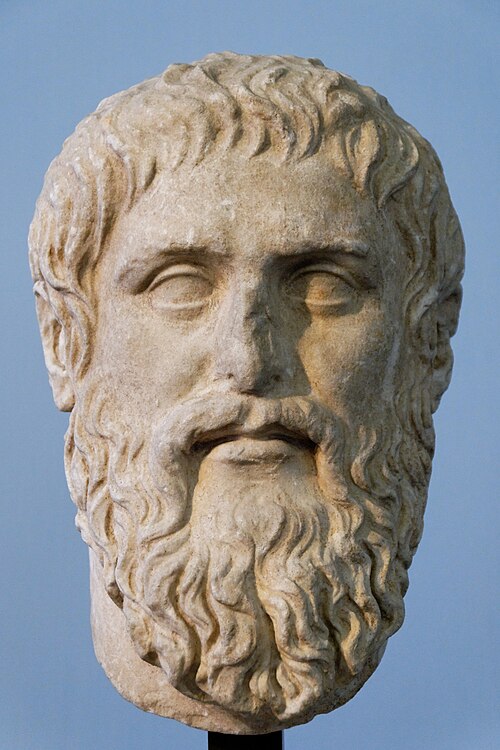 1Platoc. 427 – 347 BCEPhaedrus · Jowett (GBWW) translation
I am going to take a walk outside the wall, for I have been sitting with him the whole morning; and our common friend Acumenus tells me that it is much more refreshing to walk in the open air than to be shut up in a cloister.
SOCRATES: There he is right. Lysias then, I suppose, was in the town?
PHAEDRUS: Yes, he was staying with Epicrates, here at the house of Morychus; that house which is near the temple of Olympian Zeus.
SOCRATES: And how did he entertain you? Can I be wrong in supposing that Lysias gave you a feast of discourse?
PHAEDRUS: You shall hear, if you can spare time to accompany me.
SOCRATES: And should I not deem the conversation of you and Lysias ‘a thing of higher import,’ as I may say in the words of Pindar, ‘than any business’?
PHAEDRUS: Will you go on?
SOCRATES: And will you go on with the narration?
PHAEDRUS: My tale, Socrates, is one of your sort, for love was the theme which occupied us — love after a fashion: Lysias has been writing about a fair youth who was being tempted, but not by a lover; and this was the point: he ingeniously proved that the non-lover should be accepted rather than the lover.
SOCRATES: O that is noble of him! I wish that he would say the poor man rather than the rich, and the old man rather than the young one; — then he would meet the case of me and of many a man; his words would be quite refreshing, and he would be a public benefactor. For my part, I do so long to hear his speech, that if you walk all the way to Megara, and when you have reached the wall come back, as Herodicus recommends, without going in, I will keep you company.
PHAEDRUS: What do you mean, my good Socrates? How can you imagine that my unpractised memory can do justice to an elaborate work, which the greatest rhetorician of the age spent a long time in composing. Indeed, I cannot; I would give a great deal if I could.
SOCRATES: I believe that I know Phaedrus about as well as I know myself, and I am very sure that the speech of Lysias was repeated to him, not once only, but again and again; — he insisted on hearing it many times over and Lysias was very willing to gratify him; at last, when nothing else would do, he got hold of the book, and looked at what he most wanted to see — this occupied him during the whole morning; — and then when he was tired with sitting, he went out to take a walk, not until, by the dog, as I believe, he had simply learned by heart the entire discourse, unless it was unusually long, and he went to a place outside the wall that he might practise his lesson. There he saw a certain lover of discourse who had a similar weakness; — he saw and rejoiced; now thought he, ‘I shall have a partner in my revels.’ And he invited him to come and walk with him. But when the lover of discourse begged that he would repeat the tale, he gave himself airs and said, ‘No I cannot,’ as if he were indisposed; although, if the hearer had refused, he would sooner or later have been compelled by him to listen whether he would or no. Therefore, Phaedrus, bid him do at once what he will soon do whether bidden or not.
PHAEDRUS: I see that you will not let me off until I speak in some fashion or other; verily therefore my best plan is to speak as I best can.
SOCRATES: A very true remark, that of yours.
PHAEDRUS: I will do as I say; but believe me, Socrates, I did not learn the very words — O no; nevertheless I have a general notion of what he said, and will give you a summary of the points in which the lover differed from the non-lover. Let me begin at the beginning.
SOCRATES: Yes, my sweet one; but you must first of all show what you have in your left hand under your cloak, for that roll, as I suspect, is the actual discourse. Now, much as I love you, I would not have you suppose that I am going to have your memory exercised at my expense, if you have Lysias himself here.
PHAEDRUS: Enough; I see that I have no hope of practising my art upon you. But if I am to read, where would you please to sit?
SOCRATES: Let us turn aside and go by the Ilissus; we will sit down at some quiet spot.
PHAEDRUS: I am fortunate in not having my sandals, and as you never have any, I think that we may go along the brook and cool our feet in the water; this will be the easiest way, and at midday and in the summer is far from being unpleasant.
SOCRATES: Lead on, and look out for a place in which we can sit down.
PHAEDRUS: Do you see the tallest plane-tree in the distance?
SOCRATES: Yes.
PHAEDRUS: There are shade and gentle breezes, and grass on which we may either sit or lie down.
SOCRATES: Move forward.
PHAEDRUS: I should like to know, Socrates, whether the place is not somewhere here at which Boreas is said to have carried off Orithyia from the banks of the Ilissus?
SOCRATES: Such is the tradition.
PHAEDRUS: And is this the exact spot? The little stream is delightfully clear and bright; I can fancy that there might be maidens playing near.
SOCRATES: I believe that the spot is not exactly here, but about a quarter of a mile lower down, where you cross to the temple of Artemis, and there is, I think, some sort of an altar of Boreas at the place.
PHAEDRUS: I have never noticed it; but I beseech you to tell me, Socrates, do you believe this tale?
SOCRATES: The wise are doubtful, and I should not be singular if, like them, I too doubted. I might have a rational explanation that Orithyia was playing with Pharmacia, when a northern gust carried her over the neighbouring rocks; and this being the manner of her death, she was said to have been carried away by Boreas. There is a discrepancy, however, about the locality; according to another version of the story she was taken from Areopagus, and not from this place. Now I quite acknowledge that these allegories are very nice, but he is not to be envied who has to invent them; much labour and ingenuity will be required of him; and when he has once begun, he must go on and rehabilitate Hippocentaurs and chimeras dire. Gorgons and winged steeds flow in apace, and numberless other inconceivable and portentous natures. And if he is sceptical about them, and would fain reduce them one after another to the rules of probability, this sort of crude philosophy will take up a great deal of time. Now I have no leisure for such enquiries; shall I tell you why? I must first know myself, as the Delphian inscription says; to be curious about that which is not my concern, while I am still in ignorance of my own self, would be ridiculous. And therefore I bid farewell to all this; the common opinion is enough for me. For, as I was saying, I want to know not about this, but about myself: am I a monster more complicated and swollen with passion than the serpent Typho, or a creature of a gentler and simpler sort, to whom Nature has given a diviner and lowlier destiny? But let me ask you, friend: have we not reached the plane-tree to which you were conducting us?
PHAEDRUS: Yes, this is the tree.
SOCRATES: By Here, a fair resting-place, full of summer sounds and scents. Here is this lofty and spreading plane-tree, and the agnus castus high and clustering, in the fullest blossom and the greatest fragrance; and the stream which flows beneath the plane-tree is deliciously cold to the feet. Judging from the ornaments and images, this must be a spot sacred to Achelous and the Nymphs. How delightful is the breeze:— so very sweet; and there is a sound in the air shrill and summerlike which makes answer to the chorus of the cicadae. But the greatest charm of all is the grass, like a pillow gently sloping to the head. My dear Phaedrus, you have been an admirable guide.
PHAEDRUS: What an incomprehensible being you are, Socrates: when you are in the country, as you say, you really are like some stranger who is led about by a guide. Do you ever cross the border? I rather think that you never venture even outside the gates.
SOCRATES: Very true, my good friend; and I hope that you will excuse me when you hear the reason, which is, that I am a lover of knowledge, and the men who dwell in the city are my teachers, and not the trees or the country. Though I do indeed believe that you have found a spell with which to draw me out of the city into the country, like a hungry cow before whom a bough or a bunch of fruit is waved. For only hold up before me in like manner a book, and you may lead me all round Attica, and over the wide world. And now having arrived, I intend to lie down, and do you choose any posture in which you can read best. Begin.
PHAEDRUS: Listen. You know how matters stand with me; and how, as I conceive, this affair may be arranged for the advantage of both of us. And I maintain that I ought not to fail in my suit, because I am not your lover: for lovers repent of the kindnesses which they have shown when their passion ceases, but to the non-lovers who are free and not under any compulsion, no time of repentance ever comes; for they confer their benefits according to the measure of their ability, in the way which is most conducive to their own interest. Then again, lovers consider how by reason of their love they have neglected their own concerns and rendered service to others: and when to these benefits conferred they add on the troubles which they have endured, they think that they have long ago made to the beloved a very ample return. But the non-lover has no such tormenting recollections; he has never neglected his affairs or quarrelled with his relations; he has no troubles to add up or excuses to invent; and being well rid of all these evils, why should he not freely do what will gratify the beloved? If you say that the lover is more to be esteemed, because his love is thought to be greater; for he is willing to say and do what is hateful to other men, in order to please his beloved; — that, if true, is only a proof that he will prefer any future love to his present, and will injure his old love at the pleasure of the new. And how, in a matter of such infinite importance, can a man be right in trusting himself to one who is afflicted with a malady which no experienced person would attempt to cure, for the patient himself admits that he is not in his right mind, and acknowledges that he is wrong in his mind, but says that he is unable to control himself? And if he came to his right mind, would he ever imagine that the desires were good which he conceived when in his wrong mind? Once more, there are many more non-lovers than lovers; and if you choose the best of the lovers, you will not have many to choose from; but if from the non-lovers, the choice will be larger, and you will be far more likely to find among them a person who is worthy of your friendship. If public opinion be your dread, and you would avoid reproach, in all probability the lover, who is always thinking that other men are as emulous of him as he is of them, will boast to some one of his successes, and make a show of them openly in the pride of his heart; — he wants others to know that his labour has not been lost; but the non-lover is more his own master, and is desirous of solid good, and not of the opinion of mankind. Again, the lover may be generally noted or seen following the beloved (this is his regular occupation), and whenever they are observed to exchange two words they are supposed to meet about some affair of love either past or in contemplation; but when non-lovers meet, no one asks the reason why, because people know that talking to another is natural, whether friendship or mere pleasure be the motive. Once more, if you fear the fickleness of friendship, consider that in any other case a quarrel might be a mutual calamity; but now, when you have given up what is most precious to you, you will be the greater loser, and therefore, you will have more reason in being afraid of the lover, for his vexations are many, and he is always fancying that every one is leagued against him. Wherefore also he debars his beloved from society; he will not have you intimate with the wealthy, lest they should exceed him in wealth, or with men of education, lest they should be his superiors in understanding; and he is equally afraid of anybody’s influence who has any other advantage over himself. If he can persuade you to break with them, you are left without a friend in the world; or if, out of a regard to your own interest, you have more sense than to comply with his desire, you will have to quarrel with him. But those who are non-lovers, and whose success in love is the reward of their merit, will not be jealous of the companions of their beloved, and will rather hate those who refuse to be his associates, thinking that their favourite is slighted by the latter and benefited by the former; for more love than hatred may be expected to come to him out of his friendship with others. Many lovers too have loved the person of a youth before they knew his character or his belongings; so that when their passion has passed away, there is no knowing whether they will continue to be his friends; whereas, in the case of non-lovers who were always friends, the friendship is not lessened by the favours granted; but the recollection of these remains with them, and is an earnest of good things to come.
— Plato, Phaedrus
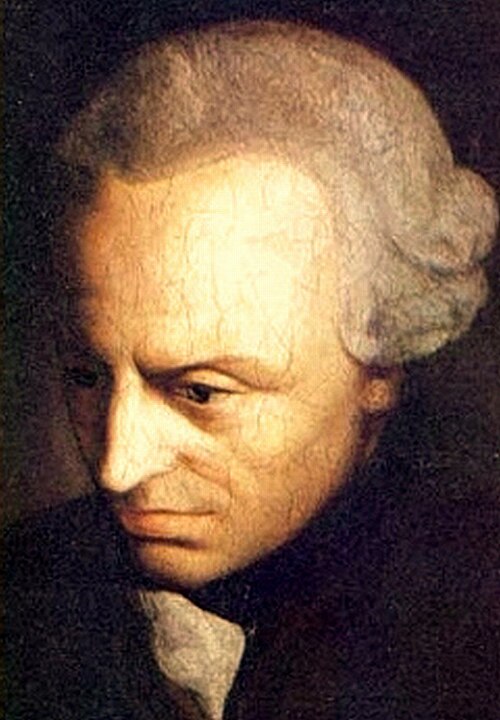 2Kant1724 – 1804Critique of Pure Reason · Abbott/Meiklejohn/Bernard (GBWW) translation
In the foregoing chapter we have merely considered the general conditions under which alone the transcendental faculty of judgement is justified in using the pure conceptions of the understanding for synthetical judgements. Our duty at present is to exhibit in systematic connection those judgements which the understanding really produces a priori. For this purpose, our table of the categories will certainly afford us the natural and safe guidance. For it is precisely the categories whose application to possible experience must constitute all pure a priori cognition of the understanding; and the relation of which to sensibility will, on that very account, present us with a complete and systematic catalogue of all the transcendental principles of the use of the understanding.
Principles a priori are so called, not merely because they contain in themselves the grounds of other judgements, but also because they themselves are not grounded in higher and more general cognitions. This peculiarity, however, does not raise them altogether above the need of a proof. For although there could be found no higher cognition, and therefore no objective proof, and although such a principle rather serves as the foundation for all cognition of the object, this by no means hinders us from drawing a proof from the subjective sources of the possibility of the cognition of an object. Such a proof is necessary, moreover, because without it the principle might be liable to the imputation of being a mere gratuitous assertion.
In the second place, we shall limit our investigations to those principles which relate to the categories. For as to the principles of transcendental aesthetic, according to which space and time are the conditions of the possibility of things as phenomena, as also the restriction of these principles, namely, that they cannot be applied to objects as things in themselves — these, of course, do not fall within the scope of our present inquiry. In like manner, the principles of mathematical science form no part of this system, because they are all drawn from intuition, and not from the pure conception of the understanding. The possibility of these principles, however, will necessarily be considered here, inasmuch as they are synthetical judgements a priori, not indeed for the purpose of proving their accuracy and apodeictic certainty, which is unnecessary, but merely to render conceivable and deduce the possibility of such evident a priori cognitions.
But we shall have also to speak of the principle of analytical judgements, in opposition to synthetical judgements, which is the proper subject of our inquiries, because this very opposition will free the theory of the latter from all ambiguity, and place it clearly before our eyes in its true nature.
System of the Principles of the Pure Understanding.
Section I. Of the Supreme Principle of all Analytical Judgements.
Whatever may be the content of our cognition, and in whatever manner our cognition may be related to its object, the universal, although only negative conditions of all our judgements is that they do not contradict themselves; otherwise these judgements are in themselves (even without respect to the object) nothing. But although there may exist no contradiction in our judgement, it may nevertheless connect conceptions in such a manner that they do not correspond to the object, or without any grounds either a priori or a posteriori for arriving at such a judgement, and thus, without being self-contradictory, a judgement may nevertheless be either false or groundless.
Now, the proposition: “No subject can have a predicate that contradicts it,” is called the principle of contradiction, and is a universal but purely negative criterion of all truth. But it belongs to logic alone, because it is valid of cognitions, merely as cognitions and without respect to their content, and declares that the contradiction entirely nullifies them. We can also, however, make a positive use of this principle, that is, not merely to banish falsehood and error (in so far as it rests upon contradiction), but also for the cognition of truth. For if the judgement is analytical, be it affirmative or negative, its truth must always be recognizable by means of the principle of contradiction. For the contrary of that which lies and is cogitated as conception in the cognition of the object will be always properly negatived, but the conception itself must always be affirmed of the object, inasmuch as the contrary thereof would be in contradiction to the object.
We must therefore hold the principle of contradiction to be the universal and fully sufficient Principle of all analytical cognition. But as a sufficient criterion of truth, it has no further utility or authority. For the fact that no cognition can be at variance with this principle without nullifying itself, constitutes this principle the sine qua non, but not the determining ground of the truth of our cognition. As our business at present is properly with the synthetical part of our knowledge only, we shall always be on our guard not to transgress this inviolable principle; but at the same time not to expect from it any direct assistance in the establishment of the truth of any synthetical proposition.
There exists, however, a formula of this celebrated principle — a principle merely formal and entirely without content — which contains a synthesis that has been inadvertently and quite unnecessarily mixed up with it. It is this: “It is impossible for a thing to be and not to be at the same time.” Not to mention the superfluousness of the addition of the word impossible to indicate the apodeictic certainty, which ought to be self-evident from the proposition itself, the proposition is affected by the condition of time, and as it were says: “A thing = A, which is something = B, cannot at the same time be non-B.” But both, B as well as non-B, may quite well exist in succession. For example, a man who is young cannot at the same time be old; but the same man can very well be at one time young, and at another not young, that is, old. Now the principle of contradiction as a merely logical proposition must not by any means limit its application merely to relations of time, and consequently a formula like the preceding is quite foreign to its true purpose. The misunderstanding arises in this way. We first of all separate a predicate of a thing from the conception of the thing, and afterwards connect with this predicate its opposite, and hence do not establish any contradiction with the subject, but only with its predicate, which has been conjoined with the subject synthetically — a contradiction, moreover, which obtains only when the first and second predicate are affirmed in the same time. If I say: “A man who is ignorant is not learned,” the condition “at the same time” must be added, for he who is at one time ignorant, may at another be learned. But if I say: “No ignorant man is a learned man,” the proposition is analytical, because the characteristic ignorance is now a constituent part of the conception of the subject; and in this case the negative proposition is evident immediately from the proposition of contradiction, without the necessity of adding the condition “the same time.” This is the reason why I have altered the formula of this principle — an alteration which shows very clearly the nature of an analytical proposition.
Section II. Of the Supreme Principle of all Synthetical Judgements.
The explanation of the possibility of synthetical judgements is a task with which general logic has nothing to do; indeed she needs not even be acquainted with its name. But in transcendental logic it is the most important matter to be dealt with — indeed the only one, if the question is of the possibility of synthetical judgements a priori, the conditions and extent of their validity. For when this question is fully decided, it can reach its aim with perfect ease, the determination, to wit, of the extent and limits of the pure understanding.
In an analytical judgement I do not go beyond the given conception, in order to arrive at some decision respecting it. If the judgement is affirmative, I predicate of the conception only that which was already cogitated in it; if negative, I merely exclude from the conception its contrary. But in synthetical judgements, I must go beyond the given conception, in order to cogitate, in relation with it, something quite different from that which was cogitated in it, a relation which is consequently never one either of identity or contradiction, and by means of which the truth or error of the judgement cannot be discerned merely from the judgement itself.
Granted, then, that we must go out beyond a given conception, in order to compare it synthetically with another, a third thing is necessary, in which alone the synthesis of two conceptions can originate. Now what is this tertium quid that is to be the medium of all synthetical judgements? It is only a complex in which all our representations are contained, the internal sense to wit, and its form a priori, time.
The synthesis of our representations rests upon the imagination; their synthetical unity (which is requisite to a judgement), upon the unity of apperception. In this, therefore, is to be sought the possibility of synthetical judgements, and as all three contain the sources of a priori representations, the possibility of pure synthetical judgements also; nay, they are necessary upon these grounds, if we are to possess a knowledge of objects, which rests solely upon the synthesis of representations.
If a cognition is to have objective reality, that is, to relate to an object, and possess sense and meaning in respect to it, it is necessary that the object be given in some way or another. Without this, our conceptions are empty, and we may indeed have thought by means of them, but by such thinking we have not, in fact, cognized anything, we have merely played with representation. To give an object, if this expression be understood in the sense of “to present” the object, not mediately but immediately in intuition, means nothing else than to apply the representation of it to experience, be that experience real or only possible. Space and time themselves, pure as these conceptions are from all that is empirical, and certain as it is that they are represented fully a priori in the mind, would be completely without objective validity, and without sense and significance, if their necessary use in the objects of experience were not shown. Nay, the representation of them is a mere schema, that always relates to the reproductive imagination, which calls up the objects of experience, without which they have no meaning. And so it is with all conceptions without distinction.
The possibility of experience is, then, that which gives objective reality to all our a priori cognitions. Now experience depends upon the synthetical unity of phenomena, that is, upon a synthesis according to conceptions of the object of phenomena in general, a synthesis without which experience never could become knowledge, but would be merely a rhapsody of perceptions, never fitting together into any connected text, according to rules of a thoroughly united (possible) consciousness, and therefore never subjected to the transcendental and necessary unity of apperception. Experience has therefore for a foundation, a priori principles of its form, that is to say, general rules of unity in the synthesis of phenomena, the objective reality of which rules, as necessary conditions even of the possibility of experience can which rules, as necessary conditions — even of the possibility of experience — can always be shown in experience. But apart from this relation, a priori synthetical propositions are absolutely impossible, because they have no third term, that is, no pure object, in which the synthetical unity can exhibit the objective reality of its conceptions.
— Kant, Critique of Pure Reason
3Platoc. 427 – 347 BCEIon · Jowett (GBWW) translation
Are you from your native city of Ephesus?
ION: No, Socrates; but from Epidaurus, where I attended the festival of Asclepius.
SOCRATES: And do the Epidaurians have contests of rhapsodes at the festival?
ION: O yes; and of all sorts of musical performers.
SOCRATES: And were you one of the competitors — and did you succeed?
ION: I obtained the first prize of all, Socrates.
SOCRATES: Well done; and I hope that you will do the same for us at the Panathenaea.
ION: And I will, please heaven.
SOCRATES: I often envy the profession of a rhapsode, Ion; for you have always to wear fine clothes, and to look as beautiful as you can is a part of your art. Then, again, you are obliged to be continually in the company of many good poets; and especially of Homer, who is the best and most divine of them; and to understand him, and not merely learn his words by rote, is a thing greatly to be envied. And no man can be a rhapsode who does not understand the meaning of the poet. For the rhapsode ought to interpret the mind of the poet to his hearers, but how can he interpret him well unless he knows what he means? All this is greatly to be envied.
ION: Very true, Socrates; interpretation has certainly been the most laborious part of my art; and I believe myself able to speak about Homer better than any man; and that neither Metrodorus of Lampsacus, nor Stesimbrotus of Thasos, nor Glaucon, nor any one else who ever was, had as good ideas about Homer as I have, or as many.
SOCRATES: I am glad to hear you say so, Ion; I see that you will not refuse to acquaint me with them.
ION: Certainly, Socrates; and you really ought to hear how exquisitely I render Homer. I think that the Homeridae should give me a golden crown.
SOCRATES: I shall take an opportunity of hearing your embellishments of him at some other time. But just now I should like to ask you a question: Does your art extend to Hesiod and Archilochus, or to Homer only?
ION: To Homer only; he is in himself quite enough.
SOCRATES: Are there any things about which Homer and Hesiod agree?
ION: Yes; in my opinion there are a good many.
SOCRATES: And can you interpret better what Homer says, or what Hesiod says, about these matters in which they agree?
ION: I can interpret them equally well, Socrates, where they agree.
SOCRATES: But what about matters in which they do not agree? — for example, about divination, of which both Homer and Hesiod have something to say —
ION: Very true:
SOCRATES: Would you or a good prophet be a better interpreter of what these two poets say about divination, not only when they agree, but when they disagree?
ION: A prophet.
SOCRATES: And if you were a prophet, would you not be able to interpret them when they disagree as well as when they agree?
ION: Clearly.
SOCRATES: But how did you come to have this skill about Homer only, and not about Hesiod or the other poets? Does not Homer speak of the same themes which all other poets handle? Is not war his great argument? and does he not speak of human society and of intercourse of men, good and bad, skilled and unskilled, and of the gods conversing with one another and with mankind, and about what happens in heaven and in the world below, and the generations of gods and heroes? Are not these the themes of which Homer sings?
ION: Very true, Socrates.
SOCRATES: And do not the other poets sing of the same?
ION: Yes, Socrates; but not in the same way as Homer.
SOCRATES: What, in a worse way?
ION: Yes, in a far worse.
SOCRATES: And Homer in a better way?
ION: He is incomparably better.
SOCRATES: And yet surely, my dear friend Ion, in a discussion about arithmetic, where many people are speaking, and one speaks better than the rest, there is somebody who can judge which of them is the good speaker?
ION: Yes.
SOCRATES: And he who judges of the good will be the same as he who judges of the bad speakers?
ION: The same.
SOCRATES: And he will be the arithmetician?
ION: Yes.
SOCRATES: Well, and in discussions about the wholesomeness of food, when many persons are speaking, and one speaks better than the rest, will he who recognizes the better speaker be a different person from him who recognizes the worse, or the same?
ION: Clearly the same.
SOCRATES: And who is he, and what is his name?
ION: The physician.
SOCRATES: And speaking generally, in all discussions in which the subject is the same and many men are speaking, will not he who knows the good know the bad speaker also? For if he does not know the bad, neither will he know the good when the same topic is being discussed.
ION: True.
SOCRATES: Is not the same person skilful in both?
ION: Yes.
SOCRATES: And you say that Homer and the other poets, such as Hesiod and Archilochus, speak of the same things, although not in the same way; but the one speaks well and the other not so well?
ION: Yes; and I am right in saying so.
SOCRATES: And if you knew the good speaker, you would also know the inferior speakers to be inferior?
ION: That is true.
SOCRATES: Then, my dear friend, can I be mistaken in saying that Ion is equally skilled in Homer and in other poets, since he himself acknowledges that the same person will be a good judge of all those who speak of the same things; and that almost all poets do speak of the same things?
ION: Why then, Socrates, do I lose attention and go to sleep and have absolutely no ideas of the least value, when any one speaks of any other poet; but when Homer is mentioned, I wake up at once and am all attention and have plenty to say?
SOCRATES: The reason, my friend, is obvious. No one can fail to see that you speak of Homer without any art or knowledge. If you were able to speak of him by rules of art, you would have been able to speak of all other poets; for poetry is a whole.
ION: Yes.
SOCRATES: And when any one acquires any other art as a whole, the same may be said of them. Would you like me to explain my meaning, Ion?
ION: Yes, indeed, Socrates; I very much wish that you would: for I love to hear you wise men talk.
SOCRATES: O that we were wise, Ion, and that you could truly call us so; but you rhapsodes and actors, and the poets whose verses you sing, are wise; whereas I am a common man, who only speak the truth. For consider what a very commonplace and trivial thing is this which I have said — a thing which any man might say: that when a man has acquired a knowledge of a whole art, the enquiry into good and bad is one and the same. Let us consider this matter; is not the art of painting a whole?
ION: Yes.
SOCRATES: And there are and have been many painters good and bad?
ION: Yes.
SOCRATES: And did you ever know any one who was skilful in pointing out the excellences and defects of Polygnotus the son of Aglaophon, but incapable of criticizing other painters; and when the work of any other painter was produced, went to sleep and was at a loss, and had no ideas; but when he had to give his opinion about Polygnotus, or whoever the painter might be, and about him only, woke up and was attentive and had plenty to say?
ION: No indeed, I have never known such a person.
SOCRATES: Or did you ever know of any one in sculpture, who was skilful in expounding the merits of Daedalus the son of Metion, or of Epeius the son of Panopeus, or of Theodorus the Samian, or of any individual sculptor; but when the works of sculptors in general were produced, was at a loss and went to sleep and had nothing to say?
ION: No indeed; no more than the other.
SOCRATES: And if I am not mistaken, you never met with any one among flute-players or harp-players or singers to the harp or rhapsodes who was able to discourse of Olympus or Thamyras or Orpheus, or Phemius the rhapsode of Ithaca, but was at a loss when he came to speak of Ion of Ephesus, and had no notion of his merits or defects?
ION: I cannot deny what you say, Socrates. Nevertheless I am conscious in my own self, and the world agrees with me in thinking that I do speak better and have more to say about Homer than any other man. But I do not speak equally well about others — tell me the reason of this.
SOCRATES: I perceive, Ion; and I will proceed to explain to you what I imagine to be the reason of this. The gift which you possess of speaking excellently about Homer is not an art, but, as I was just saying, an inspiration; there is a divinity moving you, like that contained in the stone which Euripides calls a magnet, but which is commonly known as the stone of Heraclea. This stone not only attracts iron rings, but also imparts to them a similar power of attracting other rings; and sometimes you may see a number of pieces of iron and rings suspended from one another so as to form quite a long chain: and all of them derive their power of suspension from the original stone. In like manner the Muse first of all inspires men herself; and from these inspired persons a chain of other persons is suspended, who take the inspiration. For all good poets, epic as well as lyric, compose their beautiful poems not by art, but because they are inspired and possessed. And as the Corybantian revellers when they dance are not in their right mind, so the lyric poets are not in their right mind when they are composing their beautiful strains: but when falling under the power of music and metre they are inspired and possessed; like Bacchic maidens who draw milk and honey from the rivers when they are under the influence of Dionysus but not when they are in their right mind. And the soul of the lyric poet does the same, as they themselves say; for they tell us that they bring songs from honeyed fountains, culling them out of the gardens and dells of the Muses; they, like the bees, winging their way from flower to flower. And this is true. For the poet is a light and winged and holy thing, and there is no invention in him until he has been inspired and is out of his senses, and the mind is no longer in him: when he has not attained to this state, he is powerless and is unable to utter his oracles. Many are the noble words in which poets speak concerning the actions of men; but like yourself when speaking about Homer, they do not speak of them by any rules of art: they are simply inspired to utter that to which the Muse impels them, and that only; and when inspired, one of them will make dithyrambs, another hymns of praise, another choral strains, another epic or iambic verses — and he who is good at one is not good at any other kind of verse: for not by art does the poet sing, but by power divine. Had he learned by rules of art, he would have known how to speak not of one theme only, but of all; and therefore God takes away the minds of poets, and uses them as his ministers, as he also uses diviners and holy prophets, in order that we who hear them may know them to be speaking not of themselves who utter these priceless words in a state of unconsciousness, but that God himself is the speaker, and that through them he is conversing with us. And Tynnichus the Chalcidian affords a striking instance of what I am saying: he wrote nothing that any one would care to remember but the famous paean which is in every one’s mouth, one of the finest poems ever written, simply an invention of the Muses, as he himself says. For in this way the God would seem to indicate to us and not allow us to doubt that these beautiful poems are not human, or the work of man, but divine and the work of God; and that the poets are only the interpreters of the Gods by whom they are severally possessed. Was not this the lesson which the God intended to teach when by the mouth of the worst of poets he sang the best of songs? Am I not right, Ion?
— Plato, Ion
4Kant1724 – 1804Critique of Judgement · Abbott/Meiklejohn/Bernard (GBWW) translation
But the discovery of what is required for calling an object beautiful must be reserved for the analysis of judgements of taste. In my search for the moments to which attention is paid by this judgement in its reflection, I have followed the guidance of the logical functions of judging (for a judgement of taste always involves a reference to understanding). I have brought the moment of quality first under review, because this is what the aesthetic judgement on the beautiful looks to in the first instance.
§ 1. The judgement of taste is aesthetic.
If we wish to discern whether anything is beautiful or not, we do not refer the representation of it to the object by means of understanding with a view to cognition, but by means of the imagination (acting perhaps in conjunction with understanding) we refer the representation to the subject and its feeling of pleasure or displeasure. The judgement of taste, therefore, is not a cognitive judgement, and so not logical, but is aesthetic-which means that it is one whose determining ground cannot be other than subjective. Every reference of representations is capable of being objective, even that of sensations (in which case it signifies the real in an empirical representation). The one exception to this is the feeling of pleasure or displeasure. This denotes nothing in the object, but is a feeling which the subject has of itself and of the manner in which it is affected by the representation.
To apprehend a regular and appropriate building with one’s cognitive faculties, be the mode of representation clear or confused, is quite a different thing from being conscious of this representation with an accompanying sensation of delight. Here the representation is referred wholly to the subject, and what is more to its feeling of life-under the name of the feeling of pleasure or displeasure-and this forms the basis of a quite separate faculty of discriminating and estimating, that contributes nothing to knowledge. All it does is to compare the given representation in the subject with the entire faculty of representations of which the mind is conscious in the feeling of its state. Given representations in a judgement may be empirical, and so aesthetic; but the judgement which is pronounced by their means is logical, provided it refers them to the object. Conversely, be the given representations even rational, but referred in a judgement solely to the subject (to its feeling), they are always to that extent aesthetic.
§ 2. The delight which determines the judgement of taste is independent of all interest.
The delight which we connect with the representation of the real existence of an object is called interest. Such a delight, therefore, always involves a reference to the faculty of desire, either as its determining ground, or else as necessarily implicated with its determining ground. Now, where the question is whether something is beautiful, we do not want to know, whether we, or any one else, are, or even could be, concerned in the real existence of the thing, but rather what estimate we form of it on mere contemplation (intuition or reflection). If any one asks me whether I consider that the palace I see before me is beautiful, I may, perhaps, reply that I do not care for things of that sort that are merely made to be gaped at. Or I may reply in the same strain as that Iroquois sachem who said that nothing in Paris pleased him better than the eating-houses. I may even go a step further and inveigh with the vigour of a Rousseau against the vigour of a great against the vanity of the people on such superfluous things. Or, in fine, I may quite easily persuade myself that if I found myself on an uninhabited island, without hope of ever again coming among men, and could conjure such a palace into existence by a mere wish, I should still not trouble to do so, so long as I had a hut there that was comfortable enough for me. All this may be admitted and approved; only it is not the point now at issue. All one wants to know is whether the mere representation of the object is to my liking, no matter how indifferent I may be to the real existence of the object of this representation. It is quite plain that in order to say that the object is beautiful, and to show that I have taste, everything turns on the meaning which I can give to this representation, and not on any factor which makes me dependent on the real existence of the object. Every one must allow that a judgement on the beautiful which is tinged with the slightest interest, is very partial and not a pure judgement of taste. One must not be in the least prepossessed in favour of the real existence of the thing, but must preserve complete indifference in this respect, in order to play the part of judge in matters of taste.
This proposition, which is of the utmost importance, cannot be better explained than by contrasting the pure disinterested7 delight which appears in the judgement of taste with that allied to an interest-especially if we can also assure ourselves that there are no other kinds of interest beyond those presently to be mentioned.
7A judgement upon an object of our delight may be wholly disinterested but withal very interesting, i.e., it relies on no interest, but it produces one. Of this kind are all pure moral judgements. But, of themselves judgements of taste do not even set up any interest whatsoever. Only in society is it interesting to have taste-a point which will be explained in the sequel.
§ 3. Delight in the agreeable is coupled with interest.
That is agreeable which the senses find pleasing in sensation. This at once affords a convenient opportunity for condemning and directing particular attention to a prevalent confusion of the double meaning of which the word sensation is capable. All delight (as is said or thought) is itself sensation (of a pleasure). Consequently everything that pleases, and for the very reason that it pleases, is agreeable-and according to its different degrees, or its relations to other agreeable sensations, is attractive, charming, delicious, enjoyable, etc. But if this is conceded, then impressions of sense, which determine inclination, or principles of reason, which determine the will, or mere contemplated forms of intuition, which determine judgement, are all on a par in everything relevant to their effect upon the feeling of pleasure, for this would be agreeableness in the sensation of one’s state; and since, in the last resort, all the elaborate work of our faculties must issue in and unite in the practical as its goal, we could credit our faculties with no other appreciation of things and the worth of things, than that consisting in the gratification which they promise. How this is attained is in the end immaterial; and, as the choice of the means is here the only thing that can make a difference, men might indeed blame one another for folly or imprudence, but never for baseness or wickedness; for they are all, each according to his own way of looking at things, pursuing one goal, which for each is the gratification in question.
When a modification of the feeling of pleasure or displeasure is termed sensation, this expression is given quite a different meaning to that which it bears when I call the representation of a thing (through sense as a receptivity pertaining to the faculty of knowledge) sensation. For in the latter case the representation is referred to the object, but in the former it is referred solely to the subject and is not available for any cognition, not even for that by which the subject cognizes itself.
Now in the above definition the word sensation is used to denote an objective representation of sense; and, to avoid continually running the risk of misinterpretation, we shall call that which must always remain purely subjective, and is absolutely incapable of forming a representation of an object, by the familiar name of feeling. The green colour of the meadows belongs to objective sensation, as the perception of an object of sense; but its agreeableness to subjective sensation, by which no object is represented; i.e., to feeling, through which the object is regarded as an object of delight (which involves no cognition of the object).
Now, that a judgement on an object by which its agreeableness is affirmed, expresses an interest in it, is evident from the fact that through sensation it provokes a desire for similar objects, consequently the delight presupposes, not the simple judgement about it, but the bearing its real existence has upon my state so far as affected by such an object. Hence we do not merely say of the agreeable that it pleases, but that it gratifies. I do not accord it a simple approval, but inclination is aroused by it, and where agreeableness is of the liveliest type a judgement on the character of the object is so entirely out of place that those who are always intent only on enjoyment (for that is the word used to denote intensity of gratification) would fain dispense with all judgement.
§ 4. Delight in the good is coupled with interest.
That is good which by means of reason commends itself by its mere concept. We call that good for something which only pleases as a means; but that which pleases on its own account we call good in itself. In both cases the concept of an end is implied, and consequently the relation of reason to (at least possible) willing, and thus a delight in the existence of an object or action, i.e., some interest or other.
To deem something good, I must always know what sort of a thing the object is intended to be, i. e., I must have a concept of it. That is not necessary to enable me to see beauty in a thing. Flowers, free patterns, lines aimlessly intertwining-technically termed foliage-have no signification, depend upon no definite concept, and yet please. Delight in the beautiful must depend upon the reflection on an object precursory to some (not definitely determined) concept. It is thus also differentiated from the agreeable, which rests entirely upon sensation.
In many cases, no doubt, the agreeable and the good seem convertible terms. Thus it is commonly said that all (especially lasting) gratification is of itself good; which is almost equivalent to saying that to be permanently agreeable and to be good are identical. But it is readily apparent that this is merely a vicious confusion of words, for the concepts appropriate to these expressions are far from interchangeable. The agreeable, which, as such, represents the object solely in relation to sense, must in the first instance be brought under principles of reason through the concept of an end, to be, as an object of will, called good. But that the reference to delight is wholly different where what gratifies is at the same time called good, is evident from the fact that with the good the question always is whether it is mediately or immediately good, i. e., useful or good in itself; whereas with the agreeable this point can never arise, since the word always means what pleases immediately-and it is just the same with what I call beautiful.
— Kant, Critique of Judgement
5Platoc. 427 – 347 BCERepublic · Book 6 · Jowett (GBWW) translation
AND thus, Glaucon, after the argument has gone a weary way, the true and the false philosophers have at length appeared in view.
I do not think, he said, that the way could have been shortened.
I suppose not, I said; and yet I believe that we might have had a better view of both of them if the discussion could have been confined to this one subject and if there were not many other questions awaiting us, which he who desires to see in what respect the life of the just differs from that of the unjust must consider.
And what is the next question? he asked.
Surely, I said, the one which follows next in order. Inasmuch as philosophers only are able to grasp the eternal and unchangeable, and those who wander in the region of the many and variable are not philosophers, I must ask you which of the two classes should be the rulers of our State?
And how can we rightly answer that question?
Whichever of the two are best able to guard the laws and institutions of our State — let them be our guardians.
Very good.
Neither, I said, can there be any question that the guardian who is to keep anything should have eyes rather than no eyes?
There can be no question of that.
And are not those who are verily and indeed wanting in the knowledge of the true being of each thing, and who have in their souls no clear pattern, and are unable as with a painter's eye to look at the absolute truth and to that original to repair, and having perfect vision of the other world to order the laws about beauty, goodness, justice in this, if not already ordered, and to guard and preserve the order of them — are not such persons, I ask, simply blind?
Truly, he replied, they are much in that condition.
And shall they be our guardians when there are others who, besides being their equals in experience and falling short of them in no particular of virtue, also know the very truth of each thing?
There can be no reason, he said, for rejecting those who have this greatest of all great qualities; they must always have the first place unless they fail in some other respect. Suppose, then, I said, that we determine how far they can unite this and the other excellences.
By all means.
In the first place, as we began by observing, the nature of the philosopher has to be ascertained. We must come to an understanding about him, and, when we have done so, then, if I am not mistaken, we shall also acknowledge that such a union of qualities is possible, and that those in whom they are united, and those only, should be rulers in the State.
What do you mean?
Let us suppose that philosophical minds always love knowledge of a sort which shows them the eternal nature not varying from generation and corruption.
Agreed.
And further, I said, let us agree that they are lovers of all true being; there is no part whether greater or less, or more or less honorable, which they are willing to renounce; as we said before of the lover and the man of ambition.
True.
And if they are to be what we were describing, is there not another quality which they should also possess?
What quality?
Truthfulness: they will never intentionally receive into their minds falsehood, which is their detestation, and they will love the truth.
Yes, that may be safely affirmed of them.
"May be." my friend, I replied, is not the word; say rather, "must be affirmed:" for he whose nature is amorous of anything cannot help loving all that belongs or is akin to the object of his affections.
Right, he said.
And is there anything more akin to wisdom than truth?
How can there be?
Can the same nature be a lover of wisdom and a lover of falsehood?
Never.
The true lover of learning then must from his earliest youth, as far as in him lies, desire all truth?
Assuredly.
But then again, as we know by experience, he whose desires are strong in one direction will have them weaker in others; they will be like a stream which has been drawn off into another channel.
True.
He whose desires are drawn toward knowledge in every form will be absorbed in the pleasures of the soul, and will hardly feel bodily pleasure — I mean, if he be a true philosopher and not a sham one.
That is most certain.
Such a one is sure to be temperate and the reverse of covetous; for the motives which make another man desirous of having and spending, have no place in his character.
Very true.
Another criterion of the philosophical nature has also to be considered.
What is that?
There should be no secret corner of illiberality; nothing can be more antagonistic than meanness to a soul which is ever longing after the whole of things both divine and human.
Most true, he replied.
Then how can he who has magnificence of mind and is the spectator of all time and all existence, think much of human life?
He cannot.
Or can such a one account death fearful? No, indeed.
Then the cowardly and mean nature has no part in true philosophy?
Certainly not.
Or again: can he who is harmoniously constituted, who is not covetous or mean, or a boaster, or a coward — can he, I say, ever be unjust or hard in his dealings?
Impossible.
Then you will soon observe whether a man is just and gentle, or rude and unsociable; these are the signs which distinguish even in youth the philosophical nature from the unphilosophical.
True.
There is another point which should be remarked.
What point?
Whether he has or has not a pleasure in learning; for no one will love that which gives him pain, and in which after much toil he makes little progress.
Certainly not.
And again, if he is forgetful and retains nothing of what he learns, will he not be an empty vessel?
That is certain. Laboring in vain, he must end in hating himself and his fruitless occupation? Yes.
Then a soul which forgets cannot be ranked among genuine philosophic natures; we must insist that the philosopher should have a good memory?
Certainly.
And once more, the inharmonious and unseemly nature can only tend to disproportion?
Undoubtedly.
And do you consider truth to be akin to proportion or to disproportion?
To proportion.
Then, besides other qualities, we must try to find a naturally well-proportioned and gracious mind, which will move spontaneously toward the true being of everything.
Certainly.
Well, and do not all these qualities, which we have been enumerating, go together, and are they not, in a manner, necessary to a soul, which is to have a full and perfect participation of being?
They are absolutely necessary, he replied.
And must not that be a blameless study which he only can pursue who has the gift of a good memory, and is quick to learn — noble, gracious, the friend of truth, justice, courage, temperance, who are his kindred?
The god of jealousy himself, he said, could find no fault with such a study.
And to men like him, I said, when perfected by years and education, and to these only you will intrust the State.
Here Adeimantus interposed and said: To these statements, Socrates, no one can offer a reply; but when you talk in this way, a strange feeling passes over the minds of your hearers: They fancy that they are led astray a little at each step in the argument, owing to their own want of skill in asking and answering questions; these littles accumulate, and at the end of the discussion they are found to have sustained a mighty overthrow and all their former notions appear to be turned upside down. And as unskilful players of draughts are at last shut up by their more skilful adversaries and have no piece to move, so they too find themselves shut up at last; for they have nothing to say in this new game of which words are the counters; and yet all the time they are in the right. The observation is suggested to me by what is now occurring. For any one of us might say, that although in words he is not able to meet you at each step of the argument, he sees as a fact that the votaries of philosophy, when they carry on the study, not only in youth as a part of education, but as the pursuit of their maturer years, most of them become strange monsters, not to say utter rogues, and that those who may be considered the best of them are made useless to the world by the very study which you extol.
Well, and do you think that those who say so are wrong?
I cannot tell, he replied; but I should like to know what is your opinion.
Hear my answer; I am of opinion that they are quite right.
Then how can you be justified in saying that cities will not cease from evil until philosophers rule in them, when philosophers are acknowledged by us to be of no use to them?
You ask a question, I said, to which a reply can only be given in a parable.
Yes, Socrates; and that is a way of speaking to which you are not at all accustomed, I suppose.
I perceive, I said, that you are vastly amused at having plunged me into such a hopeless discussion; but now hear the parable, and then you will be still more amused at the meagreness of my imagination: for the manner in which the best men are treated in their own States is so grievous that no single thing on earth is comparable to it; and therefore, if I am to plead their cause, I must have recourse to fiction, and put together a figure made up of many things, like the fabulous unions of goats and stags which are found in pictures. Imagine then a fleet or a ship in which there is a captain who is taller and stronger than any of the crew, but he is a little deaf and has a similar infirmity in sight, and his knowledge of navigation is not much better. The sailors are quarrelling with one another about the steering — everyone is of opinion that he has a right to steer, though he has never learned the art of navigation and cannot tell who taught him or when he learned, and will further assert that it cannot be taught, and they are ready to cut in pieces anyone who says the contrary. They throng about the captain, begging and praying him to commit the helm to them; and if at any time they do not prevail, but others are preferred to them, they kill the others or throw them overboard, and having first chained up the noble captain's senses with drink or some narcotic drug, they mutiny and take possession of the ship and make free with the stores; thus, eating and drinking, they proceed on their voyage in such manner as might be expected of them. Him who is their partisan and cleverly aids them in their plot for getting the ship out of the captain's hands into their own whether by force or persuasion, they compliment with the name of sailor, pilot, able seaman, and abuse the other sort of man, whom they call a good-for-nothing; but that the true pilot must pay attention to the year and seasons and sky and stars and winds, and whatever else belongs to his art, if he intends to be really qualified for the command of a ship, and that he must and will be the steerer, whether other people like or not — the possibility of this union of authority with the steerer's art has never seriously entered into their thoughts or been made part of their calling. Now in vessels which are in a state of mutiny and by sailors who are mutineers, how will the true pilot be regarded? Will he not be called by them a prater, a star-gazer, a good-for-nothing?
— Plato, Republic, Book 6
6Platoc. 427 – 347 BCERepublic · Book 2 · Jowett (GBWW) translation
WITH these words I was thinking that I had made an end of the discussion; but the end, in truth, proved to be only a beginning. For Glaucon, who is always the most pugnacious of men, was dissatisfied at Thrasymachus's retirement; he wanted to have the battle out. So he said to me: Socrates, do you wish really to persuade us, or only to seem to have persuaded us, that to be just is always better than to be unjust?
I should wish really to persuade you, I replied, if I could.
Then you certainly have not succeeded. Let me ask you now: How would you arrange goods — are there not some which we welcome for their own sakes, and independently of their consequences, as, for example, harmless pleasures and enjoyments, which delight us at the time, although nothing follows from them?
I agree in thinking that there is such a class, I replied.
Is there not also a second class of goods, such as knowledge, sight, health, which are desirable not only in themselves, but also for their results?
Certainly, I said.
And would you not recognize a third class, such as gymnastic, and the care of the sick, and the physician's art; also the various ways of money-making — these do us good but we regard them as disagreeable; and no one would choose them for their own sakes, but only for the sake of some reward or result which flows from them?
There is, I said, this third class also. But why do you ask?
Because I want to know in which of the three classes you would place justice?
In the highest class, I replied — among those goods which he who would be happy desires both for their own sake and for the sake of their results.
Then the many are of another mind; they think that justice is to be reckoned in the troublesome class, among goods which are to be pursued for the sake of rewards and of reputation, but in themselves are disagreeable and rather to be avoided.
I know, I said, that this is their manner of thinking, and that this was the thesis which Thrasymachus was maintaining just now, when he censured justice and praised injustice. But I am too stupid to be convinced by him.
I wish, he said, that you would hear me as well as him, and then I shall see whether you and I agree. For Thrasymachus seems to me, like a snake, to have been charmed by your voice sooner than he ought to have been; but to my mind the nature of justice and injustice has not yet been made clear. Setting aside their rewards and results, I want to know what they are in themselves, and how they inwardly work in the soul. If you please, then, I will revive the argument of Thrasymachus. And first I will speak of the nature and origin of justice according to the common view of them. Secondly, I will show that all men who practise justice do so against their will, of necessity, but not as a good. And thirdly, I will argue that there is reason in this view, for the life of the unjust is after all better far than the life of the just — if what they say is true, Socrates, since I myself am not of their opinion. But still I acknowledge that I am perplexed when I hear the voices of Thrasymachus and myriads of others dinning in my ears; and, on the other hand, I have never yet heard the superiority of justice to injustice maintained by anyone in a satisfactory way. I want to hear justice praised in respect of itself; then I shall be satisfied, and you are the person from whom I think that I am most likely to hear this; and therefore I will praise the unjust life to the utmost of my power, and my manner of speaking will indicate the manner in which I desire to hear you too praising justice and censuring injustice. Will you say whether you approve of my proposal?
Indeed I do; nor can I imagine any theme about which a man of sense would oftener wish to converse.
I am delighted, he replied, to hear you say so, and shall begin by speaking, as I proposed, of the nature and origin of justice.
They say that to do injustice is, by nature, good; to suffer injustice, evil; but that the evil is greater than the good. And so when men have both done and suffered injustice and have had experience of both, not being able to avoid the one and obtain the other, they think that they had better agree among themselves to have neither; hence there arise laws and mutual covenants; and that which is ordained by law is termed by them lawful and just. This they affirm to be the origin and nature of justice; it is a mean or compromise, between the best of all, which is to do injustice and not be punished, and the worst of all, which is to suffer injustice without the power of retaliation; and justice, being at a middle point between the two, is tolerated not as a good, but as the lesser evil, and honored by reason of the inability of men to do injustice. For no man who is worthy to be called a man would ever submit to such an agreement if he were able to resist; he would be mad if he did. Such is the received account, Socrates, of the nature and origin of justice.
Now that those who practise justice do so involuntarily and because they have not the power to be unjust will best appear if we imagine something of this kind: having given both to the just and the unjust power to do what they will, let us watch and see whither desire will lead them; then we shall discover in the very act the just and unjust man to be proceeding along the same road, following their interest, which all natures deem to be their good, and are only diverted into the path of justice by the force of law. The liberty which we are supposing may be most completely given to them in the form of such a power as is said to have been possessed by Gyges, the ancestor of Croesus the Lydian. According to the tradition, Gyges was a shepherd in the service of the King of Lydia; there was a great storm, and an earthquake made an opening in the earth at the place where he was feeding his flock. Amazed at the sight, he descended into the opening, where, among other marvels, he beheld a hollow brazen horse, having doors, at which he, stooping and looking in, saw a dead body of stature, as appeared to him, more than human and having nothing on but a gold ring; this he took from the finger of the dead and reascended. Now the shepherds met together, according to custom, that they might send their monthly report about the flocks to the King; into their assembly he came having the ring on his finger, and as he was sitting among them he chanced to turn the collet of the ring inside his hand, when instantly he became invisible to the rest of the company and they began to speak of him as if he were no longer present. He was astonished at this, and again touching the ring he turned the collet outward and reappeared; he made several trials of the ring, and always with the same result — when he turned the collet inward he became invisible, when outward he reappeared. Whereupon he contrived to be chosen one of the messengers who were sent to the court; where as soon as he arrived he seduced the Queen, and with her help conspired against the King and slew him and took the kingdom. Suppose now that there were two such magic rings, and the just put on one of them and the unjust the other; no man can be imagined to be of such an iron nature that he would stand fast in justice. No man would keep his hands off what was not his own when he could safely take what he liked out of the market, or go into houses and lie with anyone at his pleasure, or kill or release from prison whom he would, and in all respects be like a god among men. Then the actions of the just would be as the actions of the unjust; they would both come at last to the same point. And this we may truly affirm to be a great proof that a man is just, not willingly or because he thinks that justice is any good to him individually, but of necessity, for wherever anyone thinks that he can safely be unjust, there he is unjust. For all men believe in their hearts that injustice is far more profitable to the individual than justice, and he who argues as I have been supposing, will say that they are right. If you could imagine anyone obtaining this power of becoming invisible, and never doing any wrong or touching what was another's, he would be thought by the lookers-on to be a most wretched idiot, although they would praise him to one another's faces, and keep up appearances with one another from a fear that they too might suffer injustice. Enough of this.
Now, if we are to form a real judgment of the life of the just and unjust, we must isolate them; there is no other way; and how is the isolation to be effected? I answer: Let the unjust man be entirely unjust, and the just man entirely just; nothing is to be taken away from either of them, and both are to be perfectly furnished for the work of their respective lives. First, let the unjust be like other distinguished masters of craft; like the skilful pilot or physician, who knows intuitively his own powers and keeps within their limits, and who, if he fails at any point, is able to recover himself. So let the unjust make his unjust attempts in the right way, and lie hidden if he means to be great in his injustice (he who is found out is nobody): for the highest reach of injustice is, to be deemed just when you are not. Therefore I say that in the perfectly unjust man we must assume the most perfect injustice; there is to be no deduction, but we must allow him, while doing the most unjust acts, to have acquired the greatest reputation for justice. If he have taken a false step he must be able to recover himself; he must be one who can speak with effect, if any of his deeds come to light, and who can force his way where force is required by his courage and strength, and command of money and friends. And at his side let us place the just man in his nobleness and simplicity, wishing, as AEschylus says, to be and not to seem good. There must be no seeming, for if he seem to be just he will be honored and rewarded, and then we shall not know whether he is just for the sake of justice or for the sake of honor and rewards; therefore, let him be clothed in justice only, and have no other covering; and he must be imagined in a state of life the opposite of the former. Let him be the best of men, and let him be thought the worst; then he will have been put to the proof; and we shall see whether he will be affected by the fear of infamy and its consequences. And let him continue thus to the hour of death; being just and seeming to be unjust. When both have reached the uttermost extreme, the one of justice and the other of injustice, let judgment be given which of them is the happier of the two.
— Plato, Republic, Book 2
7Platoc. 427 – 347 BCEStatesman · Jowett (GBWW) translation
I owe you many thanks, indeed, Theodorus, for the acquaintance both of Theaetetus and of the Stranger.
THEODORUS: And in a little while, Socrates, you will owe me three times as many, when they have completed for you the delineation of the Statesman and of the Philosopher, as well as of the Sophist.
SOCRATES: Sophist, statesman, philosopher! O my dear Theodorus, do my ears truly witness that this is the estimate formed of them by the great calculator and geometrician?
THEODORUS: What do you mean, Socrates?
SOCRATES: I mean that you rate them all at the same value, whereas they are really separated by an interval, which no geometrical ratio can express.
THEODORUS: By Ammon, the god of Cyrene, Socrates, that is a very fair hit; and shows that you have not forgotten your geometry. I will retaliate on you at some other time, but I must now ask the Stranger, who will not, I hope, tire of his goodness to us, to proceed either with the Statesman or with the Philosopher, whichever he prefers.
STRANGER: That is my duty, Theodorus; having begun I must go on, and not leave the work unfinished. But what shall be done with Theaetetus?
THEODORUS: In what respect?
STRANGER: Shall we relieve him, and take his companion, the Young Socrates, instead of him? What do you advise?
THEODORUS: Yes, give the other a turn, as you propose. The young always do better when they have intervals of rest.
SOCRATES: I think, Stranger, that both of them may be said to be in some way related to me; for the one, as you affirm, has the cut of my ugly face (compare Theaet.), the other is called by my name. And we should always be on the look-out to recognize a kinsman by the style of his conversation. I myself was discoursing with Theaetetus yesterday, and I have just been listening to his answers; my namesake I have not yet examined, but I must. Another time will do for me; to-day let him answer you.
STRANGER: Very good. Young Socrates, do you hear what the elder Socrates is proposing?
YOUNG SOCRATES: I do.
STRANGER: And do you agree to his proposal?
YOUNG SOCRATES: Certainly.
STRANGER: As you do not object, still less can I. After the Sophist, then, I think that the Statesman naturally follows next in the order of enquiry. And please to say, whether he, too, should be ranked among those who have science.
YOUNG SOCRATES: Yes.
STRANGER: Then the sciences must be divided as before?
YOUNG SOCRATES: I dare say.
STRANGER: But yet the division will not be the same?
YOUNG SOCRATES: How then?
STRANGER: They will be divided at some other point.
YOUNG SOCRATES: Yes.
STRANGER: Where shall we discover the path of the Statesman? We must find and separate off, and set our seal upon this, and we will set the mark of another class upon all diverging paths. Thus the soul will conceive of all kinds of knowledge under two classes.
YOUNG SOCRATES: To find the path is your business, Stranger, and not mine.
STRANGER: Yes, Socrates, but the discovery, when once made, must be yours as well as mine.
YOUNG SOCRATES: Very good.
STRANGER: Well, and are not arithmetic and certain other kindred arts, merely abstract knowledge, wholly separated from action?
YOUNG SOCRATES: True.
STRANGER: But in the art of carpentering and all other handicrafts, the knowledge of the workman is merged in his work; he not only knows, but he also makes things which previously did not exist.
YOUNG SOCRATES: Certainly.
STRANGER: Then let us divide sciences in general into those which are practical and those which are purely intellectual.
YOUNG SOCRATES: Let us assume these two divisions of science, which is one whole.
STRANGER: And are ‘statesman,’ ‘king,’ ‘master,’ or ‘householder,’ one and the same; or is there a science or art answering to each of these names? Or rather, allow me to put the matter in another way.
YOUNG SOCRATES: Let me hear.
STRANGER: If any one who is in a private station has the skill to advise one of the public physicians, must not he also be called a physician?
YOUNG SOCRATES: Yes.
STRANGER: And if any one who is in a private station is able to advise the ruler of a country, may not he be said to have the knowledge which the ruler himself ought to have?
YOUNG SOCRATES: True.
STRANGER: But surely the science of a true king is royal science?
YOUNG SOCRATES: Yes.
STRANGER: And will not he who possesses this knowledge, whether he happens to be a ruler or a private man, when regarded only in reference to his art, be truly called ‘royal’?
YOUNG SOCRATES: He certainly ought to be.
STRANGER: And the householder and master are the same?
YOUNG SOCRATES: Of course.
STRANGER: Again, a large household may be compared to a small state:— will they differ at all, as far as government is concerned?
YOUNG SOCRATES: They will not.
STRANGER: Then, returning to the point which we were just now discussing, do we not clearly see that there is one science of all of them; and this science may be called either royal or political or economical; we will not quarrel with any one about the name.
YOUNG SOCRATES: Certainly not.
STRANGER: This too, is evident, that the king cannot do much with his hands, or with his whole body, towards the maintenance of his empire, compared with what he does by the intelligence and strength of his mind.
YOUNG SOCRATES: Clearly not.
STRANGER: Then, shall we say that the king has a greater affinity to knowledge than to manual arts and to practical life in general?
YOUNG SOCRATES: Certainly he has.
STRANGER: Then we may put all together as one and the same — statesmanship and the statesman — the kingly science and the king.
YOUNG SOCRATES: Clearly.
STRANGER: And now we shall only be proceeding in due order if we go on to divide the sphere of knowledge?
YOUNG SOCRATES: Very good.
STRANGER: Think whether you can find any joint or parting in knowledge.
YOUNG SOCRATES: Tell me of what sort.
STRANGER: Such as this: You may remember that we made an art of calculation?
YOUNG SOCRATES: Yes.
STRANGER: Which was, unmistakeably, one of the arts of knowledge?
YOUNG SOCRATES: Certainly.
STRANGER: And to this art of calculation which discerns the differences of numbers shall we assign any other function except to pass judgment on their differences?
YOUNG SOCRATES: How could we?
STRANGER: You know that the master-builder does not work himself, but is the ruler of workmen?
YOUNG SOCRATES: Yes.
STRANGER: He contributes knowledge, not manual labour?
YOUNG SOCRATES: True.
STRANGER: And may therefore be justly said to share in theoretical science?
YOUNG SOCRATES: Quite true.
STRANGER: But he ought not, like the calculator, to regard his functions as at an end when he has formed a judgment; — he must assign to the individual workmen their appropriate task until they have completed the work.
YOUNG SOCRATES: True.
STRANGER: Are not all such sciences, no less than arithmetic and the like, subjects of pure knowledge; and is not the difference between the two classes, that the one sort has the power of judging only, and the other of ruling as well?
YOUNG SOCRATES: That is evident.
STRANGER: May we not very properly say, that of all knowledge, there are two divisions — one which rules, and the other which judges?
YOUNG SOCRATES: I should think so.
STRANGER: And when men have anything to do in common, that they should be of one mind is surely a desirable thing?
YOUNG SOCRATES: Very true.
STRANGER: Then while we are at unity among ourselves, we need not mind about the fancies of others?
YOUNG SOCRATES: Certainly not.
STRANGER: And now, in which of these divisions shall we place the king? — Is he a judge and a kind of spectator? Or shall we assign to him the art of command — for he is a ruler?
YOUNG SOCRATES: The latter, clearly.
STRANGER: Then we must see whether there is any mark of division in the art of command too. I am inclined to think that there is a distinction similar to that of manufacturer and retail dealer, which parts off the king from the herald.
YOUNG SOCRATES: How is this?
STRANGER: Why, does not the retailer receive and sell over again the productions of others, which have been sold before?
YOUNG SOCRATES: Certainly he does.
STRANGER: And is not the herald under command, and does he not receive orders, and in his turn give them to others?
YOUNG SOCRATES: Very true.
STRANGER: Then shall we mingle the kingly art in the same class with the art of the herald, the interpreter, the boatswain, the prophet, and the numerous kindred arts which exercise command; or, as in the preceding comparison we spoke of manufacturers, or sellers for themselves, and of retailers — seeing, too, that the class of supreme rulers, or rulers for themselves, is almost nameless — shall we make a word following the same analogy, and refer kings to a supreme or ruling-for-self science, leaving the rest to receive a name from some one else? For we are seeking the ruler; and our enquiry is not concerned with him who is not a ruler.
YOUNG SOCRATES: Very good.
STRANGER: Thus a very fair distinction has been attained between the man who gives his own commands, and him who gives another’s. And now let us see if the supreme power allows of any further division.
YOUNG SOCRATES: By all means.
STRANGER: I think that it does; and please to assist me in making the division.
YOUNG SOCRATES: At what point?
STRANGER: May not all rulers be supposed to command for the sake of producing something?
YOUNG SOCRATES: Certainly.
STRANGER: Nor is there any difficulty in dividing the things produced into two classes.
YOUNG SOCRATES: How would you divide them?
STRANGER: Of the whole class, some have life and some are without life.
YOUNG SOCRATES: True.
STRANGER: And by the help of this distinction we may make, if we please, a subdivision of the section of knowledge which commands.
YOUNG SOCRATES: At what point?
STRANGER: One part may be set over the production of lifeless, the other of living objects; and in this way the whole will be divided.
YOUNG SOCRATES: Certainly.
STRANGER: That division, then, is complete; and now we may leave one half, and take up the other; which may also be divided into two.
YOUNG SOCRATES: Which of the two halves do you mean?
STRANGER: Of course that which exercises command about animals. For, surely, the royal science is not like that of a master-workman, a science presiding over lifeless objects; — the king has a nobler function, which is the management and control of living beings.
YOUNG SOCRATES: True.
STRANGER: And the breeding and tending of living beings may be observed to be sometimes a tending of the individual; in other cases, a common care of creatures in flocks?
YOUNG SOCRATES: True.
STRANGER: But the statesman is not a tender of individuals — not like the driver or groom of a single ox or horse; he is rather to be compared with the keeper of a drove of horses or oxen.
YOUNG SOCRATES: Yes, I see, thanks to you.
STRANGER: Shall we call this art of tending many animals together, the art of managing a herd, or the art of collective management?
YOUNG SOCRATES: No matter; — whichever suggests itself to us in the course of conversation.
STRANGER: Very good, Socrates; and, if you continue to be not too particular about names, you will be all the richer in wisdom when you are an old man. And now, as you say, leaving the discussion of the name — can you see a way in which a person, by showing the art of herding to be of two kinds, may cause that which is now sought amongst twice the number of things, to be then sought amongst half that number?
— Plato, Statesman
8Platoc. 427 – 347 BCEParmenides · Jowett (GBWW) translation
Cephalus rehearses a dialogue which is supposed to have been narrated in his presence by Antiphon, the half-brother of Adeimantus and Glaucon, to certain Clazomenians.
We had come from our home at Clazomenae to Athens, and met Adeimantus and Glaucon in the Agora. Welcome, Cephalus, said Adeimantus, taking me by the hand; is there anything which we can do for you in Athens?
Yes; that is why I am here; I wish to ask a favour of you.
What may that be? he said.
I want you to tell me the name of your half brother, which I have forgotten; he was a mere child when I last came hither from Clazomenae, but that was a long time ago; his father’s name, if I remember rightly, was Pyrilampes?
Yes, he said, and the name of our brother, Antiphon; but why do you ask?
Let me introduce some countrymen of mine, I said; they are lovers of philosophy, and have heard that Antiphon was intimate with a certain Pythodorus, a friend of Zeno, and remembers a conversation which took place between Socrates, Zeno, and Parmenides many years ago, Pythodorus having often recited it to him.
Quite true.
And could we hear it? I asked.
Nothing easier, he replied; when he was a youth he made a careful study of the piece; at present his thoughts run in another direction; like his grandfather Antiphon he is devoted to horses. But, if that is what you want, let us go and look for him; he dwells at Melita, which is quite near, and he has only just left us to go home.
Accordingly we went to look for him; he was at home, and in the act of giving a bridle to a smith to be fitted. When he had done with the smith, his brothers told him the purpose of our visit; and he saluted me as an acquaintance whom he remembered from my former visit, and we asked him to repeat the dialogue. At first he was not very willing, and complained of the trouble, but at length he consented. He told us that Pythodorus had described to him the appearance of Parmenides and Zeno; they came to Athens, as he said, at the great Panathenaea; the former was, at the time of his visit, about 65 years old, very white with age, but well favoured. Zeno was nearly 40 years of age, tall and fair to look upon; in the days of his youth he was reported to have been beloved by Parmenides. He said that they lodged with Pythodorus in the Ceramicus, outside the wall, whither Socrates, then a very young man, came to see them, and many others with him; they wanted to hear the writings of Zeno, which had been brought to Athens for the first time on the occasion of their visit. These Zeno himself read to them in the absence of Parmenides, and had very nearly finished when Pythodorus entered, and with him Parmenides and Aristoteles who was afterwards one of the Thirty, and heard the little that remained of the dialogue. Pythodorus had heard Zeno repeat them before.
When the recitation was completed, Socrates requested that the first thesis of the first argument might be read over again, and this having been done, he said: What is your meaning, Zeno? Do you maintain that if being is many, it must be both like and unlike, and that this is impossible, for neither can the like be unlike, nor the unlike like — is that your position?
Just so, said Zeno.
And if the unlike cannot be like, or the like unlike, then according to you, being could not be many; for this would involve an impossibility. In all that you say have you any other purpose except to disprove the being of the many? and is not each division of your treatise intended to furnish a separate proof of this, there being in all as many proofs of the not-being of the many as you have composed arguments? Is that your meaning, or have I misunderstood you?
No, said Zeno; you have correctly understood my general purpose.
I see, Parmenides, said Socrates, that Zeno would like to be not only one with you in friendship but your second self in his writings too; he puts what you say in another way, and would fain make believe that he is telling us something which is new. For you, in your poems, say The All is one, and of this you adduce excellent proofs; and he on the other hand says There is no many; and on behalf of this he offers overwhelming evidence. You affirm unity, he denies plurality. And so you deceive the world into believing that you are saying different things when really you are saying much the same. This is a strain of art beyond the reach of most of us.
Yes, Socrates, said Zeno. But although you are as keen as a Spartan hound in pursuing the track, you do not fully apprehend the true motive of the composition, which is not really such an artificial work as you imagine; for what you speak of was an accident; there was no pretence of a great purpose; nor any serious intention of deceiving the world. The truth is, that these writings of mine were meant to protect the arguments of Parmenides against those who make fun of him and seek to show the many ridiculous and contradictory results which they suppose to follow from the affirmation of the one. My answer is addressed to the partisans of the many, whose attack I return with interest by retorting upon them that their hypothesis of the being of many, if carried out, appears to be still more ridiculous than the hypothesis of the being of one. Zeal for my master led me to write the book in the days of my youth, but some one stole the copy; and therefore I had no choice whether it should be published or not; the motive, however, of writing, was not the ambition of an elder man, but the pugnacity of a young one. This you do not seem to see, Socrates; though in other respects, as I was saying, your notion is a very just one.
I understand, said Socrates, and quite accept your account. But tell me, Zeno, do you not further think that there is an idea of likeness in itself, and another idea of unlikeness, which is the opposite of likeness, and that in these two, you and I and all other things to which we apply the term many, participate — things which participate in likeness become in that degree and manner like; and so far as they participate in unlikeness become in that degree unlike, or both like and unlike in the degree in which they participate in both? And may not all things partake of both opposites, and be both like and unlike, by reason of this participation? — Where is the wonder? Now if a person could prove the absolute like to become unlike, or the absolute unlike to become like, that, in my opinion, would indeed be a wonder; but there is nothing extraordinary, Zeno, in showing that the things which only partake of likeness and unlikeness experience both. Nor, again, if a person were to show that all is one by partaking of one, and at the same time many by partaking of many, would that be very astonishing. But if he were to show me that the absolute one was many, or the absolute many one, I should be truly amazed. And so of all the rest: I should be surprised to hear that the natures or ideas themselves had these opposite qualities; but not if a person wanted to prove of me that I was many and also one. When he wanted to show that I was many he would say that I have a right and a left side, and a front and a back, and an upper and a lower half, for I cannot deny that I partake of multitude; when, on the other hand, he wants to prove that I am one, he will say, that we who are here assembled are seven, and that I am one and partake of the one. In both instances he proves his case. So again, if a person shows that such things as wood, stones, and the like, being many are also one, we admit that he shows the coexistence of the one and many, but he does not show that the many are one or the one many; he is uttering not a paradox but a truism. If however, as I just now suggested, some one were to abstract simple notions of like, unlike, one, many, rest, motion, and similar ideas, and then to show that these admit of admixture and separation in themselves, I should be very much astonished. This part of the argument appears to be treated by you, Zeno, in a very spirited manner; but, as I was saying, I should be far more amazed if any one found in the ideas themselves which are apprehended by reason, the same puzzle and entanglement which you have shown to exist in visible objects.
While Socrates was speaking, Pythodorus thought that Parmenides and Zeno were not altogether pleased at the successive steps of the argument; but still they gave the closest attention, and often looked at one another, and smiled as if in admiration of him. When he had finished, Parmenides expressed their feelings in the following words:—
Socrates, he said, I admire the bent of your mind towards philosophy; tell me now, was this your own distinction between ideas in themselves and the things which partake of them? and do you think that there is an idea of likeness apart from the likeness which we possess, and of the one and many, and of the other things which Zeno mentioned?
I think that there are such ideas, said Socrates.
Parmenides proceeded: And would you also make absolute ideas of the just and the beautiful and the good, and of all that class?
Yes, he said, I should.
And would you make an idea of man apart from us and from all other human creatures, or of fire and water?
I am often undecided, Parmenides, as to whether I ought to include them or not.
And would you feel equally undecided, Socrates, about things of which the mention may provoke a smile? — I mean such things as hair, mud, dirt, or anything else which is vile and paltry; would you suppose that each of these has an idea distinct from the actual objects with which we come into contact, or not?
Certainly not, said Socrates; visible things like these are such as they appear to us, and I am afraid that there would be an absurdity in assuming any idea of them, although I sometimes get disturbed, and begin to think that there is nothing without an idea; but then again, when I have taken up this position, I run away, because I am afraid that I may fall into a bottomless pit of nonsense, and perish; and so I return to the ideas of which I was just now speaking, and occupy myself with them.
Yes, Socrates, said Parmenides; that is because you are still young; the time will come, if I am not mistaken, when philosophy will have a firmer grasp of you, and then you will not despise even the meanest things; at your age, you are too much disposed to regard the opinions of men. But I should like to know whether you mean that there are certain ideas of which all other things partake, and from which they derive their names; that similars, for example, become similar, because they partake of similarity; and great things become great, because they partake of greatness; and that just and beautiful things become just and beautiful, because they partake of justice and beauty?
— Plato, Parmenides
Join the Great Conversation
Add your reading notes, a question, or a response. Others in this lesson will see your contribution — and the editor will read every submission before it goes live.